An automatic cat feeder can make breakfast punctual, split a daily allowance into smaller meals and take some pressure off busy mornings. The right model depends less on how many buttons it has and more on what your cat eats, how accurately it portions food and what happens if the power or Wi-Fi drops out.
This guide compares timer trays, smart hoppers, refrigerated feeders and microchip-access bowls so you can choose a setup that suits a Kiwi household. It also explains how to calculate portions, what to check before buying and why an automatic feeder still needs regular human checks.
Quick answer
Choose a rotating tray or refrigerated model for wet food, a hopper feeder for measured dry meals, and a microchip feeder when the main problem is another pet stealing food. Check the number of meals, minimum portion size, food compatibility, cleaning process, backup power and whether schedules continue without Wi-Fi. Measure the full daily allowance first, then divide it between the feeder's releases.
Automatic cat feeder types compared
“Automatic” covers several different feeding jobs. Some lids open at a set time, some dispense kibble from a hopper and others control which pet can reach the bowl. Start with the problem you want to solve, then choose the mechanism.
| Feeder type | Food compatibility | Best for | Check before buying |
|---|---|---|---|
| Dial-timer tray | Dry or semi-moist food, depending on the model | One or two simple timed meals without an app | Timer range, tray size, battery needs and lid security |
| Rotating meal tray | Dry food, treats and some wet foods | Several pre-portioned meals across a day | Number of compartments, cooling method and tray cleaning |
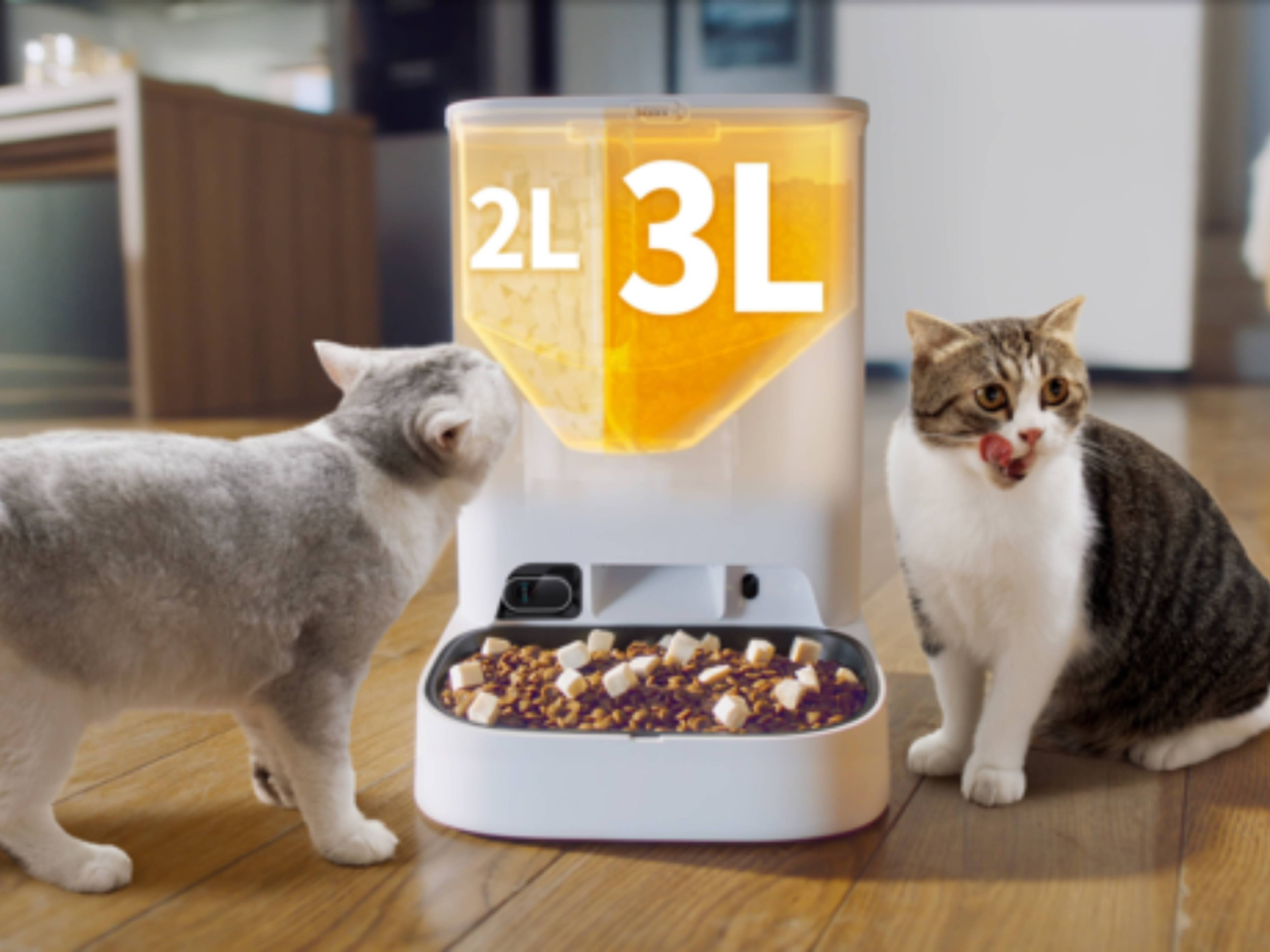
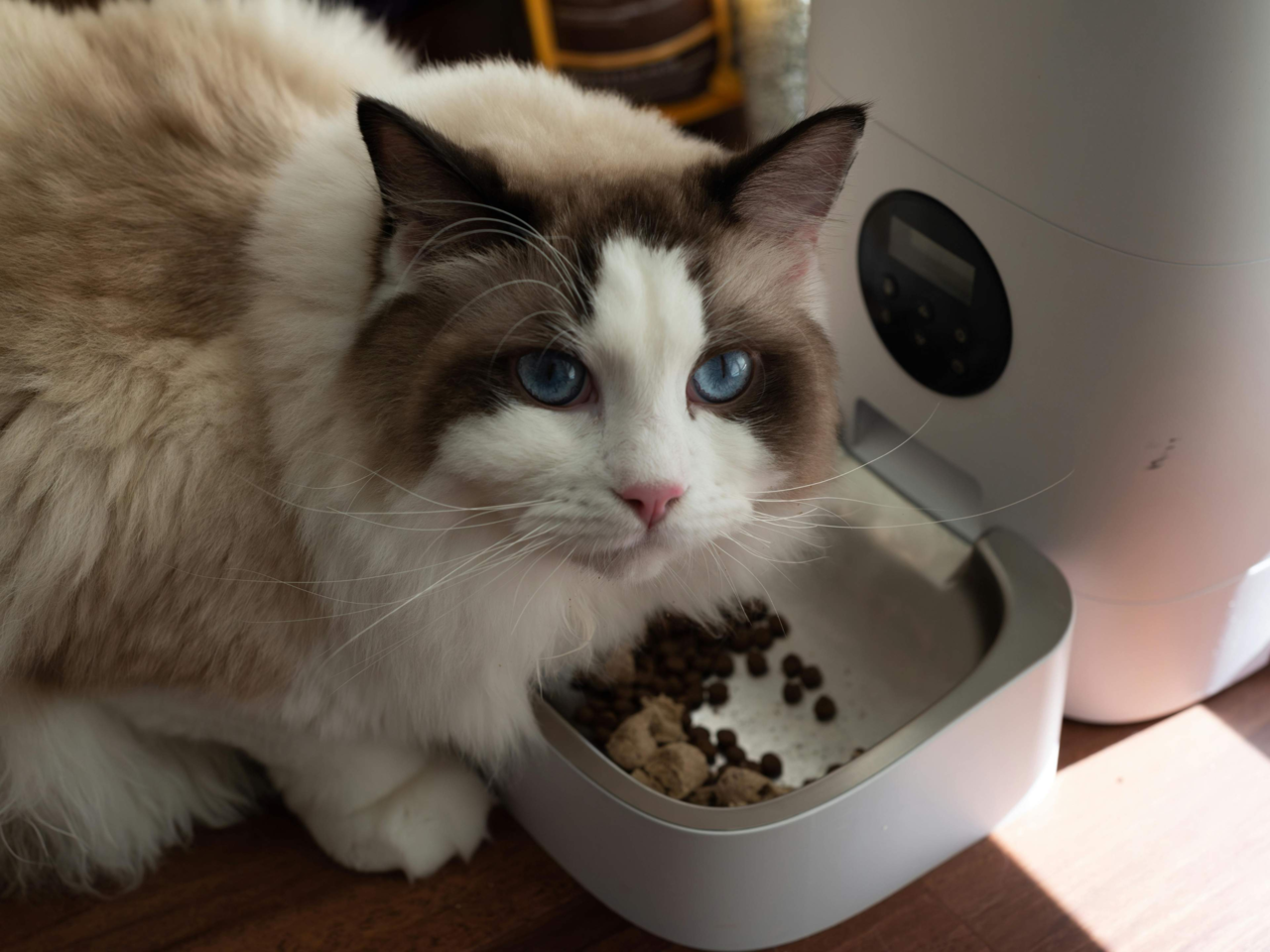
| Smart hopper | Dry kibble and, for some models, selected dried formats | Frequent small meals, app schedules and feeding records | Minimum portion, kibble size, Wi-Fi band and backup power |
| Microchip-access bowl | Wet or dry food | Stopping food theft in multi-pet homes | Microchip or tag compatibility, training mode and bowl capacity |
A microchip bowl is access-controlled rather than timed. It opens for the registered cat when they approach, so it can protect a measured meal but will not automatically create a breakfast or dinner schedule.
Work out portions before programming the timer
The feeder should divide your cat's food, not add extra meals on top of the usual day. Start with the daily amount for the food you are serving, taking your cat's size, age, activity and current body condition into account. Weigh the complete daily allowance on kitchen scales, subtract any food given separately, then divide the remainder between the planned releases.
For tray feeders
Measure each compartment yourself. This makes them useful when meals need different amounts or when you want to combine wet food, dry food and treats at different times.
For hopper feeders
Run a calibration test into an empty bowl and weigh what one “portion” actually dispenses. Kibble shape and density can change the gram weight, even when the app setting stays the same.
Keep treats inside the daily allowance and review the total if you change recipes. A cup of one biscuit can weigh very differently from a cup of another, so grams give you a more consistent starting point than volume alone.
Choose a feeder that suits the food
Simple timers and wet-food trays
A dial timer is a straightforward choice when you only need one or two lids to open later in the day. The PetSafe Automatic 2 Meal Cat and Dog Feeder has two 355ml compartments and can schedule meals up to 24 hours ahead in half-hour increments. It is designed for dry or semi-moist food rather than a full wet-food programme.
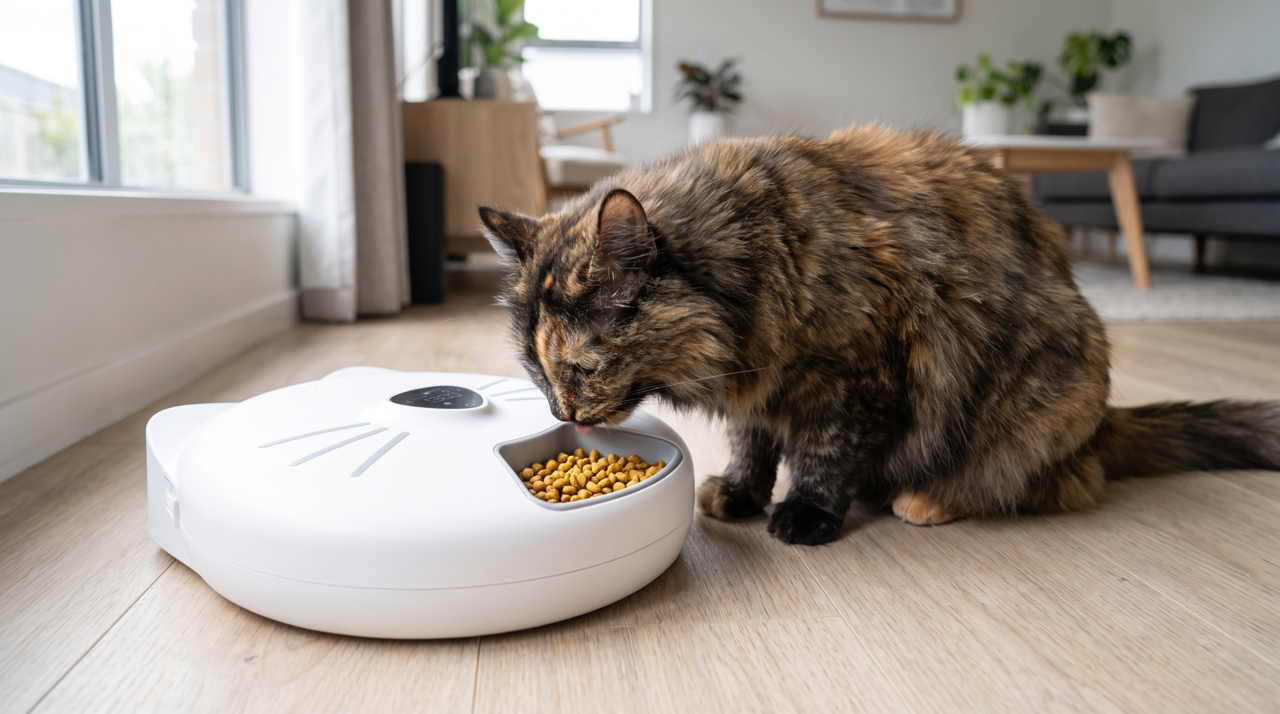
For wet meals, look at how the feeder manages temperature. The Catit PIXI Smart 6-Meal Cat Feeder uses a rotating tray with six 170ml compartments and included ice packs. The UB Pet Smart Refrigerated Feeder plugs in, offers up to five meals and uses semiconductor cooling with three temperature levels. Follow each model's food-handling instructions and clean the tray after use.
Dry-food hoppers
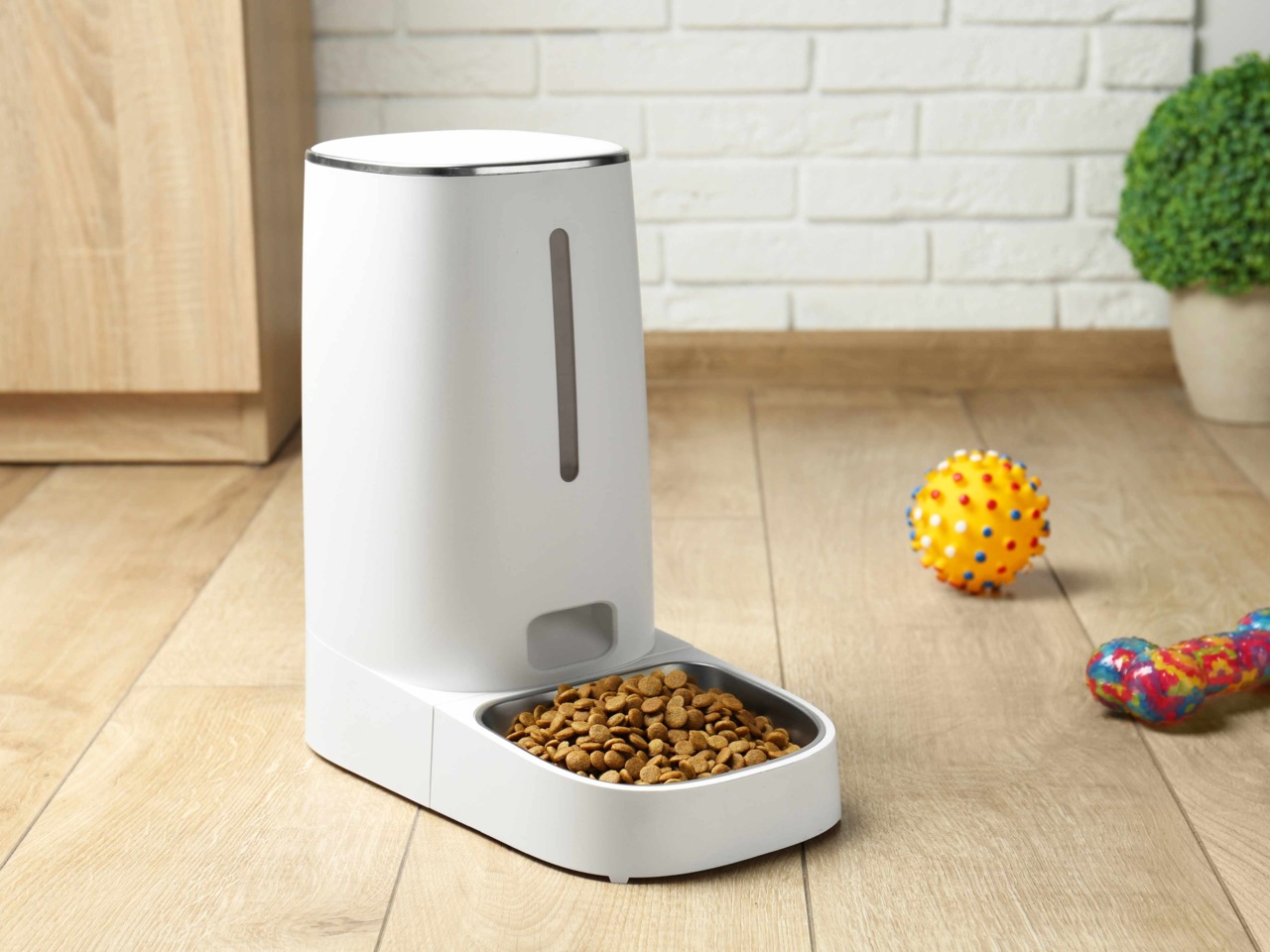
A hopper suits cats that eat dry food and benefit from several small releases. Check the model's minimum portion and compatible kibble dimensions. Pieces that are too large, unusually shaped or oily can dispense inconsistently. A sealed lid and desiccant compartment can help protect crunch, but neither replaces regular cleaning or checking the food is flowing properly.
Decide which smart features are useful
App control can make schedule changes easy, but it should solve a real need. The Aclium Smart Automatic Cat and Dog Feeder offers up to four dry-food meals a day, low-food alerts, stored schedules and battery backup. The PETKIT Yumshare Dual Hopper 2 with Camera Smart Pet Feeder adds two hoppers, portion planning, a camera, two-way audio and backup power.
In a multi-pet home, access can matter more than timing. The SureFeed Microchip Cat and Dog Feeder opens for a programmed microchip or RFID collar tag and holds wet or dry food. It can help keep one cat's measured meal away from a housemate, but it is not a timed dispenser.
Before paying for extra connectivity, check whether the feeder stores schedules locally, which Wi-Fi frequency it uses, whether alerts require a subscription and what functions remain available when the internet is down.
What to look for before buying
- Food type: confirm whether the model is approved for dry, semi-moist or wet food.
- Meal count: choose enough slots or releases for your normal routine, not the highest number available.
- Portion range: make sure the smallest release is suitable for your cat and chosen food.
- Freshness: compare sealed lids, desiccant storage, ice packs or active refrigeration.
- Power backup: check battery type, expected runtime and whether the schedule remains saved.
- Cleaning: removable, dishwasher-safe food-contact parts make everyday hygiene easier.
- Cat-proofing: look for secure lids, a stable base and a chute that curious paws cannot easily reach.
- Noise: a quiet motor and gradual training can help cats that are cautious around moving equipment.
- Size: measure the planned floor space and check bowl height, depth and whisker clearance.
Set up an automatic feeder safely
Introduce the feeder while you are home. Start by placing familiar food in the open tray, then run one manual cycle at a distance so your cat can hear and watch it. Reward calm investigation and never push their face towards a moving lid. For a microchip model, use its training mode so the opening action becomes gradual.
Test the full schedule for several days before relying on it. Confirm every meal opens or dispenses, check that one portion matches the planned grams and watch for food bridging inside a hopper. Wash the bowl and tray regularly, wipe food dust from the outlet and replace cooling packs or desiccant parts as directed.
A feeder is a routine tool, not a pet sitter
Automatic feeding does not replace fresh water, litter care, company or someone checking that your cat has eaten and the device is working. If you are away, arrange regular in-person care and leave clear instructions for manual feeding if the unit fails.
Frequently asked questions
Are automatic feeders good for cats?
They can be useful for consistent meal times, measured portions and early breakfasts. The benefit depends on accurate setup, regular cleaning and checking that your cat is comfortable using the device.
Can an automatic cat feeder hold wet food?
Only if the model is designed for it. Rotating trays may use frozen ice packs, while refrigerated feeders actively cool the food. A standard dry-food hopper should not be filled with wet food.
How many times a day should an automatic feeder open?
Use the meal pattern that suits your cat and divide the daily allowance across those releases. More openings do not mean more food. Several small meals may suit some cats, while others do well with fewer, larger meals.
Will an automatic feeder stop another cat stealing food?
A timed lid may not stop the quickest cat reaching every meal. For food theft, a microchip-access feeder is usually the more targeted tool because it opens only for the registered pet.
Do smart feeders work if Wi-Fi goes down?
It depends on the model. Some store the schedule locally and continue dispensing, while app updates and alerts may stop. Check the product instructions and test offline behaviour before you need to rely on it.
Find an automatic feeder for your cat
Compare timed trays, smart hoppers, wet-food options and microchip feeders in one place.
SHOP CAT SMART FEEDERS