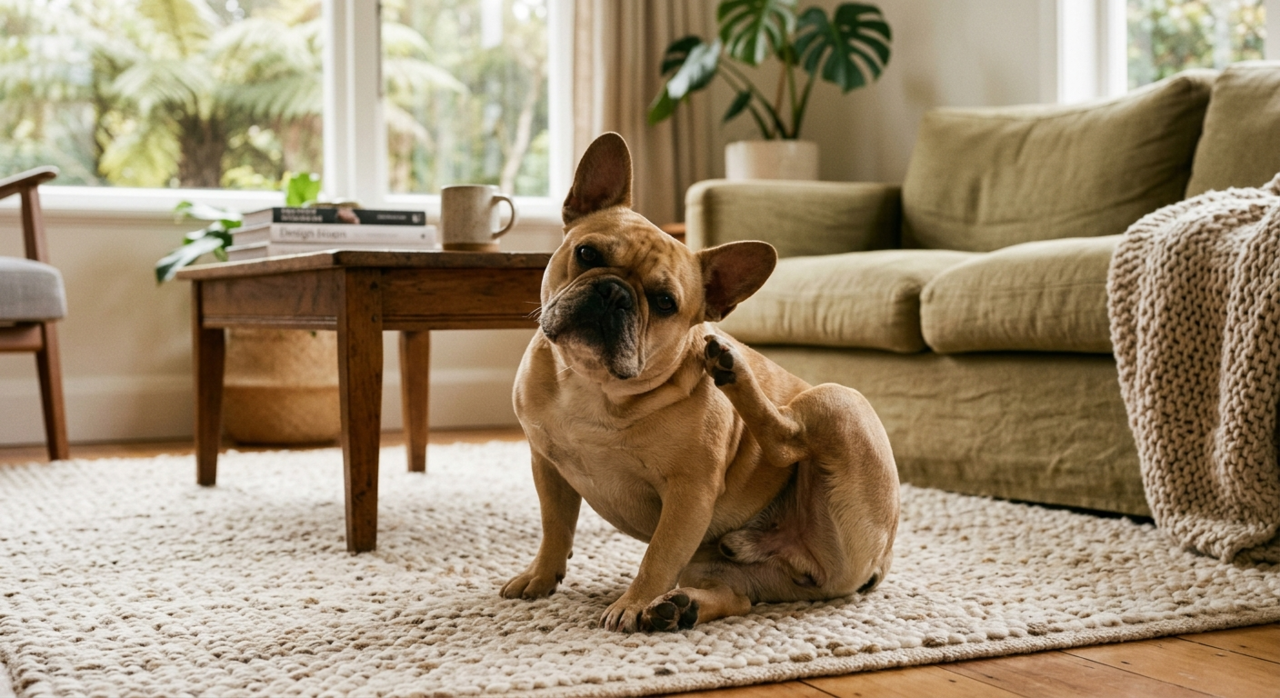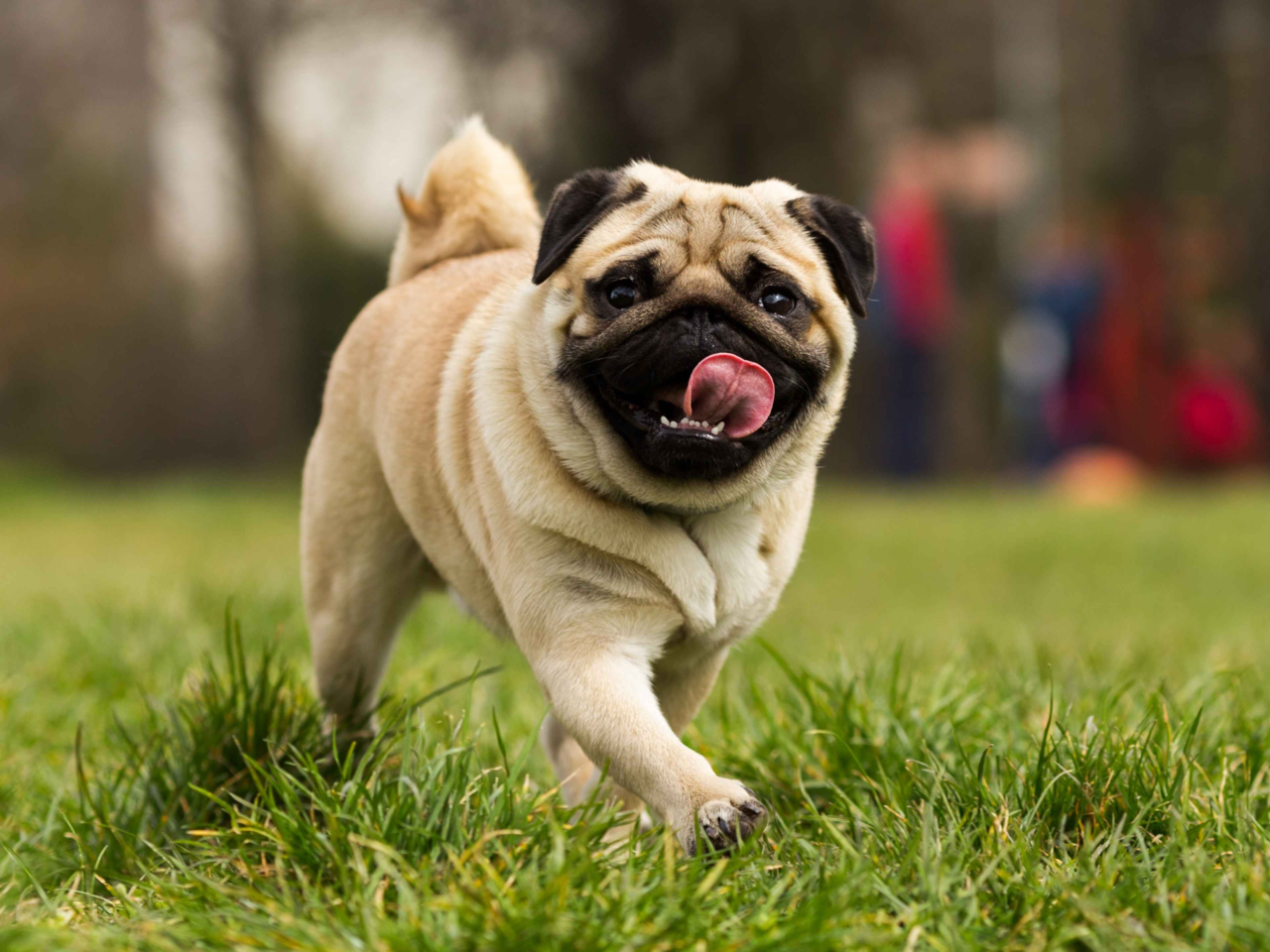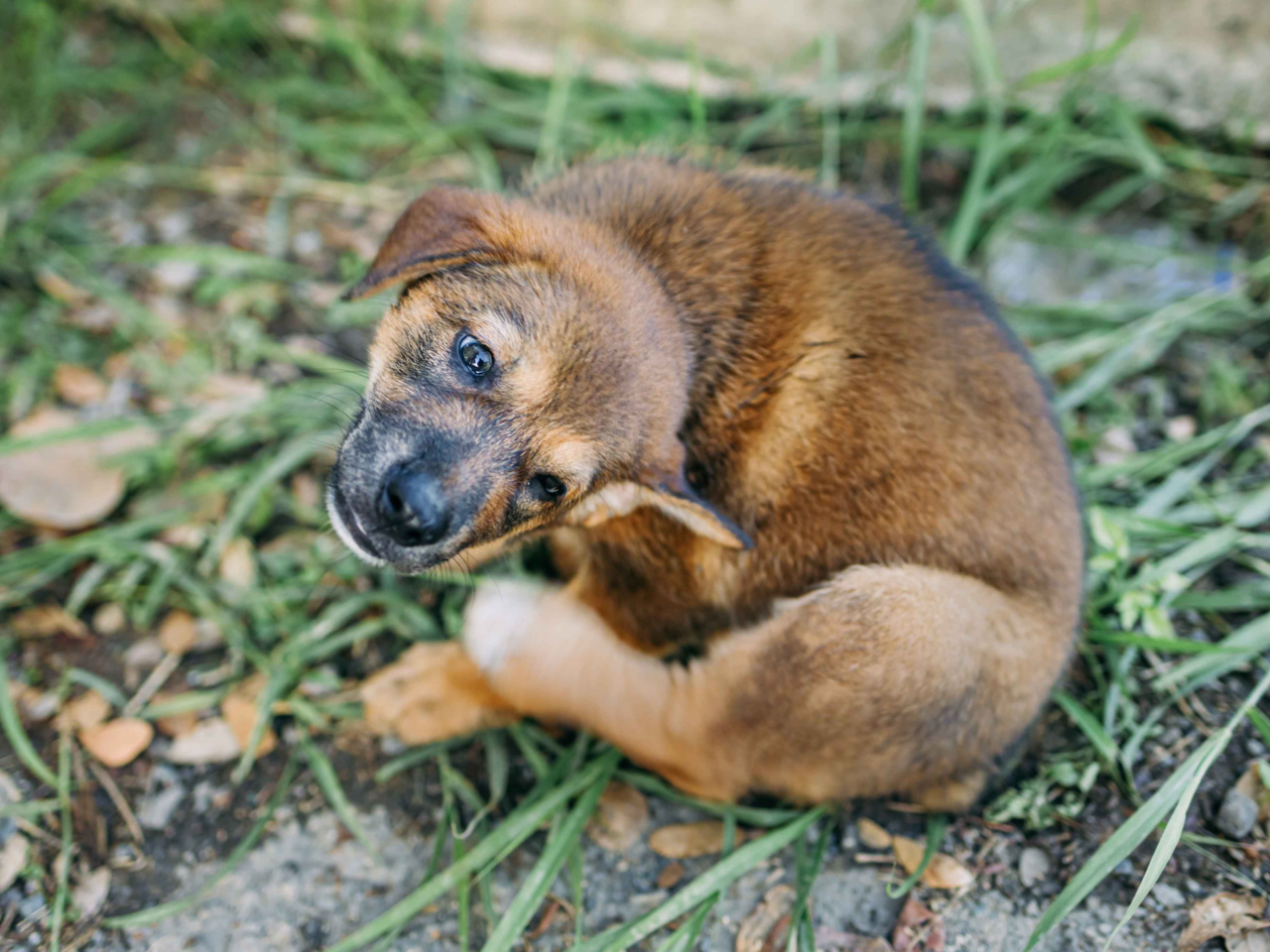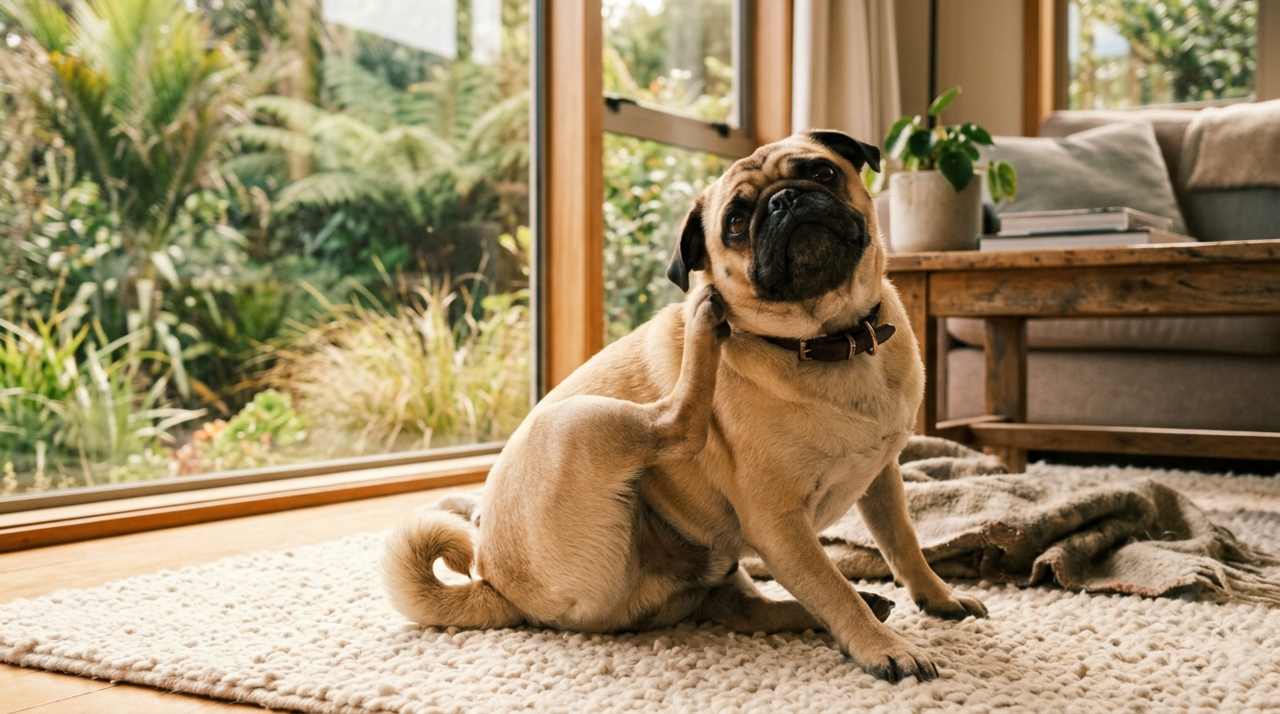
If you've found yourself watching your Pug scratching away at the same spot for the third evening in a row, you're not alone. Pugs are one of the most itch-prone breeds in NZ, and the way their bodies are built means a few things stack against them: deep skin folds, a short coat that exposes the skin, sensitive stomachs, and a strong tendency toward environmental allergies.
The good news is that most Pug scratching has a clear, identifiable trigger and a practical fix. Here's a guide for NZ Pug owners on the common causes, what to look at first, and the everyday products that help.
Quick answer
Pug scratching is usually down to one of four things: skin fold issues, food sensitivities, environmental allergies (atopy), or fleas. Pugs are particularly prone to all four because of their build and breed history. Start by cleaning the skin folds daily, switching to a sensitive-skin food, keeping up with year-round flea prevention, and looking for any new household or seasonal trigger. If scratching is persistent or you can see broken skin, a clinic check is worth booking.
Why Pugs Scratch More Than Most Breeds
Deep skin folds
That charming wrinkly face hides moist, warm pockets where bacteria and yeast love to set up shop. Skin fold dermatitis (the technical name for an inflamed wrinkle) is one of the most common causes of itchiness in Pugs and is genuinely fixable with daily care.
Short, single coat
Pugs don't have the protective top layer that thicker-coated breeds do. Allergens, grit and irritants reach their skin faster, and they feel it sooner. The coat also sheds a lot, which can make grooming-related issues more visible.
Allergy-prone breed
Pugs sit near the top of the "most prone to atopic dermatitis" list. Environmental allergies (pollens, grasses, dust mites, household sprays, cleaning products) often present as itchy paws, belly, armpits and face.
Sensitive stomachs
Food sensitivities show up as scratching just as often as they show up as upset tummies. Pugs do better on calm, single-protein or sensitive-skin formulations than on rich rotating menus.
Year-round flea risk
NZ doesn't get a hard frost, so fleas are an all-year issue. Pugs feel even a few flea bites more than thicker-coated dogs, and a single bite from a sensitive Pug can trigger an itching spiral.
They notice and stay with it
Some breeds shake off a mild itch. Pugs are not those breeds. Once they get going, they can scratch the same spot until it's red and sore. That makes early intervention important.
Where to Look First (In Order)
The Pug scratching triage
Work through these in this order. Most owners find the answer in the first two.
- Skin folds. Especially the nose roll and any deep facial wrinkles. Look for redness, smell, or any moisture.
- Recent food or treat changes. Anything new in the last 4-6 weeks? A new flavour, a different brand, a sudden interest in someone's leftovers?
- Coat for fleas. Part the fur on the lower back, belly and tail base. Look for flea dirt (little black specks).
- Paws, belly, armpits, face. These are the classic atopic dermatitis spots. Red, irritated or licked skin in these areas points to environmental allergies.
- Anything new in the house. New laundry detergent? Different floor cleaner? Carpet shampoo? Air freshener? Even small changes can trigger sensitive Pug skin.
- Seasonal patterns. Worse in spring/summer often means grasses or pollens. Worse year-round often means food or household trigger.
Skin Fold Care: The First Pug Habit
Daily fold check
Once a day, gently open the nose roll and any other folds. Look for redness, smell, or moisture. If anything looks irritated, clean it carefully with a gentle antibacterial wipe and dry thoroughly. Damp skin folds are where most of the trouble starts.
Dry, never wet
The wrinkles need to be dry after cleaning. A clean dry cotton pad works fine. Don't apply lotions or creams unless directed by a clinic, since they can trap moisture and make things worse.
Food and the Itchy Pug
Try a sensitive-skin formula
If you suspect food is the trigger, a sensitive-skin or limited-ingredient food is usually the easiest first step. Look for single-protein or novel-protein (salmon, kangaroo) recipes and skip rich daily treats while you're testing.
Add a daily omega-3
Omega-3 supplements (salmon oil, flaxseed oil) support skin and coat from the inside and are particularly helpful for itch-prone breeds like Pugs. The Omega Plus King Salmon Oil and Fourflax Skin & Coat Oil are popular NZ-made picks.
Shampoo and Topical Soothing
Gentle, soothing baths (not too often)
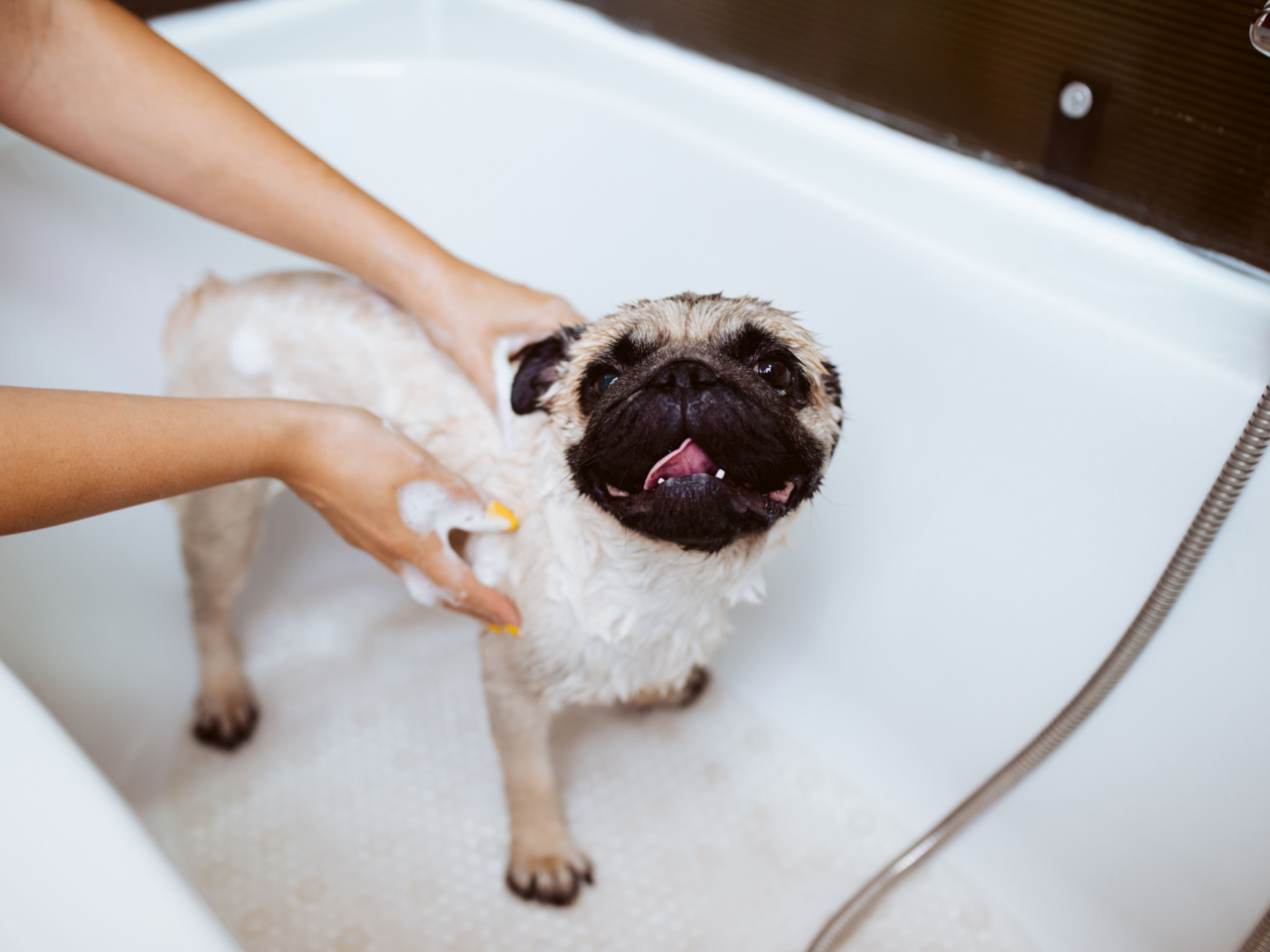
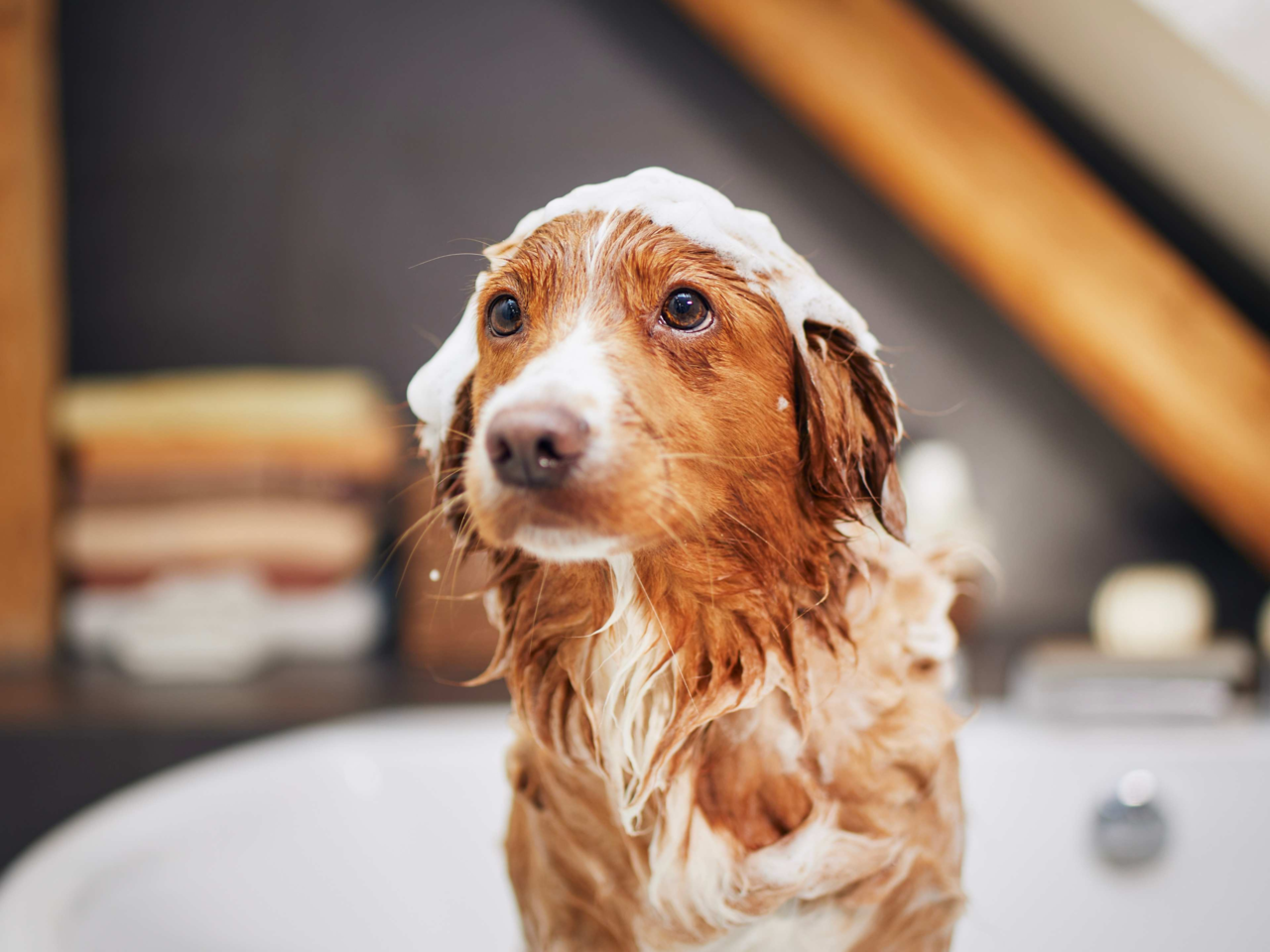
Once every 2-3 weeks with a soothing oatmeal-based or manuka shampoo is usually plenty for an itchy Pug. Over-bathing strips natural oils and makes skin drier, which makes itching worse. Skip harsh deodorising shampoos.
Spot-treatment for hot spots
If you can see a red, irritated patch where your Pug has been scratching, a topical probiotic spray supports the skin microbiome and gives sore spots a chance to settle. Don't use human creams unless directed by a clinic.
Year-Round Flea Prevention
For a sensitive breed like the Pug, year-round flea prevention is non-negotiable. NZ doesn't get a hard winter freeze, so fleas remain active all year. Choose a monthly or three-monthly preventative and stick to the schedule, even in winter.
Environmental Triggers Around the House
Laundry and bedding
Wash your Pug's bedding weekly in a hypoallergenic detergent. Skip fabric softener (a common trigger) and avoid scented dryer sheets. The bedding sits against the most-affected skin, so this one matters more than people realise.
Floor cleaners
Pugs are low to the ground and absorb everything that's on the floor. Choose a pet-safe floor cleaner, rinse well, and let surfaces dry before letting them back on.
Grass and lawn treatments
If your local park or your own lawn has been sprayed recently, the residue often shows up as paw scratching the same evening. Rinse paws after walks, especially in spring and summer.
Carpet and soft furnishings
Dust mites build up in carpets, sofas and curtains. Vacuum where your Pug spends time, wash blankets weekly, and consider an air purifier if seasonal atopy is severe.
When to Get a Clinic Check
Worth booking a check if you see:
- Broken, weeping or bleeding skin where they've been scratching
- Smell from the skin folds that doesn't go away with daily cleaning
- Hair loss in bald or thinning patches
- Head-shaking and ear scratching alongside the body scratching (could be ears, mites, infection)
- Scratching that's keeping them or you awake at night
- Scratching that's persisted for more than 2-3 weeks despite home care
- Any swelling, hives, or sudden onset of itching after a meal or treat
Frequently Asked Questions
Is it normal for a Pug to scratch a lot?
A bit of casual scratching is normal for any breed. Persistent daily scratching, red skin, hot spots or focused licking is not just "the breed", it's a sign something can be improved. Pugs are predisposed to itchiness, but they shouldn't be uncomfortable.
How often should I clean my Pug's skin folds?
Daily check, with an actual clean every 2-3 days for most Pugs. Some need daily cleaning in summer or after dusty walks. Always dry thoroughly after cleaning.
Can food really cause my Pug to itch?
Yes, often. Food sensitivities are one of the top three causes of scratching in Pugs. The good news is a 6-8 week trial on a sensitive-skin formula usually gives you a clear answer.
How often should I bathe my itchy Pug?
Every 2-3 weeks at most with a gentle oatmeal or manuka-based shampoo. More often than that can dry out the skin and make scratching worse. Skip strong perfumed shampoos.
Do I need flea prevention in winter?
Yes. NZ winters don't kill the flea population, especially in homes with heat pumps and warm carpets. Year-round prevention is the standard recommendation for itch-prone breeds like Pugs.
My Pug's been scratching for weeks, what now?
If you've worked through the home checklist (folds, food, fleas, household triggers) and it's been more than 2-3 weeks of persistent scratching, a clinic check is the right next step. Chronic itch often needs targeted treatment that's worth getting properly diagnosed.
What's the single best thing I can do for my Pug's skin?
Clean the skin folds every couple of days, switch to a sensitive-skin food, and stay on top of flea prevention year-round. That trio of habits resolves most everyday Pug itchiness without anything fancier.
Skin and Coat Care for Pugs at Petdirect
Browse sensitive-skin foods, soothing shampoos, antibacterial wipes, omega supplements, flea prevention and the rest of the everyday essentials for an itch-prone breed. Save with Autodeliver on everyday items, and enjoy everyday member pricing as part of Pet Perks.
SHOP SKIN AND COAT CARE