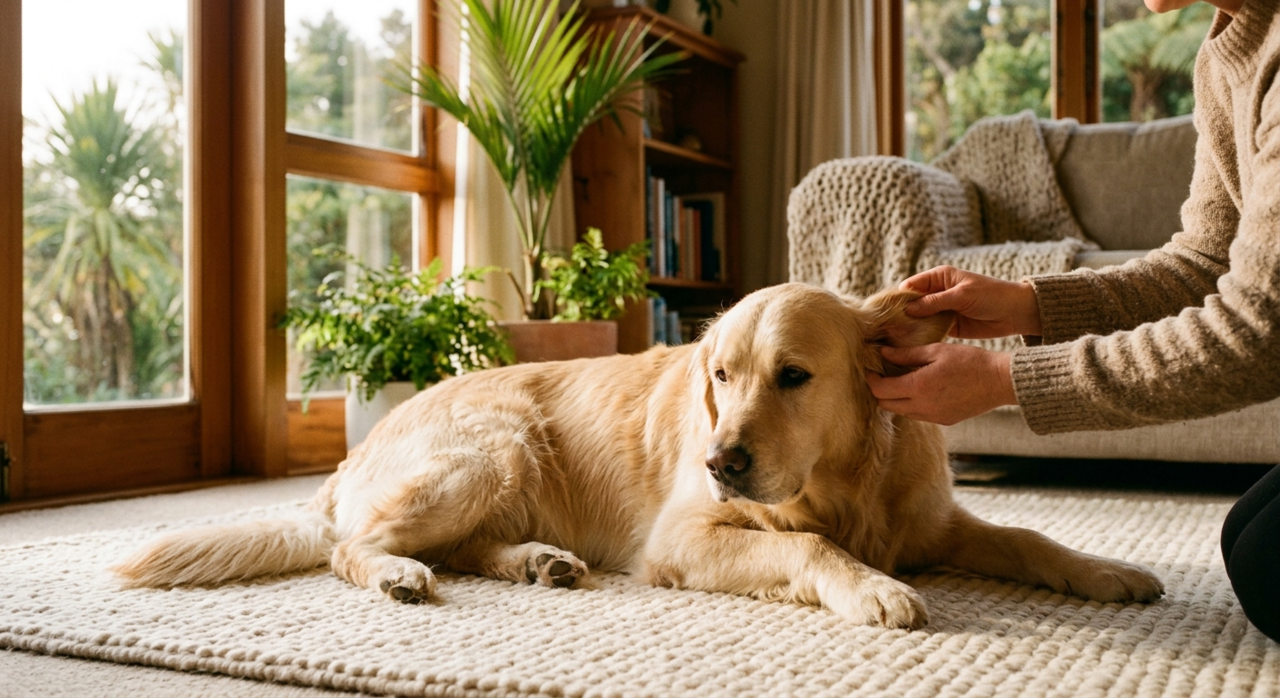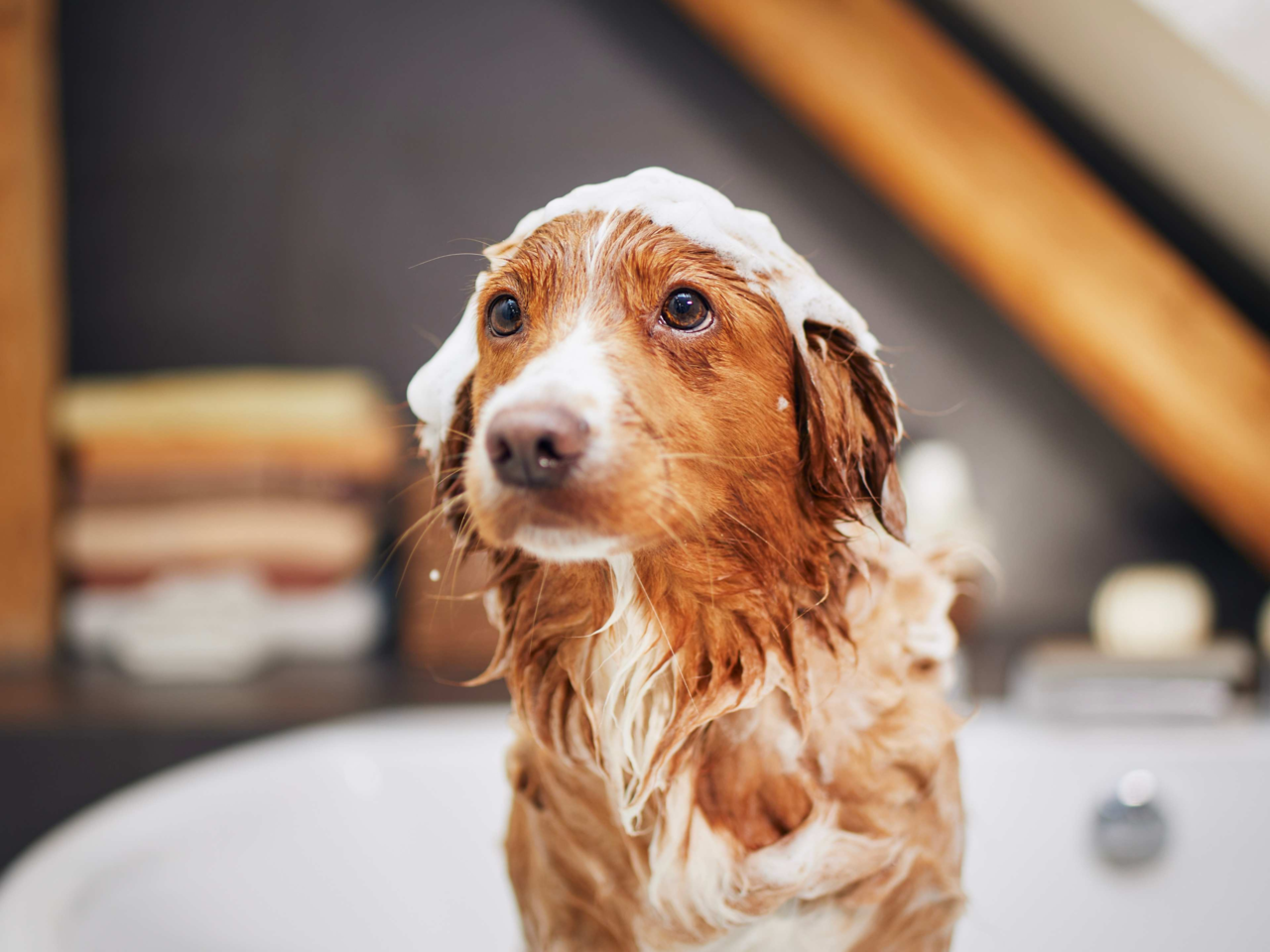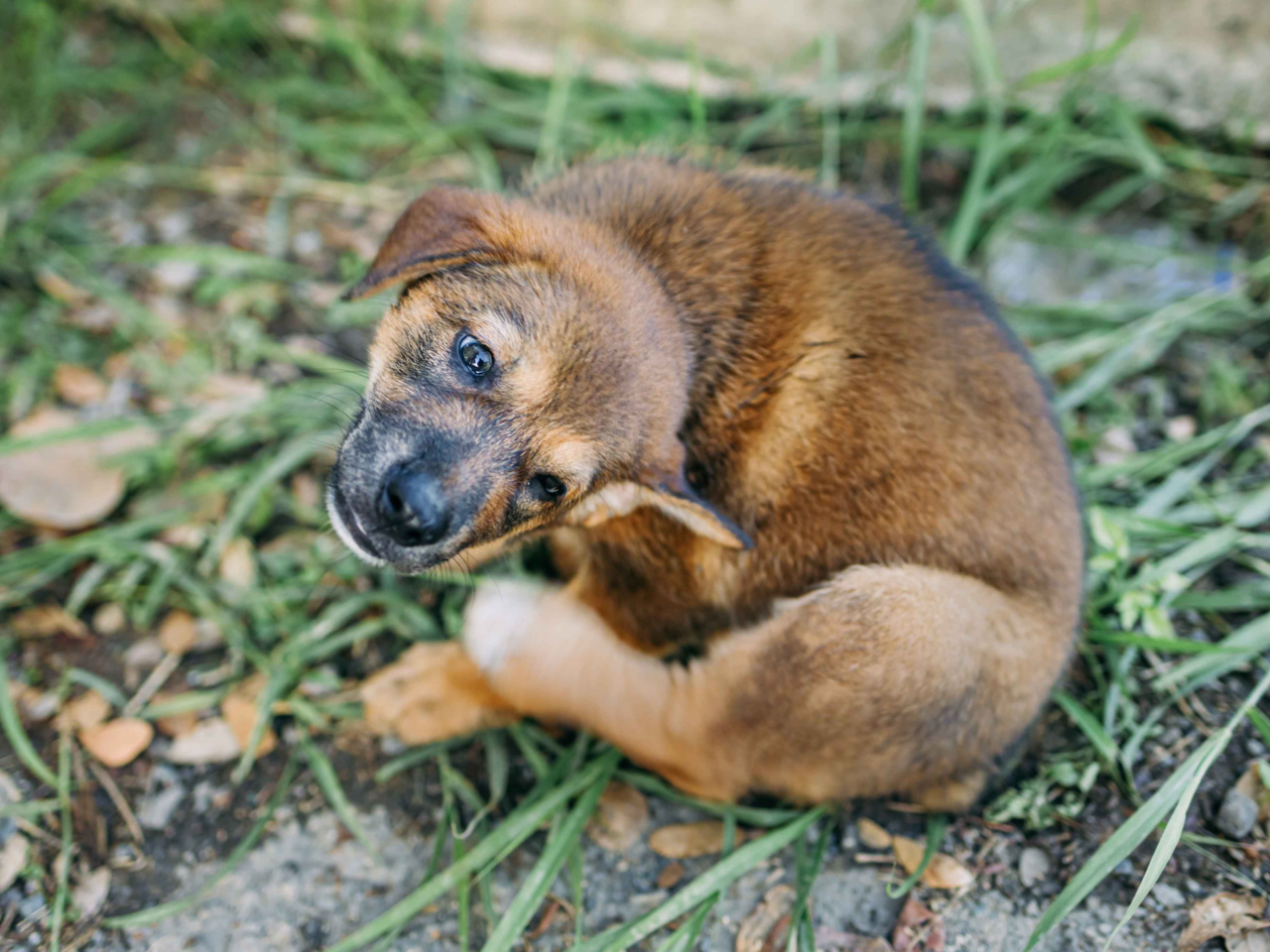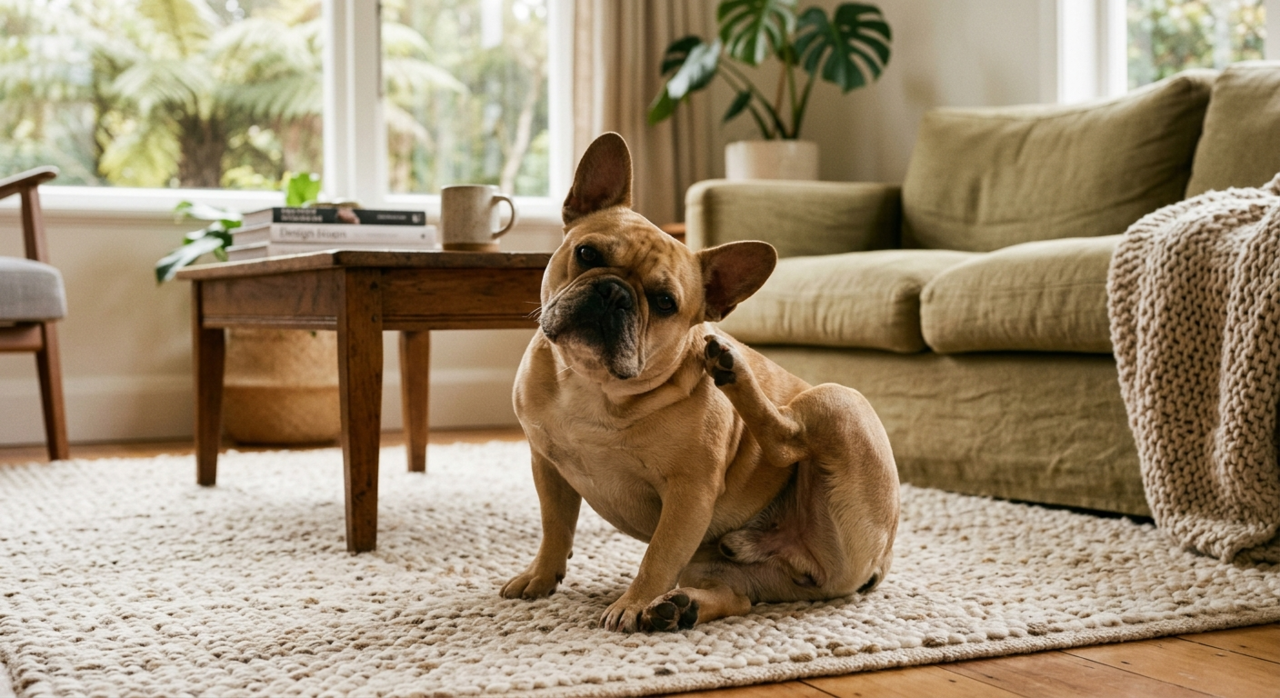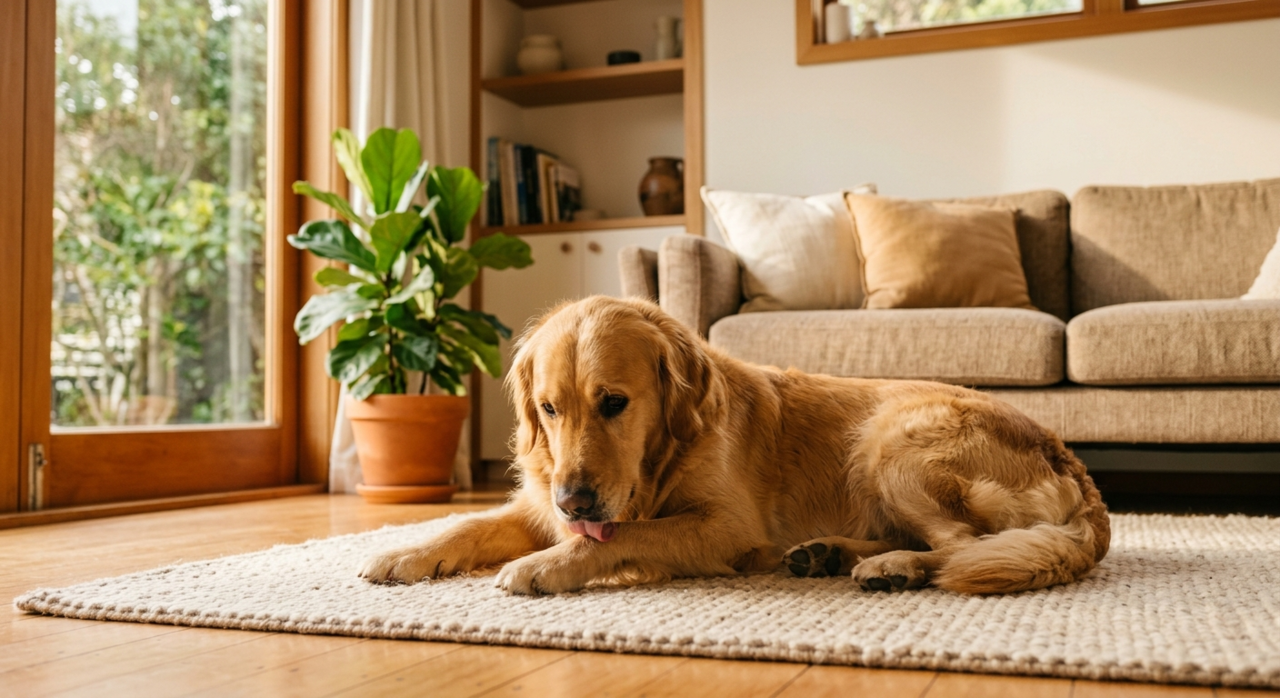
Dogs lick their paws for all sorts of reasons, and most are mild. The post-walk wash, the after-dinner clean, the occasional five-minute grooming session on the rug. The licking that's worth paying attention to is the kind that doesn't stop. The dog who can't settle without going at one paw, the slurp-slurp-slurp soundtrack to your evenings, the brown stained fur that's appeared between the toes. That's when it's worth doing some detective work.
Here's a friendly NZ guide to why dogs lick their paws, what the different patterns usually mean, and how to handle it. We're not a clinic, so anything raw, smelly, or coming with limping needs a chat with your local clinic. The good news: most paw-licking is solvable once you know what's actually driving it.
Quick answer
The single most useful question to ask: are they licking all four paws, or just one? All four paws, generalised, often paired with itchy ears and belly, almost always points at allergies (food or environmental). One paw obsessively, especially after a walk, points at a foreign object (grass seed, splinter, glass) or an injury. Brown-stained fur with a yeasty smell between the toes is a yeast infection. Older dogs licking one specific leg or paw can be referring pain from a sore joint. Boredom and anxiety are real causes too, often showing as a habitual lick of one paw. Most mild cases settle with a regular foot wash, an omega supplement, and the right environmental fixes. Anything raw, swollen, smelly, or limping needs the clinic.
All Four Paws or Just One? The Most Useful Question
The pattern of which paw(s) tells you most of what you need to know. Spend a minute watching the next licking session and match it to one of the four below.
All four paws, generalised
Your dog rotates between paws, often after dinner or as they settle in the evening. They might also be scratching at ears or rubbing the belly. The fur between the toes may be slightly stained brown.
Usually means: allergies, either environmental (pollen, dust, household products) or food. The most common reason behind chronic paw-licking in dogs.
One paw, obsessively, after a walk
Your dog goes straight for one specific paw the moment they get home. They may chew at it, hold it up, or limp slightly. The other three are normal.
Usually means: a foreign object (grass seed, splinter, small stone), a cut, a torn nail, or pavement burn. Get a proper look at the paw, including between the toes, on the pad, and around the nail beds.
Brown-stained fur, yeasty smell
The fur between the toes is reddish-brown, the paws have a faintly cheesy or "corn chip" smell, and the licking is most intense after lying down or first thing in the morning.
Usually means: a yeast infection between the toes. Common in floppy-eared, long-coated and allergy-prone dogs. Often follows on from an undiagnosed allergy.
Habitual, one paw, no obvious trigger
Your dog licks the same paw at the same times of day. Often when bored, when you're on a Zoom call, when there's a thunderstorm coming, or when you've been out longer than usual. The paw itself looks normal.
Usually means: boredom, anxiety, or compulsive habit. The paw is the soothing spot rather than the source of the problem. Worth addressing with enrichment and calm-routine support.
Two extra details that help clinics enormously: when did the licking start, and what (if anything) changed around that time? A new food, a new washing detergent, a fresh round of pollen, a renovation, a new dog in the house. The trigger often jogs the memory.
The Most Common Causes of Dog Paw Licking
1. Allergies (environmental and food)
By a comfortable margin, the single most common cause of chronic paw-licking. Dog paws are rich in allergy receptors, and an allergic dog will often show their allergies through the paws first, before the rest of the skin catches up. Environmental allergies (pollen, dust mites, mould, household products) tend to be seasonal; food allergies tend to be year-round.
What helps: a sensitive-skin food trial (run strictly for 6 to 8 weeks, no other treats or table scraps), a daily omega-3 supplement, and reducing environmental triggers in the home (fragrance-free detergents, vacuum more often, wash bedding weekly).
2. Yeast infection between the toes
Yeast loves warm, damp, low-airflow spots, and the gaps between dog toes are perfect. Once it takes hold, the fur stains a tea-brown colour, the paws develop a distinctive cheesy smell, and the licking becomes constant because the yeast itches genuinely. Often follows on from an undiagnosed allergy that's left the skin reactive.
What helps: get it checked. Yeast infections respond well to treatment but rarely clear up on their own. In the meantime, dry the paws thoroughly after every walk and wash, and keep the fur between the toes a little shorter if you can manage it.
3. Foreign object stuck in the paw
Grass seeds are a known NZ summer-and-autumn culprit, and they have an evil habit of getting between toes, into nail beds, or piercing the pad. Splinters, small stones, glass and tiny shells (from the beach) all do similar things. The classic sign is sudden one-paw licking that started during or after a walk.
What helps: get a proper look. Spread the toes, check the pad, look at the nail beds. If you can see something obvious and it's loose, you can try to remove it gently. Anything stuck deep, surrounded by red skin, or you can't see clearly, needs the clinic. Don't probe or push.
4. Injury or wound
A cut on the pad, a torn nail, a chipped pad after running on rough ground, a small burn from a hot pavement (still relevant in late summer NZ). The dog will often hold the paw up, walk gingerly, or limp. Licking is the dog's instinct to clean the wound.
What helps: assess the paw carefully. Small clean cuts can be rinsed with cool water and watched. Anything bleeding, swollen, deep, or making your dog limp needs the clinic. Keep the paw clean and dry while it heals.
5. Dry, cracked pads
Winter heating dries pads out. So does a hot summer pavement. Dogs who walk a lot on rough surfaces (concrete, gravel, sand) develop calluses that crack. The licking is the dog's attempt to soften and soothe.
What helps: a dog-specific paw balm applied a few times a week. Avoid human balms, lanolin and petroleum jelly, since the dog will lick most of it off and some ingredients aren't safe to ingest in volume. A gentle balm designed for dog paws is the safer choice.
6. Boredom, anxiety or compulsive habit
One of the most underrated reasons. Dogs who don't have enough mental stimulation, who are home alone for long days, or who get anxious about specific triggers (storms, fireworks, owner leaving) often develop paw-licking as a self-soothing habit. The paw isn't the source of the problem; it's the safe spot to direct nervous energy.
What helps: more enrichment (puzzle feeders, snuffle mats, lickmats), longer mid-day exercise, and for genuine anxiety, a calming pheromone collar or diffuser. If you've worked through every physical cause and the licking continues, this is often what's left.
7. Joint pain in older dogs
Dogs sometimes lick the leg or paw above a sore joint, even when the paw itself is fine. It's a referred-pain behaviour. Older dogs (typically 8+) who develop a new licking habit on one specific leg, often paired with slowing down on walks or stiffness getting up, may be telling you something further up the leg is sore.
What helps: a clinic check is the right move. In the meantime, an orthopaedic bed and an omega-3 or joint-support supplement can be useful, but don't replace the visit.
8. Fleas or mites
A flea burden often shows up as scratching at the back end and base of the tail, but persistent paw-licking can also be a sign. Mites between the toes are less common but possible. The dense fur on the paws hides parasites well.
What helps: a current monthly flea preventive, and a fine-toothed flea comb to verify. Most modern combination flea-and-worm products cover mites too.
Easy Home Wins to Try First
For mild cases (occasional licking, no smell, no sore-looking paws), start with the simple fixes. They cost almost nothing and they sort a surprising number of cases.
1. Identify the pattern
All four, one paw, brown-stained, or habitual? The pattern points at completely different fixes, so it's worth a minute of watching before doing anything.
2. Inspect the paws properly
Spread the toes one by one, check the pad, look at the nail beds, sniff for the yeasty cheese smell. Half the answers are right there if you actually look.
3. Wash and dry after walks
A quick rinse with cool water gets pollen, grass juice and household particles out of the fur between the toes. Dry thoroughly afterwards, since wet fur between the toes is a yeast invitation.
4. Switch to fragrance-free home products
Floor cleaner, laundry detergent, fabric softener. Indoor dogs walk on the floor, lie on the bedding and licked-up residue isn't fun for sensitive paws.
5. Try a daily omega-3 supplement
Skin barrier support from the inside out. Most dogs need 4 to 6 weeks of daily dosing before you'd see a change. Pairs well with a sensitive-skin food trial.
6. Add enrichment if it's a habit
Puzzle feeders, snuffle mats, lickmats with peanut butter or wet food. If the licking is boredom or anxiety, the paw is the symptom and you need to give the brain something else to do.
Paw Care: Balms, Wipes and Anti-Itch Washes
For dry pads, post-walk paw cleaning, and reactive skin between the toes, a small kit of dog-specific paw products goes a long way. The two paw balms below are NZ-friendly options without ingredients that aren't safe to lick. The antibacterial wipes are useful for wiping pads and between toes after walks.
Foods and Supplements for Allergy-Driven Lickers
If the licking is generalised across all four paws, year-round, and especially if it pairs with itchy ears or belly, food and supplements are the long-term levers. Sensitive-skin formulas plus a daily omega-3 supplement are the most useful starting points.
Sensitive-skin foods need 6 to 8 weeks of strict feeding before judging. Omega supplements work best given consistently every day for 4 to 6 weeks. Both pair well with Autodeliver for that reason.
For Boredom and Anxiety Lickers
If you've worked through the physical causes and the licking is still happening, the paw is being used as a self-soothing spot rather than because anything is wrong with it. The fix is enrichment for the body and brain, plus calm-routine support for genuine anxiety.
For anxiety lickers in particular, give a calming product 2 to 4 weeks of consistent use before judging. They work alongside lifestyle changes (more enrichment, calmer routine), not instead of them.
Flea, Worm and Parasite Cover
If fleas or mites are the underlying driver, no amount of paw balm will sort it. A current monthly preventive is the foundation.
When to Get It Checked
Most mild paw-licking settles within a couple of weeks of a regular routine and the right environmental fixes. Book a clinic visit if any of these apply:
- The skin between the toes is broken, raw or weeping
- The paws have a strong cheesy or yeasty smell that won't go away
- Your dog is limping, holding the paw up, or favouring one leg
- You can see something stuck (grass seed, splinter) but can't get it out easily
- The fur between the toes is bald or visibly thinning
- Licking is keeping your dog (or you) awake at night
- You've worked through the basics for 2 to 3 weeks and there's no improvement
- An older dog has developed new one-leg licking, especially with stiffness
- Eating, drinking, energy or behaviour have shifted alongside the licking
Frequently Asked Questions
Why does my dog lick their paws so much?
The most common reason is allergies (environmental or food), especially if all four paws are involved and there's also itchy ears or belly. After that, in rough order: yeast infections between the toes, foreign objects, dry pads, boredom or anxiety, and joint pain in older dogs. The pattern of licking (all four vs one paw) tells you most of what you need to know to start.
Why do my dog's paws smell like corn chips?
That distinctive cheesy or "corn chip" smell is almost always yeast. Yeast lives naturally on dog skin but overgrows in warm, moist, low-airflow spots, and the gaps between dog toes are perfect. Common in floppy-eared and allergy-prone dogs. Get it checked, then sort the underlying allergy if there is one.
How do I know if it's allergies or anxiety?
Allergies are usually all four paws, often paired with itchy ears or belly, often worse at certain times of year (spring for environmental, year-round for food). Anxiety is usually one paw, often the same one, often at predictable times (you on a call, owner leaving, evening when the house quietens). Worth working through the physical causes first before assuming anxiety.
Can I use coconut oil or human paw balm on my dog?
Coconut oil is generally fine in small amounts and most dogs lick a bit off without issue, but it's not a long-term solution for cracked pads. Human paw balms, lanolin and petroleum jelly are best avoided, since dogs lick most of it off and some ingredients aren't ideal for ingestion. A dog-specific paw balm is the safer choice.
Should I stop my dog from licking their paws?
Don't tell them off, the licking is the symptom not the cause. Address the underlying reason (allergy, yeast, foreign object, anxiety) and the licking eases on its own. If you need to physically prevent it short-term while a wound heals, a soft cone or recovery suit from your clinic is the way.
Why does my dog lick their paws after walks?
Often it's just routine grooming: washing off pollen, grass juice and city pavement residue. If it's intense and focused on one paw, look for a foreign object (grass seed especially) or a small injury. If it's gentle on all paws, a quick rinse and dry as part of the post-walk routine usually settles things.
What if my dog only licks one paw?
One-paw licking is the pattern most likely to point at something physical: a foreign object, a small wound, a torn nail, a chipped pad, or referred pain from a joint above. Inspect the paw thoroughly. If you can't see anything obvious and the licking continues, get it checked.
Can food allergies cause paw licking?
Yes, frequently. Food sensitivity in dogs often shows up as paw and ear inflammation before the rest of the skin catches up. Year-round paw licking, often paired with itchy ears, is the typical pattern. A 6 to 8 week sensitive-skin or limited-ingredient food trial (run strictly, no treats outside the trial) is the usual way to find out.
How long should I try home steps before going to the clinic?
For mild paw-licking with no smell, no broken skin, no limping, and your dog is otherwise well, give the basics 2 to 3 weeks. If the licking is the same or worse, go. For anything raw, smelly, swollen, or paired with limping, skip the home try and go straight to the clinic.
Dog Paw Care Essentials
Find dog-specific paw balms, antibacterial wipes, sensitive-skin food, omega supplements and calming support in one place. Save with Autodeliver on food and supplements, and enjoy everyday member pricing as part of Pet Perks.
SHOP DOG PAW CARE