Finding a sharp-smelling patch of cat urine on a wall, door or curtain can be upsetting, but spraying is not spite or bad behaviour. It is a form of scent communication. Your cat may be marking a place that feels important, responding to stress, or trying to make their surroundings smell familiar and safe.
The right response starts with working out whether your cat is spraying or emptying their bladder outside the litter tray. From there, clean the marked area thoroughly, reduce the trigger, improve the litter setup and rule out discomfort. Punishment can increase stress and make the problem harder to solve.
Is your cat spraying or peeing outside the litter tray?
Spraying and inappropriate urination can look similar, but the body position, surface and volume usually give useful clues. Spraying is often about communication. A larger puddle outside the tray is more likely to involve the litter setup, stress or a health issue.
Some cats show a mix of both patterns, so treat these clues as a starting point rather than a diagnosis. If you are unsure, note the location, amount and body posture, or record a short video if you can do so without disturbing your cat.
Why cats spray indoors
When a clinic check should come first
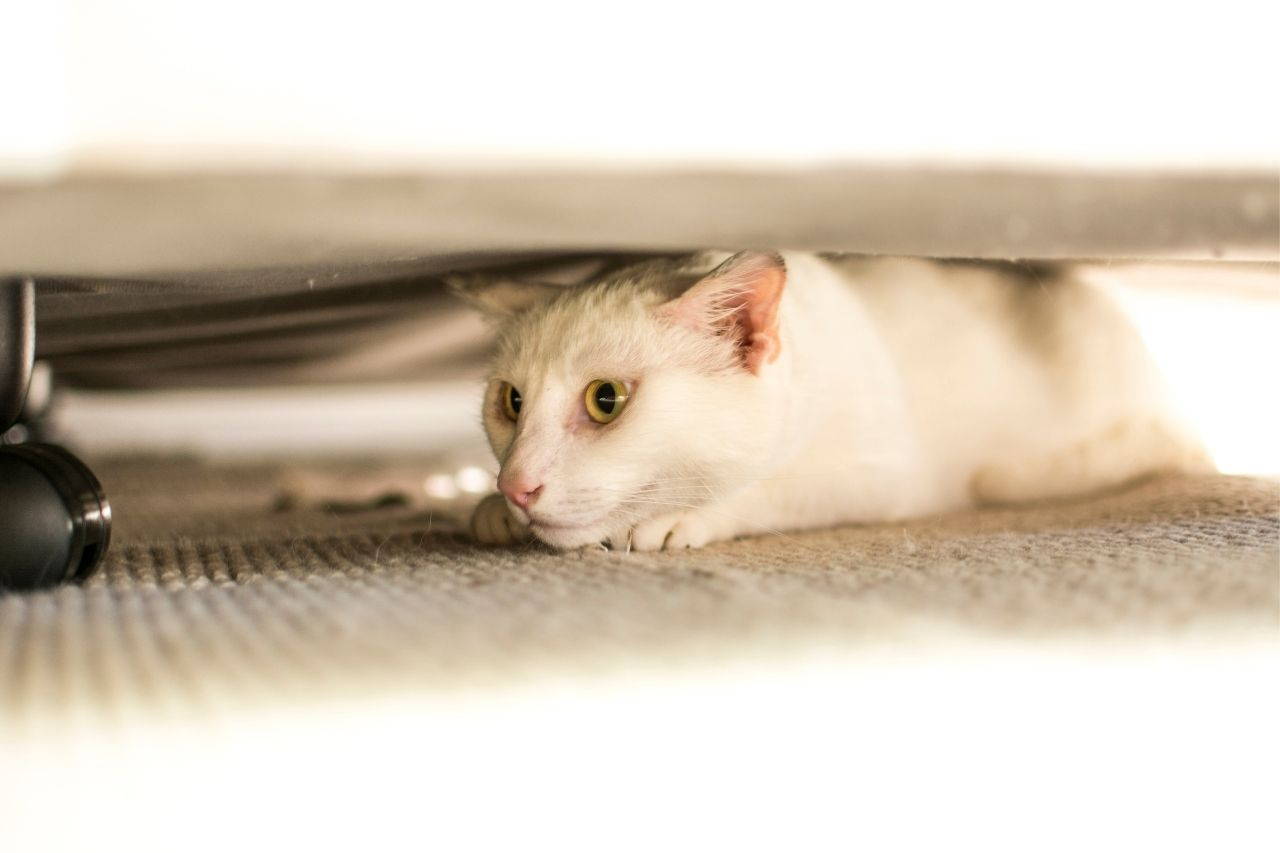
Contact your clinic if the spraying is new, your cat is older, the pattern has changed suddenly, or you also notice frequent litter tray visits, blood in the urine, licking around the genitals, crying, hiding, reduced appetite or obvious discomfort. A clinic check can rule out urinary and pain-related causes before you focus only on behaviour.
How to stop a cat spraying in the house
There is rarely one instant fix. The best plan removes the scent cue, lowers pressure around the trigger and gives your cat more control over their space.
Use calming support around stress triggers
Synthetic feline pheromones can support a calmer environment while you address the cause. Place a diffuser in the room where your cat spends the most time, not behind furniture or beside an open window. Give it time to work and keep the wider routine consistent.
If you already have the plug-in unit, the Feliway Cat Calming Diffuser Refill helps maintain facial pheromone support in the home. For tension between cats, the Feliway Friends Cat Calming Diffuser is designed to support harmony in multi-cat households.
Clean urine marks so your cat is less likely to return
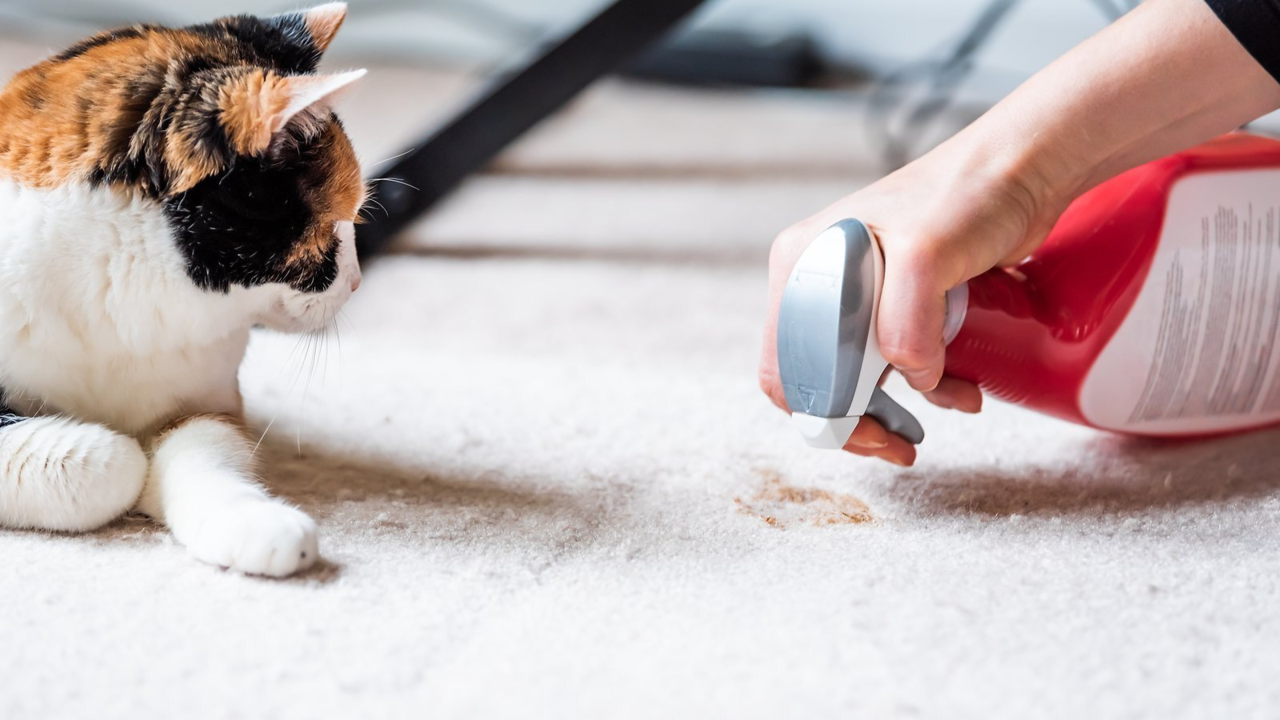
Cat urine can remain detectable after the area smells clean to us. Enzymatic cleaners are useful because they are designed to break down urine residues rather than cover them with fragrance. Test any cleaner on an inconspicuous patch first, follow the label and keep your cat away until the surface is ready for use.
The Nature's Miracle Urine Destroyer Plus for Cats targets cat urine residues, while the Trouble & Trix No More Stains + Odours Cat Spray is another option for neutralising stains and odours. If your cat is missing a low tray or kicking urine over the back, the Brooklands High Back Cat Litter Tray may help contain mess while keeping an open design.
What not to do when your cat sprays
- Do not shout, chase, spray water or rub your cat's nose near the mark. Punishment adds stress and does not explain what you want instead.
- Do not use ammonia or bleach on urine marks. Strong smells may encourage remarking or make the area unpleasant for your cat.
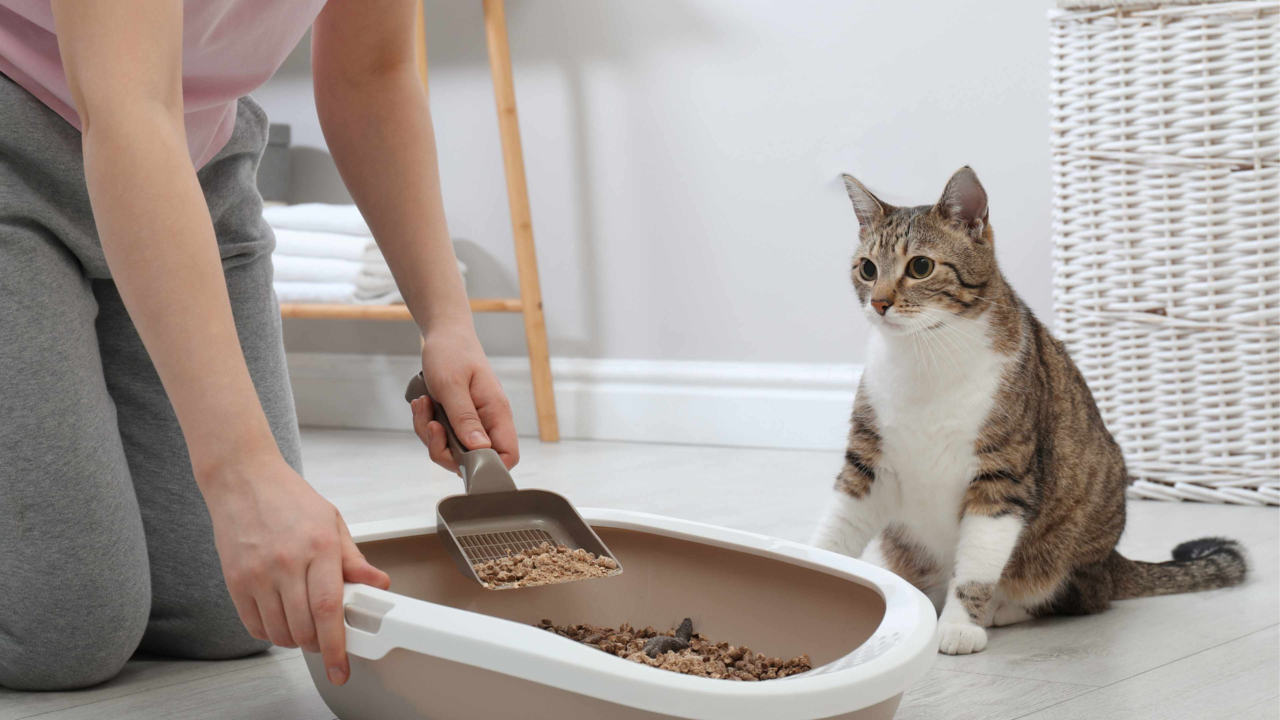
- Do not place every litter tray together. To a cat, several trays in one row can feel like one bathroom station.
- Do not force two cats to share food, water, beds or hiding places if there is tension between them.
- Do not assume a sudden change is purely behavioural. Urinary discomfort can look like a litter or marking problem.
How long does it take for cat spraying to stop?
Some cats improve within days once a clear trigger is removed and marked areas are cleaned. Long-standing habits, multi-cat conflict or outdoor-cat pressure can take several weeks of consistent management. Keep a simple diary so you can see whether the frequency, location or amount is changing.
If spraying continues despite a clean environment, enough resources and a clinic check, ask your clinic about the next step. A qualified feline behaviour professional may help identify subtle tension or environmental patterns that are easy to miss.
Cat spraying FAQs
Do female cats spray?
Yes. Spraying is more common in entire males, but female cats and desexed cats can also mark when they feel stressed, territorial or socially unsettled.
Why has my cat suddenly started spraying?
Look for a recent change such as a new pet, visitor, outdoor cat, moved furniture or altered routine. Because sudden changes can also involve discomfort, contact your clinic if the behaviour is new or paired with urinary signs.
Will desexing stop cat spraying?
Desexing often reduces hormone-driven marking, especially when done before the behaviour becomes established. It may not remove spraying caused by stress, conflict or an environmental trigger.
Why does my cat spray near windows and doors?
These are boundary points where your cat can see, hear or smell animals outside. Restricting the view, discouraging visiting cats and creating a secure resting area away from the window can help.
Can a dirty litter tray cause spraying?
A dirty, cramped or poorly placed tray is more often linked to peeing outside the tray, but litter stress can add to insecurity. Scoop daily and provide several clean, accessible options.
Does Feliway stop cat spraying?
Feline pheromone products may help reduce stress-related marking for some cats, but they work best alongside thorough cleaning, enough litter trays, separate resources and changes to the trigger.