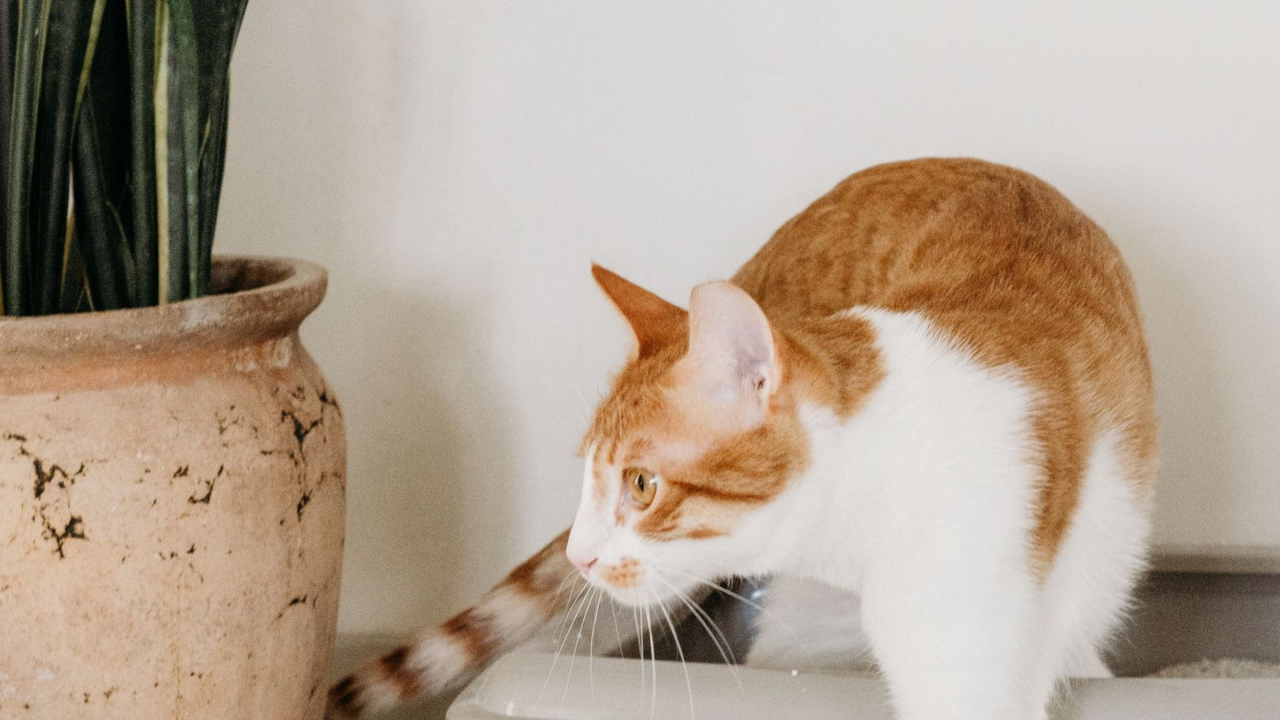
For a senior cat with arthritis, the best litter tray is the one that removes effort from every part of the toilet routine. A high step, slippery floor or cramped interior can turn a familiar task into an uncomfortable one. This practical guide focuses on selecting the tray, litter and position that make access easier.
Quick answer
Choose a stable, open tray with a low front entry, enough room for your cat to turn and a non-slip route in and out. Keep it on the same level as your cat's main living area, use familiar unscented litter, and scoop often. Sudden tray avoidance, straining, crying or very little urine needs prompt veterinary advice.
Choose a genuinely low entry
The front edge is usually the first feature to assess. Your cat should be able to step over it without lifting their legs high, stumbling or leaning heavily on the side. A tray can have taller walls at the back while still offering a shallow front entrance.
Watch your cat approach their current tray. Hesitation, a sideways climb or stepping over the rim rather than through the opening suggests the entry may be too demanding. Put the tray on a firm, level surface and avoid soft mats that shift beneath their paws.
Allow room to turn and squat
Arthritis can make twisting and repositioning uncomfortable. Choose a tray with enough usable floor space for your cat to enter, turn and adopt a natural posture without their hips touching the walls. As a starting point, look for a tray about one and a half times your cat's nose-to-tail-base length.
Measure first
Measure from the nose to the base of the tail. Use this as a guide for tray length rather than judging by outside dimensions alone.
Watch the exit
Backing out, perching on the rim or immediately leaving can indicate that the interior is too tight or the posture is uncomfortable.
Check stability
A larger tray should not slide when your cat steps in. Test it on the finished floor surface before removing the old tray.
Open trays are often easier to access and monitor. A high-sided tray may work if its front entry is low, but avoid a raised doorway or narrow covered entrance if your cat struggles with mobility.
Pick gentle, familiar litter
Older paws may be more sensitive. Paper, tofu and fine clumping litters can be options, but acceptance matters more than the label. If your cat already uses a particular litter, change gradually by mixing a small amount of the new litter into the familiar one.
Start with an unscented option and keep the depth even and shallow enough for easy stepping. Avoid sudden changes in texture, fragrance or depth. If your cat refuses the new litter, return to the familiar option and transition more slowly.
Make the route arthritis-friendly
Put the tray somewhere quiet and easy to reach, ideally on the same level as your cat's main living area. Avoid stairs, slippery flooring, narrow gaps and busy doorways. If your home has more than one level, an additional tray can reduce unnecessary trips.
Keep the routine predictable
Scoop regularly and wash the tray with a mild, unscented cleaner before it becomes heavily soiled. A consistent routine makes it easier to notice changes in frequency, posture, urine or stool.
Keep food and water away from the tray, while still avoiding a long journey between essential resources. A firm non-slip mat around the tray can improve traction and catch stray litter.
Know when the setup is not the whole story
A cat may keep using an uncomfortable tray while showing subtle changes: perching on the edge, stepping out quickly, missing the tray or choosing a nearby soft surface. Try one adjustment at a time, such as lowering the entry or moving the tray closer.
If your cat suddenly stops using the tray, strains, cries while urinating, produces very little urine, has blood in the urine, vomits or seems weak, contact your vet promptly. Do not assume a tray problem explains a sudden health change.
Frequently asked questions
What is the best tray for a senior cat with arthritis?
Usually an open, stable tray with a low entry and enough room to turn. The best dimensions depend on your cat's size and movement.
Should I use a covered litter box?
Some cats tolerate covered boxes, but a covered entrance can be higher and the interior tighter. An open tray is often easier to access and monitor.
How low should the entry be?
Choose the lowest entry your cat can step over smoothly without stumbling, dragging a paw or leaning heavily on the rim.
Is paper litter suitable?
Paper litter may feel comfortable under sensitive paws. Introduce it gradually and keep the litter your cat accepts available during the change.
Where should the tray go?
Choose a quiet, accessible spot on the same level as your cat's main living area, away from stairs and slippery routes.
When should I contact my vet?
Contact your vet promptly for sudden tray avoidance, straining, crying, very little urine, blood in the urine, vomiting or signs of pain or illness.
Support your senior cat's daily routine
Read our care guide for your senior cat, then browse cat litter trays and accessories.
Shop cat litter trays