Introducing a Puppy to Your Senior Dog Without the Rush
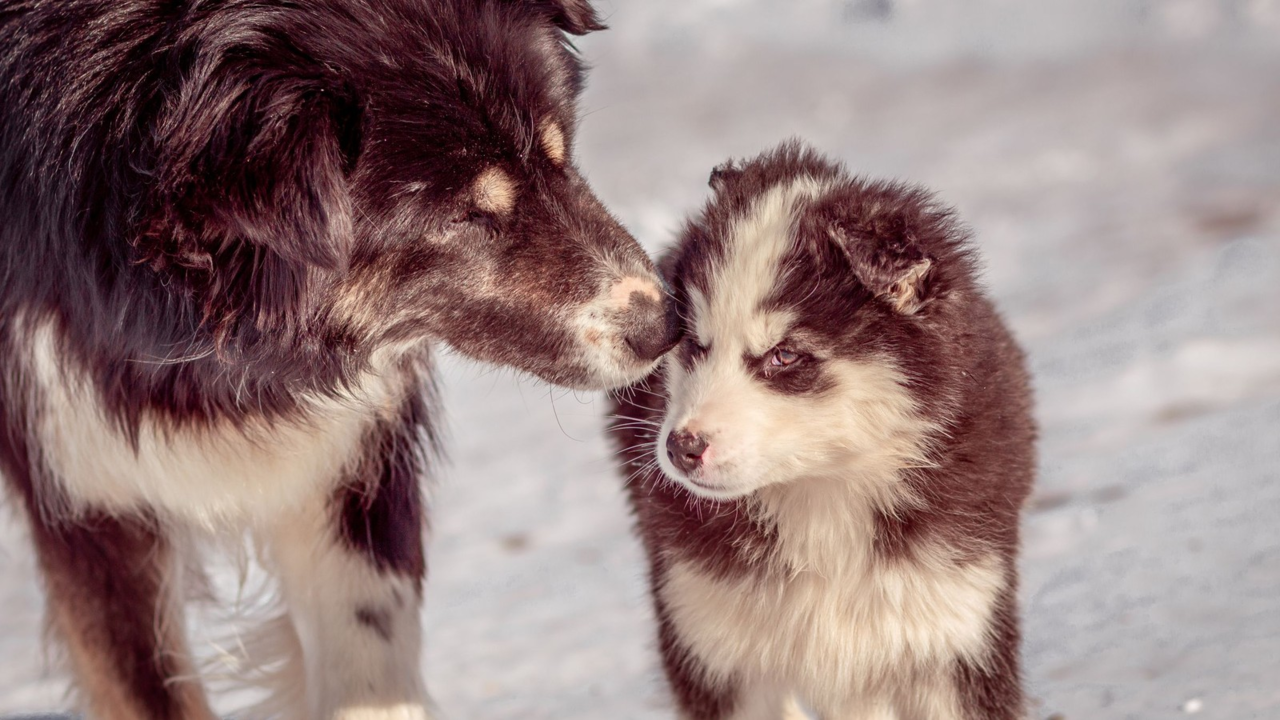
Bringing a Puppy home to a Senior dog can be rewarding, but the two dogs may need very different things from the same household. A Puppy often wants to investigate, play and repeat an interaction. A Senior dog may prefer quiet, predictable spaces and the ability to move away.
The goal is not to make them spend time together all day. It is to give your Senior dog choice, give your Puppy clear guidance and build calm, manageable interactions gradually.
Quick answer
Start with separate spaces, short supervised meetings and plenty of opportunities for the Senior dog to rest undisturbed. Interrupt Puppy pestering early, reward calm behaviour and pause interactions when either dog needs space. A Puppy may not be the right fit if your Senior dog cannot reliably get away, is repeatedly overwhelmed or is showing ongoing distress.
Why the age gap matters
Puppies learn through movement, play and exploration. They can miss subtle signals that another dog has had enough, especially when they are excited. Senior dogs may have less patience for repeated chasing, jumping or face-to-face attention, and may need longer breaks between activities.
That does not mean a Senior dog and a Puppy cannot live well together. It means the humans need to manage the environment so the older dog is not left to set every boundary alone.
Set up separate spaces before the Puppy arrives
Create at least one comfortable area where your Senior dog can rest without being followed. Make it easy to reach, keep the Puppy out when the Senior dog is taking a break and avoid placing food, beds or favourite items in a narrow passage where either dog could feel cornered.
A separate area for the Puppy is useful too. A pen or crate can support naps, meals and short periods of calm while you give the Senior dog uninterrupted time. This is not a punishment or a way to force isolation. It is a practical way to make rest predictable for both dogs.
Make choice visible
Whenever possible, let your Senior dog choose whether to approach, continue or leave. Keep pathways clear, do not hold the dogs together for a greeting and avoid calling the older dog back into an interaction they have chosen to end.
Plan the first meetings around calm
Choose a familiar, low-pressure space and keep the first meeting short. Allow the dogs to notice each other without immediately asking them to play. Keep leads loose if you are using them, give each dog room and end the interaction while both are still coping well.
At home, use gates, pens or separate rooms to prevent the Puppy from rushing straight back in. Several brief, successful interactions are more useful than one long session that leaves your Senior dog exhausted or your Puppy overexcited.
Teach the Puppy that calm behaviour works
Reward the Puppy for noticing the Senior dog and then looking away, settling on a mat, responding to their name or choosing a toy instead of jumping onto the older dog. Keep rewards quiet and timely so the Puppy does not become more excited.
When the Puppy pesters, guide them away rather than waiting for the Senior dog to escalate. Offer a nap, a chew or a short training activity in their own space. The lesson is simple: calm behaviour keeps access to the room, while pestering leads to a calm break.
Protect the Senior dog’s rest
Build protected rest into the daily routine, not only after a difficult interaction. Keep the Puppy away while the Senior dog is sleeping, eating or relaxing. Give the older dog one-to-one time without the Puppy present, even if it is just a quiet greeting or a few minutes together in another room.
Watch for changes in how your Senior dog uses the home. If they stop entering a favourite room, avoid their bed or stay close to you to avoid the Puppy, the current arrangement may be asking too much of them.
Know when to pause an interaction
Pause when your Senior dog turns away, moves behind you, leaves, becomes still or repeatedly tries to create distance. Also pause when the Puppy is unable to respond to you, keeps rushing back or becomes more frantic despite redirection.
Give both dogs space, lower the energy in the room and try again later only if they have settled. Do not punish a growl or other warning signal. Treat it as information that the interaction needs to stop and the environment needs more management.
Choose equipment that supports separation
Use equipment to create options, not to force the dogs to stay close. A correctly sized crate can give a Puppy a quiet nap space, while a play pen can help you manage movement during meals, household tasks or short training sessions. Your Senior dog should still have their own undisturbed area.
When a Puppy may not suit your Senior dog
It may be kinder to reconsider or delay the match if your Senior dog has no reliable place to withdraw, cannot rest without interruption or is repeatedly overwhelmed even with careful management. A busy household, limited space or a Puppy with very high energy can make the gap harder to support.
If interactions remain difficult, ask your veterinarian or a suitably qualified behaviour professional for individual guidance. Do not wait for the dogs to “sort it out” if either dog is repeatedly frightened, cornered or unable to disengage.
Build a repeatable plan
Keep the plan simple enough to follow every day:
- Give each dog a separate rest area and keep access to it clear.
- Supervise shared time and interrupt Puppy pestering early.
- Reward the Puppy for settling, looking away and responding to you.
- Protect meals, sleep and one-to-one time for your Senior dog.
- End interactions when either dog needs space, then try again later only if both are settled.
With steady management, the dogs do not need to have the same energy or become constant playmates. A good outcome is a home where the Puppy can learn, the Senior dog can rest and both dogs can move away from each other safely.
Frequently asked questions
How long should a Puppy and Senior dog spend together at first?
Start with short, supervised interactions and finish before either dog becomes overwhelmed. There is no single correct time. The useful measure is whether both dogs can remain settled and disengage easily.
Should I let my Senior dog correct the Puppy?
Do not rely on your Senior dog to manage every interaction. Step in early when the Puppy is pestering, give the older dog an easy way out and treat warning signals as a reason to pause.
Is a crate or play pen better for a Puppy?
They serve different purposes. A crate can support short rest periods and travel, while a play pen provides more room for calm movement. Choose the option that fits your home, your Puppy and the supervision you can provide.
How do I stop a Puppy from chasing my Senior dog?
Prevent repeated chasing with gates, a pen or a lead held by an adult, then redirect the Puppy to settling, a chew or a simple training activity. Reward the Puppy before they rush back towards the Senior dog.
What if my Senior dog keeps leaving the room?
Let them leave and check that their preferred rest area is protected. Repeatedly leaving can mean the current interaction is too much, so reduce the Puppy’s access and give the older dog more uninterrupted time.
Can the dogs share toys and beds?
Do not assume they are ready to share. Provide separate beds, food areas and high-value items, and supervise any shared resources until you understand how both dogs respond.
When should I get extra help?
Seek individual help if either dog is repeatedly frightened, cornered, unable to settle or showing escalating conflict. A veterinarian or suitably qualified behaviour professional can help you assess the situation and make a safer plan.
Make room for calm
Explore crates and pens that can help you create separate spaces for a Puppy and protect your Senior dog’s rest.
Explore dog pens and crates