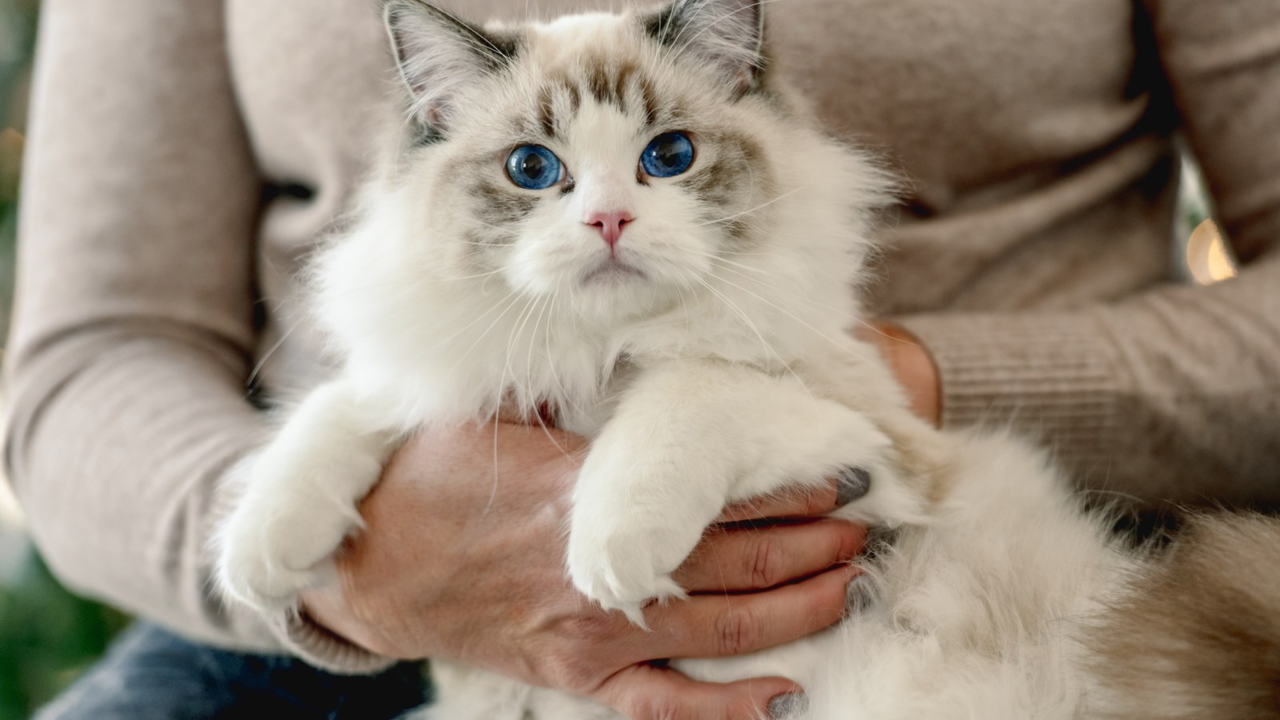
Ragdoll cats may be famous for their relaxed nature, but that does not mean they want a life without challenge. These social, people-focused cats can learn useful household manners, enjoy puzzle-based enrichment and take part in short reward-led sessions. The key is to make learning feel like a choice, not a chore.
Training a Ragdoll cat is less about obedience and more about building communication. A marker word, a small reward and a predictable routine can help your cat understand what works. That same approach can support calmer mealtimes, more suitable scratching, confident handling and even harness practice.
Quick answer
Ragdoll cats can learn simple skills through positive reinforcement. Keep sessions to one or two minutes, mark the behaviour you want with a word such as “yes” or a click, then reward it straight away. Start with easy wins like responding to their name, touching a target or using a scratcher. Mix these sessions with daily play and food puzzles so learning stays useful and fun.
What training means for a Ragdoll cat
For a cat, training is a conversation. Your Ragdoll offers a behaviour, you mark the moment and something good follows. They begin to repeat the behaviour because it has a clear, rewarding outcome.
This works best when your cat is free to step away. Ragdolls can appear very tolerant, especially when being handled, but a quiet or floppy cat is not automatically a comfortable cat. Watch their body language and pause if you see a swishing tail, flattened ears, skin twitching, a tense crouch or repeated attempts to leave.
Keep it short
One or two focused minutes is plenty. Finish while your cat is still interested rather than waiting for them to lose patience.
Reward quickly
Mark the exact behaviour, then deliver the reward within a second or two so the connection is easy to understand.
Offer a choice
Invite participation instead of positioning your cat by hand. Choice builds confidence and makes the skill more reliable.
Choose a marker and reward
A marker tells your cat, “That was it.” You can use a simple handheld clicker or a short word such as “yes”. Pick one sound and keep it consistent. To introduce it, make the sound and immediately offer a tiny reward. Repeat several times, then take a break.
Use small rewards so several repetitions do not replace a meal. A lickable treat can be portioned onto a spoon, while part of your cat’s regular food can work well before mealtime. The best reward is the one your Ragdoll is keen to earn in that moment.
Start with three simple skills
These foundation skills are practical around the home and give you a shared language for later learning. Practise in a quiet room when your Ragdoll is awake and receptive.
Respond to their name
Say your cat’s name once. The moment they turn an ear, glance at you or move towards you, mark and reward. Gradually wait for a clearer head turn before marking. Avoid repeating the name, as that can teach them the first few calls do not matter.
Touch a target
Hold one finger a few centimetres from your cat’s nose. Most cats will lean in to investigate. Mark the nose touch and reward. Once the movement is easy, shift your hand slightly to the side or one step away. A target can later guide your cat onto scales, into a carrier or away from a doorway without lifting them.
Settle on a mat
Place a small mat or folded towel nearby. Mark any interest, then reward paws on the mat and eventually a relaxed sit or lie-down. Keep the mat in the same place at first. This gives your Ragdoll a familiar station for grooming, visitors or meal preparation.
Let the cue come later
First build the behaviour, then add the word. Say the cue just before your cat is about to do the action. This is clearer than repeating a new word while they are still working out what you want.
Use enrichment to make learning feel natural
Cats are built to search, stalk, pounce and solve small problems. Ragdolls may have a calm reputation, but they still need outlets for these natural behaviours. Enrichment gives training a purpose and can help prevent boredom-led habits.
Turn part of a meal into a puzzle
Start with an easy puzzle where food is visible and simple to reach. Once your cat understands the game, make it slightly more challenging. If they walk away, reset it to an easier level. A puzzle should create curiosity, not frustration.
Use short hunting-style play
Move a wand toy like prey by travelling away from your cat, pausing and hiding behind furniture. Let them catch it regularly. Finish with a small food reward or part of a meal to complete the chase, catch and eat sequence.
Rotate rather than overload
Leaving every toy out can make the whole collection feel ordinary. Keep a few options available and rotate them every few days. A cardboard box, paper packing material without tape, a sturdy scratcher and a familiar puzzle can create a useful enrichment area without filling the room.
Teach manners without punishment
Household manners are easiest to teach when you show your cat what to do instead. Interrupting or punishing may stop a behaviour in front of you, but it does not give your Ragdoll a better option.
Redirect scratching
Place a stable scratcher close to the area your cat already chooses. Ragdolls are large cats, so the surface should be sturdy and long enough for a full-body stretch. Reward investigation and use. If the scratcher wobbles, move it against a wall or choose a more stable style.
Reward four paws on the floor
If your cat jumps onto a food-preparation surface, calmly guide them to a nearby mat, perch or stool using their target cue. Reward there. Keep tempting food packed away so the unwanted location does not pay better than the approved one.
Build a calm mealtime pause
Prepare the meal, then wait for a brief moment when your cat has four paws down or steps back. Mark and place the bowl down. At first, reward a pause of less than a second. The goal is not a long wait, just a calmer routine that becomes predictable.
Redirect play biting
Keep hands out of wrestling games and use a toy that creates distance. If teeth touch skin, become still, end the interaction briefly and offer suitable play later. Consistency helps your Ragdoll learn that toys keep the game going while hands do not.
Introduce a harness one step at a time
Some Ragdolls enjoy supervised outdoor time, but a harness is a separate skill rather than something to put on and immediately use outside. Begin indoors, where your cat feels secure.
- Place the harness nearby and reward your cat for approaching or sniffing it.
- Touch the harness lightly to their shoulder, mark and reward, then remove it.
- Fasten it for a few seconds indoors and pair it with a favourite activity.
- Gradually build comfortable wear time before attaching the lead.
- Let your cat follow a target indoors with the lead loose before considering a quiet outdoor space.
Use a properly fitted cat harness rather than attaching a lead to a collar. If your cat freezes, flattens to the floor or tries to escape the harness, return to an easier stage. Never use the lead to pull them forward.
Fix common training problems
| If your cat... | What it may mean | Try this |
|---|---|---|
| Walks away | The session is too long, the setting is distracting or the reward is not valuable enough. | Pause and try one easier repetition later, before a meal or during an alert part of the day. |
| Grabs at the reward | Excitement is too high or the food is being shown too early. | Keep rewards out of sight, mark first and deliver calmly on a spoon or flat dish. |
| Only responds when food is visible | The reward has become a lure rather than a consequence. | Keep food hidden until after the marker, then vary between food, play and attention. |
| Looks confused | The step is too large or the cue was added too soon. | Return to the last easy version and reward a smaller movement towards the goal. |
| Gets restless | They need movement or play before focused learning. | Use a short play session, allow a catch, then practise one simple skill. |
Frequently asked questions
Can you really train a Ragdoll cat?
Yes. Ragdolls can learn through the same reward-based process as other cats. Their sociable nature may make shared activities appealing, but each cat has individual preferences and motivation.
How often should I train my Ragdoll?
One or two short sessions a day is enough. You can also build learning into normal routines by rewarding a calm pause before meals, a target touch near the carrier or use of an approved scratcher.
What is the easiest skill to teach first?
A nose touch to a finger is a useful first skill because many cats offer it naturally. It can become a gentle way to guide movement without picking your cat up.
Can an adult or senior Ragdoll learn new skills?
Yes. Start with comfortable movements, non-slip surfaces and a pace that suits the individual cat. Older cats may prefer several very brief sessions to one longer activity.
Should I use treats every time?
Use frequent rewards while a skill is new. Once it is reliable, vary the reward and sometimes use play, attention or access to a favourite place. Keep occasional food rewards so the behaviour stays worthwhile.
Why is my Ragdoll not interested?
They may be tired, full, distracted or unsure. Change the timing, lower the difficulty and try a different reward. Choosing not to participate is useful information, so pause rather than pushing through.
Build your cat’s enrichment routine
Start with one easy puzzle, a stable scratcher and a reward your Ragdoll genuinely enjoys. A few minutes of thoughtful play and learning can make everyday routines more engaging.
Shop cat toys and enrichmentRelated reading

Ragdoll Cat Care Guide: Tips for Every Life Stage
Indoor Cat Enrichment: Keep Your Cat Happy and Active
The Benefits of Cat Puzzle Toys
Best Cat Enrichment Toys in NZ
Why Ragdoll Cats Go Limp
Ragdoll Cat Grooming Guide