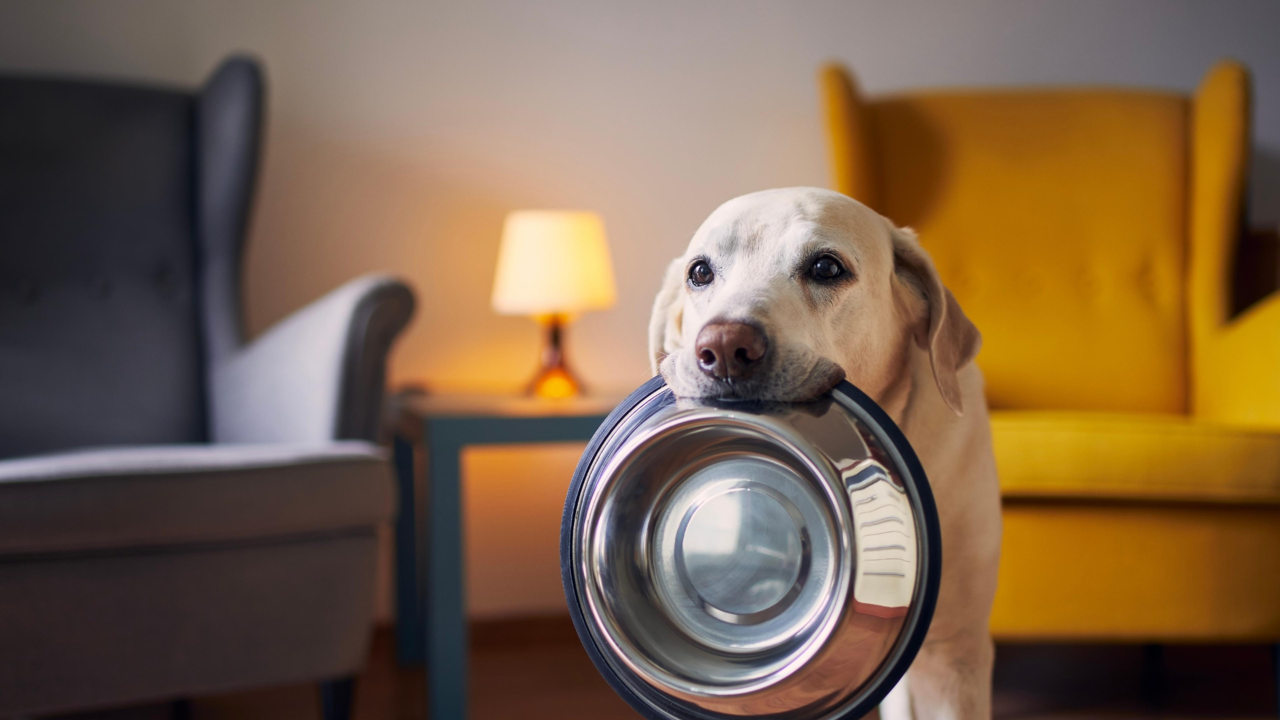
A dog that finishes dinner in seconds can turn every meal into a blur. A slow feeder adds ridges, channels or movement so your dog has to take smaller mouthfuls and work around the design. That can stretch out mealtimes, add enrichment and make gulping less easy.
The right option depends on more than bowl size. Your dog's muzzle shape, food type, enthusiasm, age and experience all matter. A pattern that suits a determined adult may frustrate a puppy, while a shallow lick mat may not slow a confident dry-food gulper for long.
Quick answer
Choose a slow feeder that is wide enough for your dog's muzzle, stable on the floor and only moderately challenging at first. Ridged bowls suit dry or mixed meals, lick mats suit spreadable foods, wobble feeders add movement and puzzle feeders offer the most mental work. Your dog should be able to reach every part without scraping their face or giving up.
Why use a slow feeder?
Slow feeders make it harder to scoop up a large mouthful at once. For dogs that gulp, this can help create a steadier pace and reduce the amount of air swallowed with a meal. It also turns part of the daily food allowance into a simple enrichment activity.
They are not only for fast eaters. A lick mat can encourage calm, repetitive licking, while a puzzle feeder asks a dog to sniff, nudge and problem-solve. That makes slow feeding useful on wet days, during quiet indoor routines or whenever you want a meal to provide more than calories.
Slower is not always harder
The aim is a calm, comfortable meal, not maximum difficulty. If your dog paws at the feeder, bites it, walks away or cannot reach the food, switch to a simpler design or use fewer obstacles.
Compare slow feeder types
No single design is right for every dog or every meal. Start by matching the feeder style to the food you use most often and the kind of challenge your dog enjoys.
| Feeder type | Works well for | Watch for |
|---|---|---|
| Ridged bowl | Dry food, mixed meals and dogs new to slow feeding. | Deep, narrow channels can be awkward for broad or short muzzles. |
| Lick mat | Wet food, soaked dry food and soft spreadable toppers. | It may be too easy for a determined dry-food gulper. |
| Wobble feeder | Dogs that enjoy movement and using paws or noses. | Use on an easy-clean floor and supervise enthusiastic play. |
| Layered puzzle | Confident problem-solvers needing more mental work. | Begin with easy access so the meal does not become frustrating. |
When a lick mat is the best fit
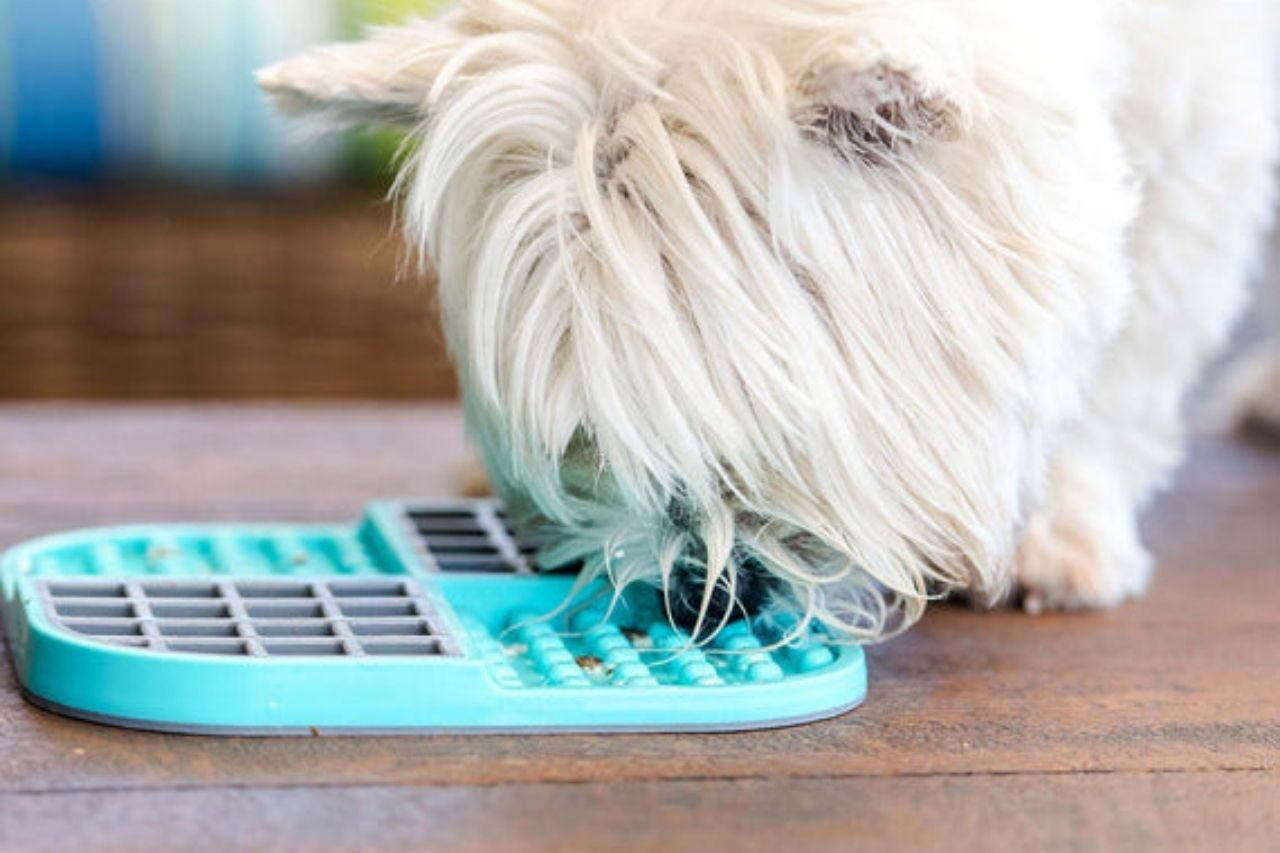
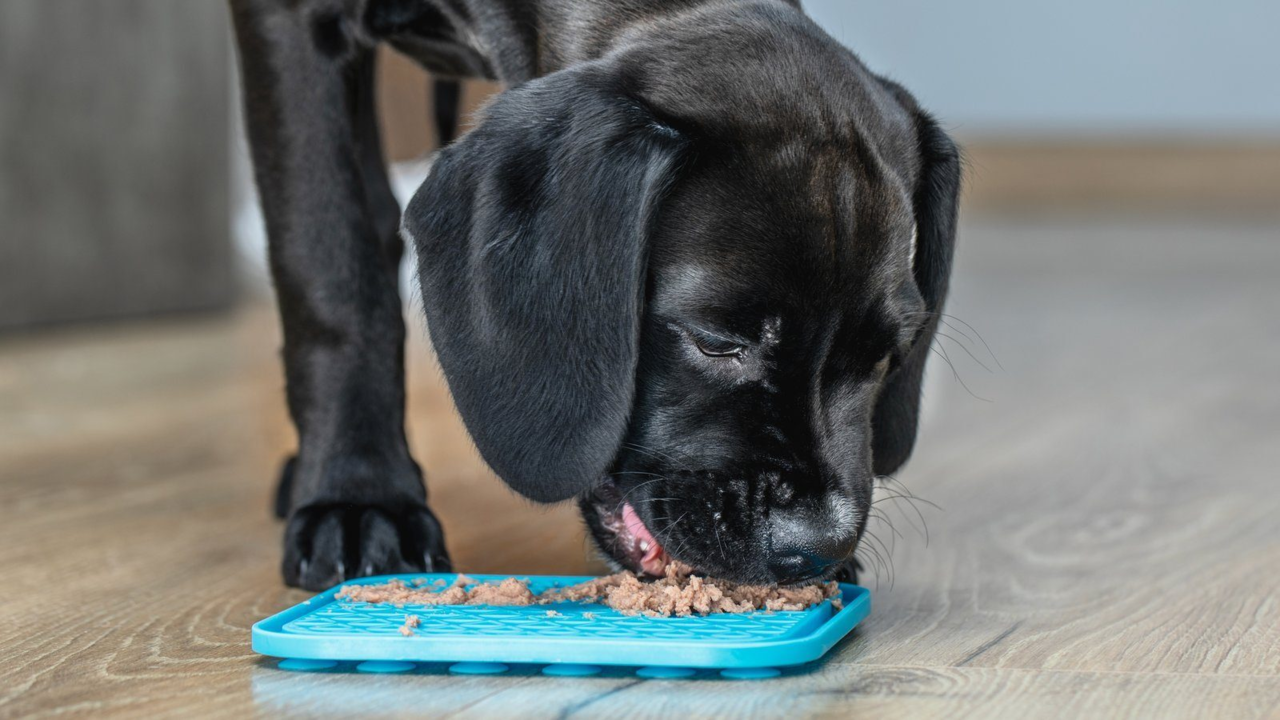
A lick mat is useful when your dog's meal can be spread into grooves. Wet food, soaked dry food or a thin layer of dog-safe soft food encourages small, repeated licks rather than quick mouthfuls. Mats are also low to the ground, which can suit dogs that prefer a shallow eating surface.
For everyday use, look for a non-slip base and enough textured area to spread the meal thinly. The M-PETS Leccamat Non-Slip Cat and Dog Slow Feed Mat works with wet or dry food and is designed to stay put. The LickiMat Tuff Buddy Slow Feeder Cat and Dog Mat offers a sturdier format, while the LickiMat Wobble Dog Slow Feeder adds movement for dogs that need more of a challenge.
Make the first mat easy
Spread food across a large area without pressing it deeply into every groove. Once your dog understands the task, use a thinner layer or fill more textured sections.
When to choose a bowl or puzzle feeder
A ridged bowl is often the simplest switch for a dog that eats dry food too quickly. It feels familiar, contains the meal and lets you control difficulty through the height and spacing of the obstacles. Wide, flowing ridges are easier; tighter channels usually take more patience.
The Outward Hound Fun Feeder Interactive Dog Bowl uses meal-lengthening ridges and has a non-slip base. If your dog quickly masters fixed ridges, the Nina Ottosson Lickin' Layers Interactive Dog Puzzle Slow Feeder adds rotating layers and many small food spaces. The PetDreamHouse SPIN Interactive Cat and Dog Feeder UFO Maze combines feeding with movement and problem-solving.
Choose the right size and obstacle depth
Your dog should be able to place their muzzle between the obstacles without rubbing their nose or whisker area. A bowl that looks large from the outside may still have narrow internal channels, so focus on usable eating space rather than the overall diameter.
Short-muzzled dogs generally need wider channels and lower ridges. Puppies, seniors and dogs new to food puzzles also benefit from an easier pattern. Long-muzzled dogs may manage deeper grooves, but that does not mean they need the hardest design available.
Small or short muzzle
Look for a shallow surface, broad pathways and low obstacles that are easy to reach around.
Longer muzzle
A deeper bowl may work, provided the channels are still wide enough for comfortable access.
Powerful eater
Prioritise a stable base, durable construction and a shape that is difficult to flip.
Match the feeder to the food
Dry food rolls easily through channels and moving parts, so it works in most ridged bowls and puzzle feeders. Wet food needs a surface that contains moisture and is easy to scrub. Mixed meals can work in either format, but very deep channels may trap soft food and make cleaning harder.
If you feed more than one texture, a washable ridged bowl is often the most flexible starting point. You can also rotate between a bowl for main meals and a mat for a smaller portion. Always count everything used on a mat or puzzle as part of the day's food allowance.
Check stability, materials and cleaning
A slow feeder only works well if it stays in place. Non-slip feet, suction cups or a broad base can reduce skidding. For dogs that like to pick up bowls, use the feeder on a non-slip mat and supervise until you know they will eat rather than chew it.
Check the care instructions before buying. Complicated grooves can hold food residue, especially after wet meals. Rinse promptly, use a small brush where needed and let the feeder dry fully. Replace it if cracks, sharp edges or chew damage appear.
How to introduce a slow feeder
Use the feeder for part of one familiar meal before making it the everyday bowl. Keep food visible and easy to reach, then let your dog explore without rushing them. If they stay relaxed and finish comfortably, increase the amount at the next meal.
For a puzzle, place food in the easiest compartments and leave moving parts partly open. For a lick mat, begin with food spread across the top of the texture. Avoid freezing the first attempt because that increases the challenge before your dog understands how the feeder works.
- Wash the new feeder and place it on a stable, easy-clean surface.
- Add a small amount of familiar food in easy-to-reach areas.
- Supervise quietly and allow your dog to work it out.
- Make the next meal easier if you see biting, frantic pawing or frustration.
- Increase difficulty only after several calm, successful meals.
Frequently asked questions
Are slow feeder bowls good for dogs?
They can be a useful way to slow gulping and add enrichment. The design should suit your dog's muzzle, food and experience so the meal stays comfortable rather than frustrating.
How difficult should a slow feeder be?
Start at an easy to moderate level. Your dog should need to work around the design but still reach the full meal without biting the feeder or giving up.
Can puppies use slow feeders?
Yes. Choose a shallow, stable design with wide channels, supervise the meal and make sure the material is suitable for enthusiastic puppy mouths.
Can wet food go in a slow feeder bowl?
Yes, if the feeder is designed for wet food and can be cleaned thoroughly. Lick mats and shallow ridged bowls are often easier than feeders with enclosed moving parts.
Is a lick mat the same as a slow feeder?
A lick mat is one type of slow feeder. It is best for spreadable food and encourages licking, while a ridged bowl is usually more practical for a full dry-food meal.
Should every meal use a slow feeder?
Not necessarily. Some dogs benefit from consistent use, while others enjoy rotating between a slow feeder, training rewards and supervised scatter feeding. Keep the total daily portion consistent.
How do I clean a slow feeder?
Follow the product instructions, rinse after use and scrub grooves or moving parts carefully. Dry it fully before the next meal and replace any feeder that becomes cracked or damaged.
Find a better pace for mealtimes
Explore slow feeder bowls, lick mats and puzzle feeders to match your dog's food, muzzle shape and preferred challenge.
Shop dog bowls and feeders