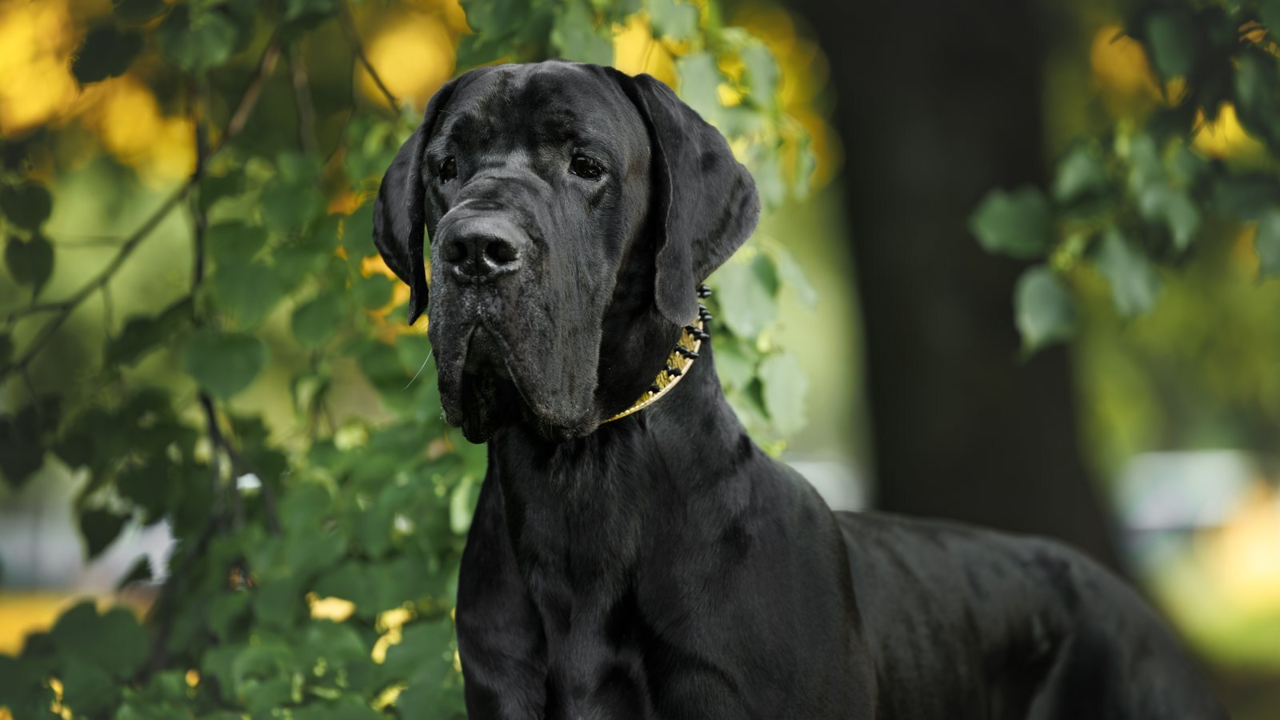
Great Danes grow quickly, eat generously and need a feeding routine that supports steady development without pushing growth too fast. The best plan is not simply a bigger portion. It combines a complete giant-breed diet, measured meals, regular body-condition checks and calm habits around food.
This Great Dane feeding guide covers puppy growth through to the senior years, including how often to feed, how to adjust portions and how to reduce common mealtime risks.
Quick answer
Feed a complete food designed for your Great Dane's current life stage and giant adult size. Great Danes are puppies until around 24 months and are considered senior from 5 years. Split the daily amount into several measured meals during growth and at least two meals in adulthood. Keep your dog lean, avoid extra calcium during puppyhood and use a slow feeder if meals disappear too quickly.
Great Dane life stages and meal frequency
Great Danes mature later than smaller dogs. Treating a tall adolescent like a fully grown adult too early can mean changing food before growth is complete. Use the table below as a practical starting point, then adapt it to the food instructions, your dog's appetite and body condition.
| Life stage | Typical age | Starting meal routine | Main nutrition focus |
|---|---|---|---|
| Puppy | Birth to under 4 months | 4 small meals each day | Complete giant-breed puppy food, controlled growth and gentle digestion |
| Growing puppy | 4 to under 24 months | 3 measured meals, moving towards 2 as maturity approaches | Steady growth, controlled calcium and a lean body condition |
| Adult | 24 months to under 5 years | 2 measured meals each day | Weight stability, muscle support and an active routine |
| Senior | 5 years and over | 2 meals, or smaller split serves if preferred | Maintaining muscle, comfortable weight and reliable appetite |
These meal counts are a routine, not an instruction to add food. Divide the recommended daily amount across the number of meals. If your Great Dane receives 600 g per day, for example, three meals means three 200 g serves rather than three full daily portions.
Choosing food for a Great Dane puppy
Choose a complete food made for large or giant-breed growth. These diets are designed to provide enough nutrition while keeping energy and minerals controlled. A Great Dane puppy should grow steadily and stay lean rather than become as large as possible as quickly as possible.
Keep calcium controlled
Complete giant-breed puppy foods already balance calcium and phosphorus for growth. Do not add calcium powder, bone meal or a general mineral supplement unless your puppy has an individual feeding plan that specifically calls for it.
Watch growth, not just appetite
A hungry puppy is not always an underfed puppy. Use the packet guide as a starting point, weigh meals and check body condition regularly. Rapid weight gain can place unnecessary pressure on a growing frame.
Many giant-breed ranges use one recipe for early puppyhood and another for the later growth phase. Make each change gradually and follow the age guidance on the specific product.
Choosing food for an adult Great Dane
At around 24 months, a Great Dane can move to an adult large or giant-breed food. Look for a complete recipe that suits their activity level and helps maintain a lean shape. A very active adult may need more energy than a quiet household dog, even when both weigh the same.
Measure the food rather than free-pouring it. Large bags and large bowls can make gradual portion creep hard to notice. A kitchen scale gives a more consistent serve than a scoop, especially when different foods have different kibble density.
How much should a Great Dane eat?
There is no single cup amount that suits every Great Dane. The right daily amount depends on age, current weight, expected adult size, activity, body condition, whether the dog has been desexed and the energy density of the food.
1. Start with the feeding guide
Use the guide on the exact food. For a puppy, use the expected adult weight band where the label asks for it. For an adult, start with current weight and activity.
2. Weigh the daily amount
Measure the full day in grams, then divide it into meals. Count training rewards, toppers and chews as part of the day's intake.
3. Check body condition
You should be able to feel the ribs under a light covering, see a waist from above and notice an abdominal tuck from the side.
4. Adjust gradually
If weight or body condition is moving away from ideal, make a small change and reassess. Sudden large cuts or increases make it harder to identify what works.
Keep the measuring method consistent
Recheck the label whenever you change flavour, range or bag size. Two kibbles can look similar but provide different energy per gram, so the same scoop may not be the same meal.
Great Dane bloat safety at mealtimes
Great Danes are deep-chested dogs and can be at risk of gastric dilatation-volvulus, often called GDV or bloat. No feeding routine can remove the risk completely, but calm, measured mealtimes can reduce avoidable triggers.
- Split the daily food across at least two meals rather than feeding one large meal.
- Use a slow feeder when your dog gulps food.
- Feed dogs separately if competition makes them rush.
- Keep the one to two hours around meals calm and avoid vigorous exercise.
- Provide normal access to fresh water rather than encouraging a very large drink all at once.
- Use a stable floor-level bowl by default. Do not rely on an elevated bowl as a bloat-prevention tool.
Know the urgent warning signs
A swollen or tight abdomen, repeated unproductive retching, heavy drooling, sudden restlessness, weakness or collapse can signal an emergency. Seek urgent emergency care immediately. Do not wait to see whether the signs settle.
Using a slow feeder with a Great Dane
A slow feeder should make eating calmer without making the meal frustrating. Choose a stable design with smooth channels and enough capacity for the portion. Many puzzle feeders are better for part of a Great Dane's meal, so use more than one surface or split the serve if needed.
Supervise the first few uses. Remove the feeder if your dog chews it, flips it forcefully or becomes distressed. Wash it after wet food and check grooves for trapped food.
Feeding a senior Great Dane
Great Danes enter the senior life stage from 5 years. That does not mean every dog must change food on their fifth birthday. Start by reviewing weight, muscle condition, appetite, activity and how comfortably they eat their current meals.
Senior Great Danes often benefit from keeping meals predictable and maintaining good protein intake while energy is adjusted to their activity. If a large meal is less appealing, the same daily amount can be divided into smaller serves. Warm water can soften kibble and increase aroma without adding a rich topper.
Treats, toppers and food changes
Keep treats and extras modest, generally around 10% or less of daily energy. For training, use small pieces rather than large biscuits for every repetition. Rich chews, table scraps and generous toppers can unbalance the day's intake or make it harder to see whether the main food amount is right.
When changing food, transition gradually over about 7 to 10 days by increasing the new food while decreasing the old food. Slow the change if stools soften. A sudden loss of appetite, repeated vomiting, persistent diarrhoea or unexplained weight loss needs prompt professional assessment.
Great Dane feeding FAQs
How much food should I give my Great Dane each day?
Start with the guide on the exact food, using expected adult weight for puppies when requested. Weigh the daily amount, divide it into meals and adjust according to body condition. Cup amounts cannot be transferred reliably between different foods.
How long should a Great Dane stay on puppy food?
Great Danes continue growing until around 24 months. Use a complete giant-breed growth food through this period, moving between early and later growth recipes according to the product guidance.
When is a Great Dane considered an adult?
Great Danes are considered adult at around 24 months. Their height may look impressive earlier, but their frame and muscle are still developing.
When is a Great Dane considered senior?
As a giant breed, a Great Dane is considered senior from 5 years. Review portions and body condition regularly, but change food according to individual needs rather than age alone.
Should I give my Great Dane puppy calcium supplements?
Not alongside a complete giant-breed puppy food unless the puppy has a specific feeding plan. Extra calcium can upset the mineral balance that the growth diet is designed to provide.
Are raised bowls better for Great Danes?
A raised bowl should not be used as a general bloat-prevention method. A stable bowl at floor level is the sensible default unless your dog has an individual mobility or feeding need and you have been advised otherwise.
Can a Great Dane use a slow feeder?
Yes, especially if they gulp meals. Choose a large, stable design and confirm it can hold the intended portion. A smaller puzzle feeder can still be used for part of a meal.
What are the emergency signs of bloat?
A tight or enlarged abdomen, repeated retching without bringing anything up, heavy drooling, pacing, weakness or collapse require urgent emergency care.
Build a steady feeding routine
Match food to your Great Dane's life stage, measure each day and keep mealtimes calm. Explore giant-breed options or visit the Great Dane breed page for more practical care guidance.
SHOP GIANT-BREED FOODRelated reading
Complete Nutrition Guide for Giant Breed Puppies
Feeding Large Breed Puppies
Large Breed Dog Nutrition Guide
Training Large Breed Dogs
Choosing a Bowl for a Large Breed Dog
Best Treats for Slow Feeders