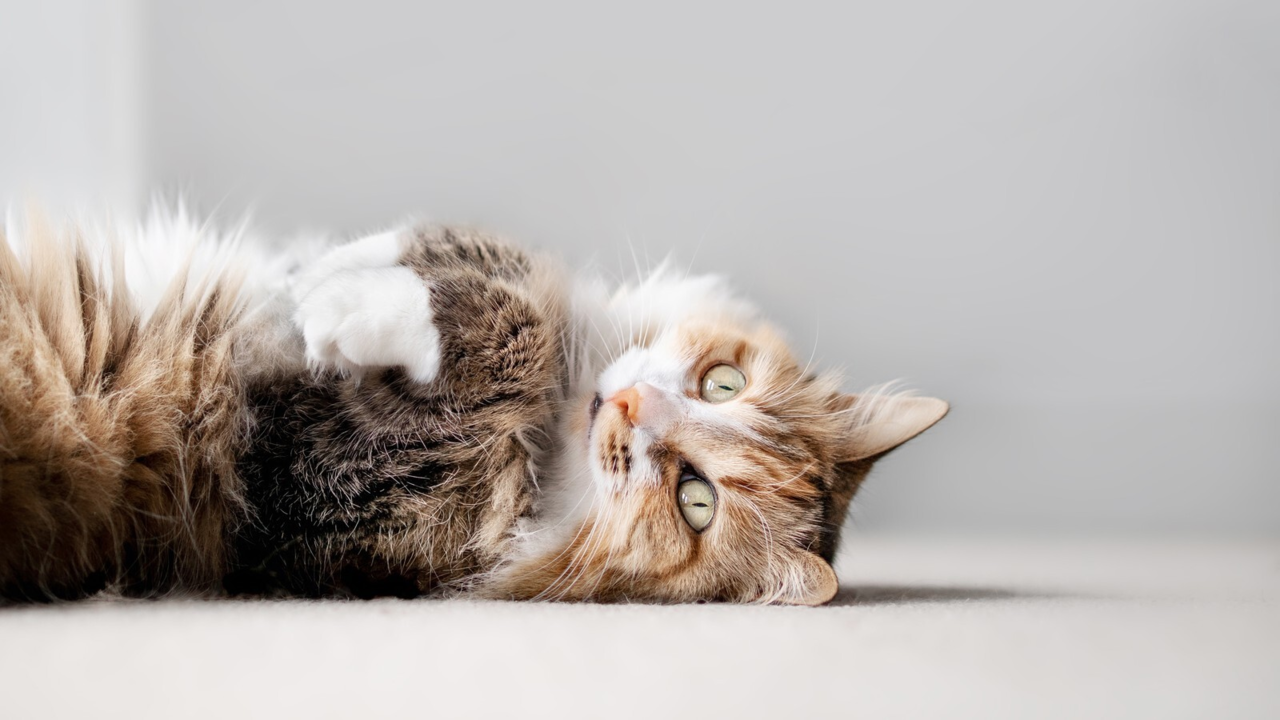
Cat fur can look sleek, fluffy, curly or almost absent, but coat length is only part of the story. The layers beneath the surface influence how a coat feels, how much loose hair it holds and which grooming tools will be comfortable to use.
Learning your cat's coat type makes everyday care easier. It helps you notice normal seasonal changes, choose a sensible brushing rhythm and spot when the texture is no longer typical for your cat.
Quick answer
Most cat coats combine three hair layers: protective guard hairs, insulating awn hairs and soft down hairs. The balance of those layers creates short, long, plush, curly or sparse coat types. Short coats often need weekly brushing, while long, dense or curly coats usually need more frequent attention.
What is a cat's coat made of?
A cat's coat is not one uniform layer. Each hair grows from a follicle, but the hairs can have different lengths, thicknesses and jobs. Breed, genetics, age, season and indoor temperature all influence the finished coat.
Guard hairs
These are the longest and firmest outer hairs. They help protect the skin from moisture and minor scrapes, and they carry much of the visible colour and pattern.
Awn hairs
This middle layer sits between the guard coat and soft undercoat. Awn hairs add body, support insulation and help blend the outer and inner layers.
Down hairs
These fine, soft and often wavy hairs sit closest to the skin. They trap warm air and can be especially dense in plush or double-coated cats.
Some nearly hairless cats also have a very fine covering often described as vellus hair or peach fuzz. Not every cat has the same amount of each layer, which is why two short-haired cats can feel completely different.
Individual hairs move through a cycle of growth, transition, rest and release. This is why shedding is continuous at a low level for many cats, then becomes more noticeable as daylight, temperature or coat condition changes.
Cat fur types and how to care for them
These coat groups are useful guides rather than strict boxes. A cat may have a long double coat, a short plush coat or a curly coat with sparse guard hairs. Start with what you can see and feel, then adjust care to suit the individual cat.
| Coat type | How it feels | Typical care |
|---|---|---|
| Short and sleek | Close to the body with little fluff and a smooth surface. | Brush once or twice a week to collect loose hair and check the skin. |
| Plush or double | Dense, springy and soft beneath the outer hairs, even when the coat is short. | Brush two to four times a week and increase attention during heavier shedding. |
| Long or semi-long | Silky, flowing or fluffy, with longer furnishings around the neck, belly and tail. | Comb daily or close to daily, especially behind the ears, under the legs and around the back end. |
| Curly or wavy | Soft waves, loose curls or a textured coat that may have fewer straight guard hairs. | Use light, regular grooming so curls are not flattened or pulled. Follow the needs of the individual coat. |
| Hairless or sparse | Bare-looking skin or a fine suede-like layer of hair. | Skip brushing and focus on gentle skin care, warmth and cat-suitable cleaning when needed. |
What different cat coat textures can tell you
Texture describes how the coat feels rather than how long it is. A healthy sleek coat may lie flat and feel smooth, while a healthy plush coat may feel dense and spring back when stroked. Long coats can be silky and flowing or thick and woolly underneath.
The useful comparison is not your cat against another cat. It is your cat's coat today compared with what is normal for them.
- A coat that suddenly feels greasy, clumped or sticky may mean your cat is not grooming an area as usual.
- Dry flakes, thinning patches, redness or broken hairs are changes that need attention.
- Small knots around the armpits, collar area or back legs can quickly tighten if they are ignored.
- A rougher coat can also appear when loose undercoat is trapped beneath the guard hairs.
Check difficult-to-reach areas such as between the shoulder blades and across the lower back. Changes there can be easy to miss because the surface may still look tidy from a distance.
Grooming tools that suit different coats
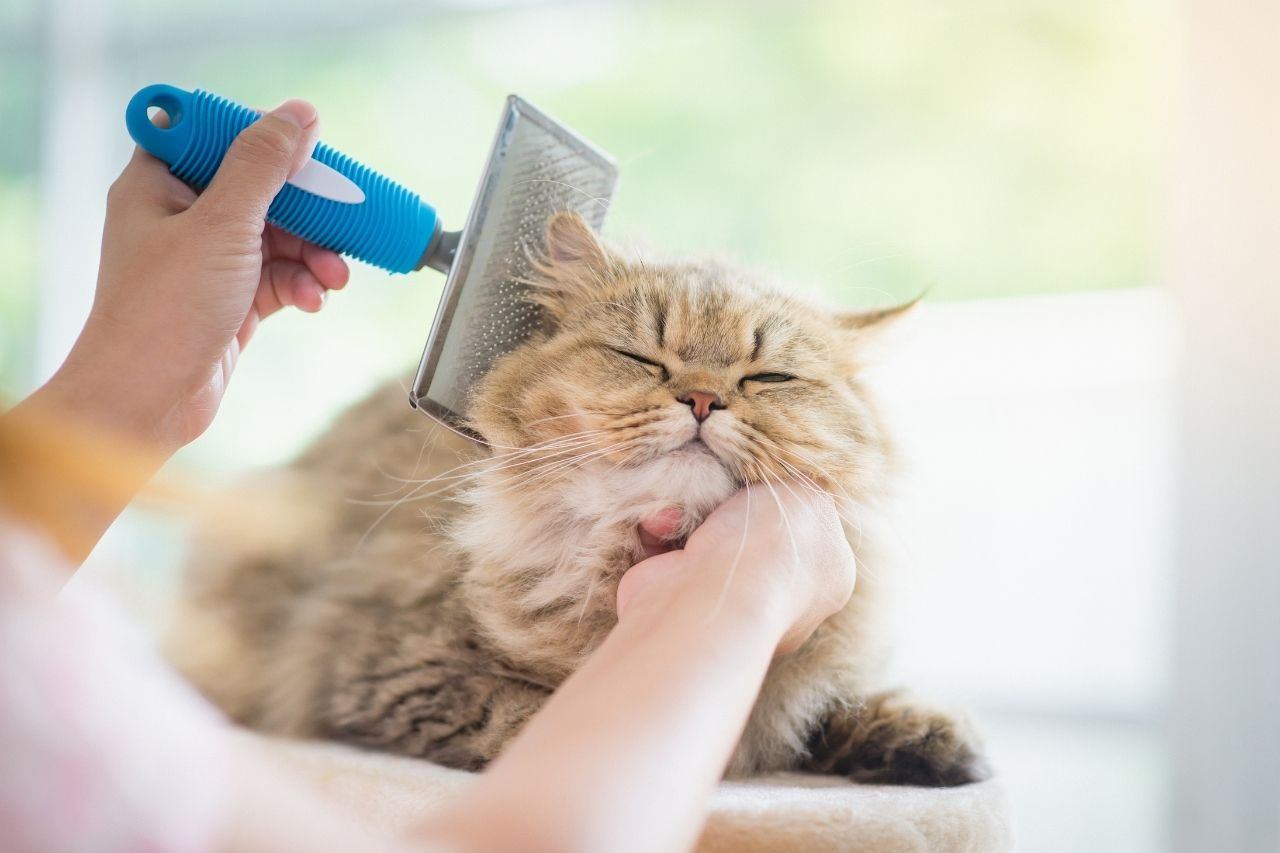
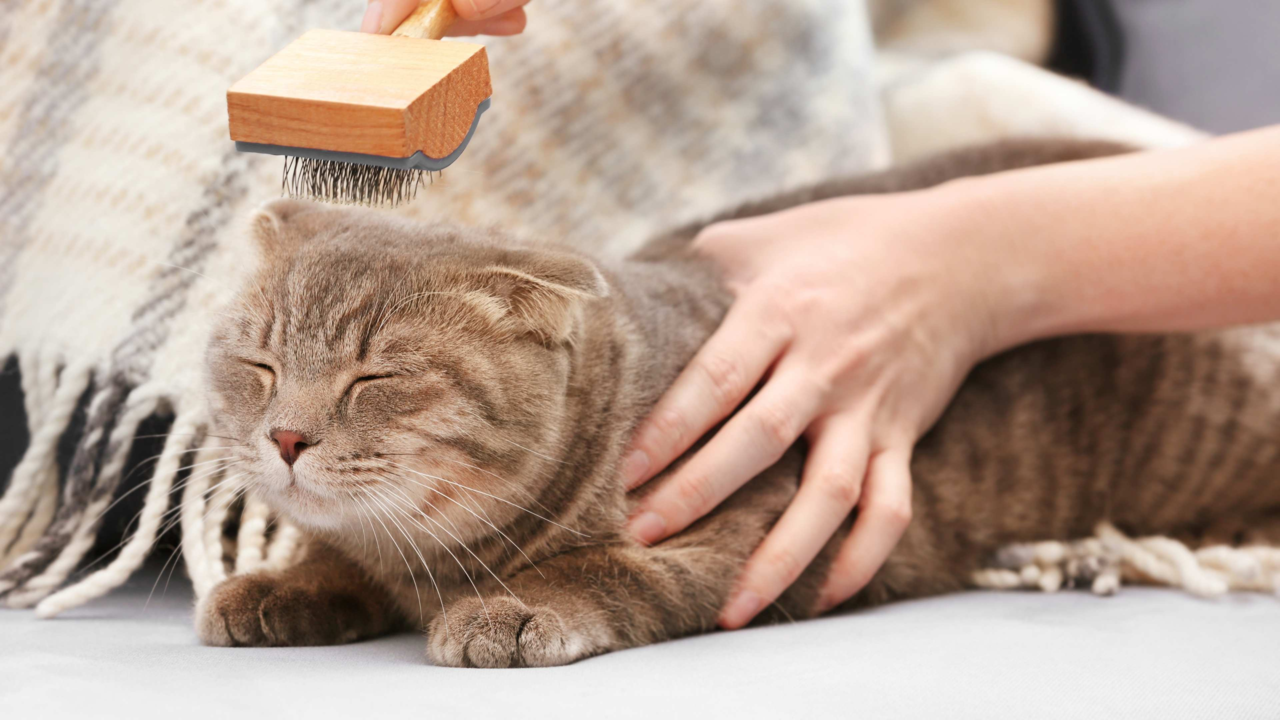
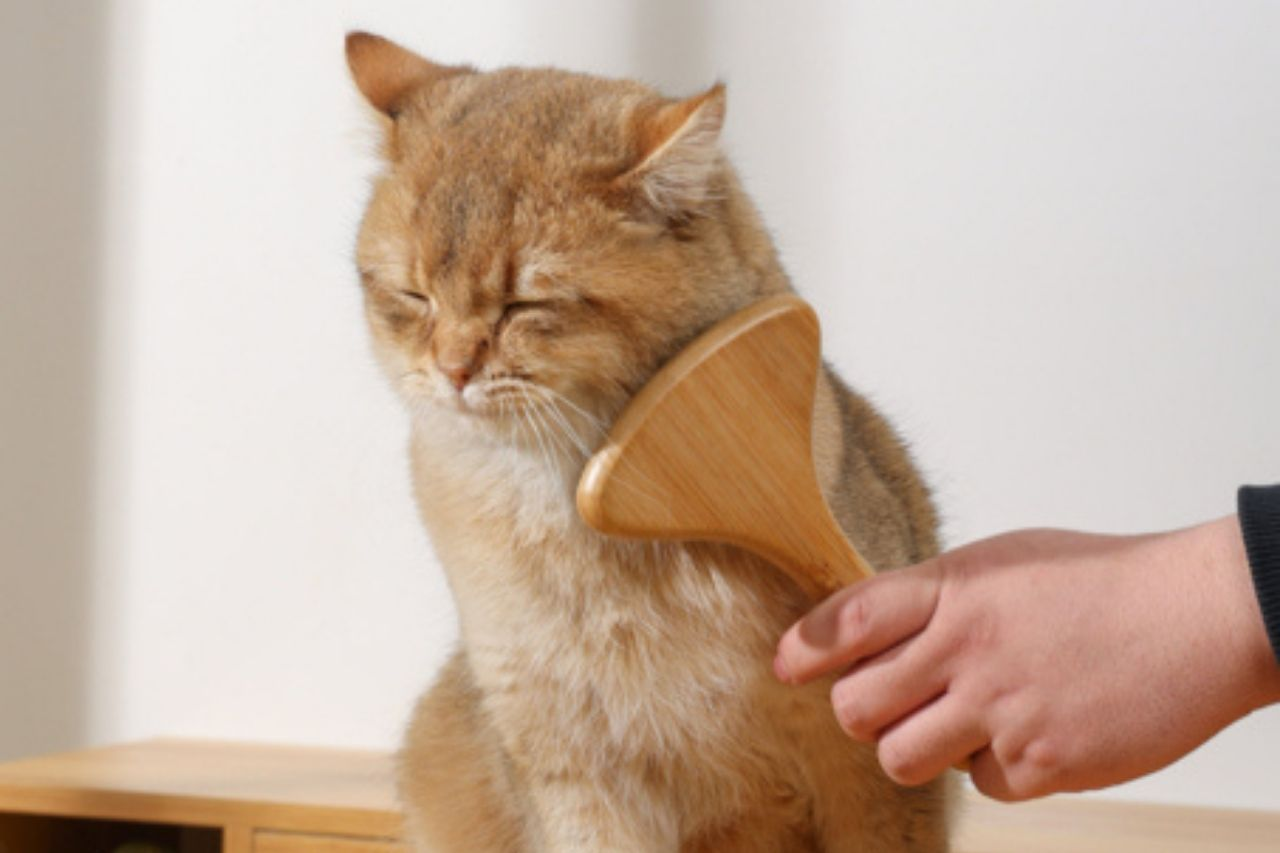
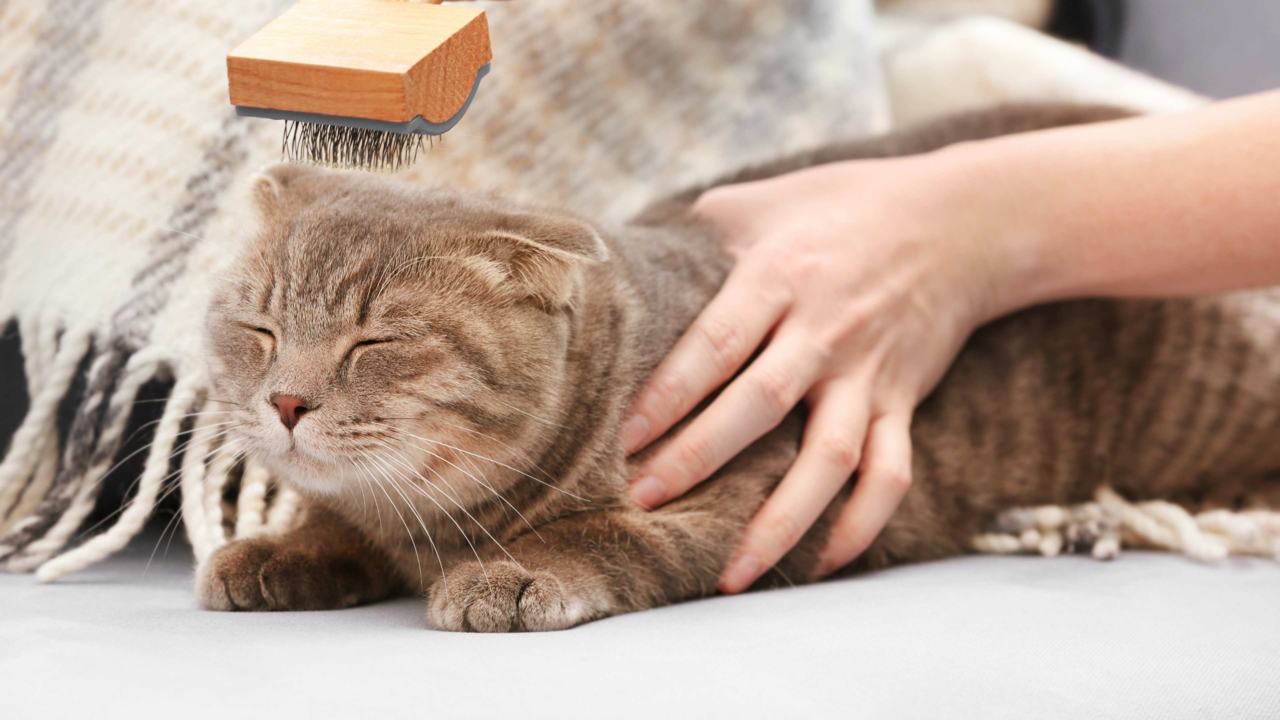
The right tool should move through the coat without scraping the skin or dragging at knots. Begin with gentle pressure and let your cat investigate the tool before you start.
- A pin brush can smooth long or silky coats and lift loose surface hair.
- A slicker brush can help with dense coats when used lightly in short strokes.
- A metal comb is useful for checking whether long hair is tangle-free from near the skin to the tip.
- A rotating-tooth rake can reach loose undercoat in suitable plush or double coats.
- A deshedding tool can collect loose hair during seasonal shedding, but repeated pressure in one spot can irritate the skin.
- A cat-suitable detangling spray may add slip to a small knot, but it should never be used to force a tool through a tight mat.
A simple coat care routine for any cat fur type
Regular short sessions are usually easier than waiting for loose hair and knots to build up. Keep the routine predictable and finish while your cat is still comfortable.
Start with your hands
Stroke the coat in its natural direction. Feel for bumps, tangles, damp patches or areas where the texture has changed.
Choose the easiest area
Begin along the shoulders or back if your cat enjoys being touched there. Use only a few gentle strokes at first.
Work in small sections
For thick or long coats, part the hair so you can check the layer close to the skin. Support the coat with one hand to reduce pulling.
Check the friction points
Look behind the ears, under the front legs, around the chest, across the belly and near the back legs. These areas can knot before the main body coat does.
Finish calmly
Stop before your cat becomes frustrated. Calm praise, play or a small reward can help build a positive routine for the next session.
How to handle knots and mats safely
A loose knot may come apart with your fingers or the wider end of a comb. Hold the hair close to the skin so your hand absorbs the tension, then tease a few hairs free from the outer edge. Do not pull from the root or repeatedly drag a brush through the knot.
Never cut a mat with scissors
Cat skin is thin and can be pulled up inside a mat where it is difficult to see. Scissors can cut skin even when the blades look safely above the body. Tight, large or skin-level mats should be removed by an experienced professional groomer with suitable clippers.
Bathing does not loosen a matted coat. Water can make tangles tighten as they dry, so check and gently detangle the coat before any full wash. Use only products labelled as suitable for cats.
How seasons and age can change cat fur
Many cats release more hair as daylight and temperature shift. Indoor cats may shed more steadily through the year because artificial light and heating soften the seasonal pattern. A double-coated cat can look much fuller before a heavier shed, while a sleek cat may simply leave more fine hairs on bedding.
Kittens also replace their softer baby coat as they mature, usually becoming more adult in texture during the first year. Later in life, a cat may spend less time grooming hard-to-reach areas, so gentle help with loose hair can become more important.
Increase brushing gradually when shedding rises. More pressure is not better. A comfortable tool, short sessions and regular checks protect both the coat and the cat's trust.
Cat fur types: frequently asked questions
Is cat fur different from cat hair?
Both terms describe the same keratin fibres. People often use fur for a dense body coat and hair for longer individual strands, but there is no separate biological material.
How many types of cat fur are there?
There is no single count because length, density, curl and hair layers overlap. Short, long, curly and hairless are common broad groups, while sleek, plush, silky and woolly describe texture.
How can I tell if my cat has a double coat?
Part the outer hairs and look for a softer, denser layer close to the skin. A double coat often feels springy or plush and may release fluffy tufts during heavier shedding.
How often should I brush a short-haired cat?
Once or twice a week suits many short coats. A plush double coat may need more frequent brushing, while a very sleek coat may need less if it stays tidy and comfortable.
Do long-haired cats need brushing every day?
Daily or near-daily combing helps prevent small tangles from becoming mats. Focus on friction areas such as behind the ears, under the legs and around the back end.
Why has my cat's coat become greasy or clumped?
Your cat may be grooming that area less than usual, or loose hair and skin oils may be building up. Sudden texture changes, flakes, bald areas or sore-looking skin need attention.
Do hairless cats need grooming?
Yes, but the focus is skin rather than brushing. Use gentle cat-suitable care, keep skin folds clean and dry, and follow a routine that suits your cat rather than over-washing.
Does coat length affect cat allergies?
Coat length alone does not decide whether a cat will trigger allergies. The proteins involved are carried in saliva and skin flakes, so a short or sparse coat is not automatically allergy-free.
Build a grooming kit for your cat's coat
Choose one comfortable everyday brush, add a comb if your cat has a long or dense coat, and keep sessions short enough to stay positive. The right routine is the one that suits your cat's texture and tolerance.
SHOP CAT GROOMING