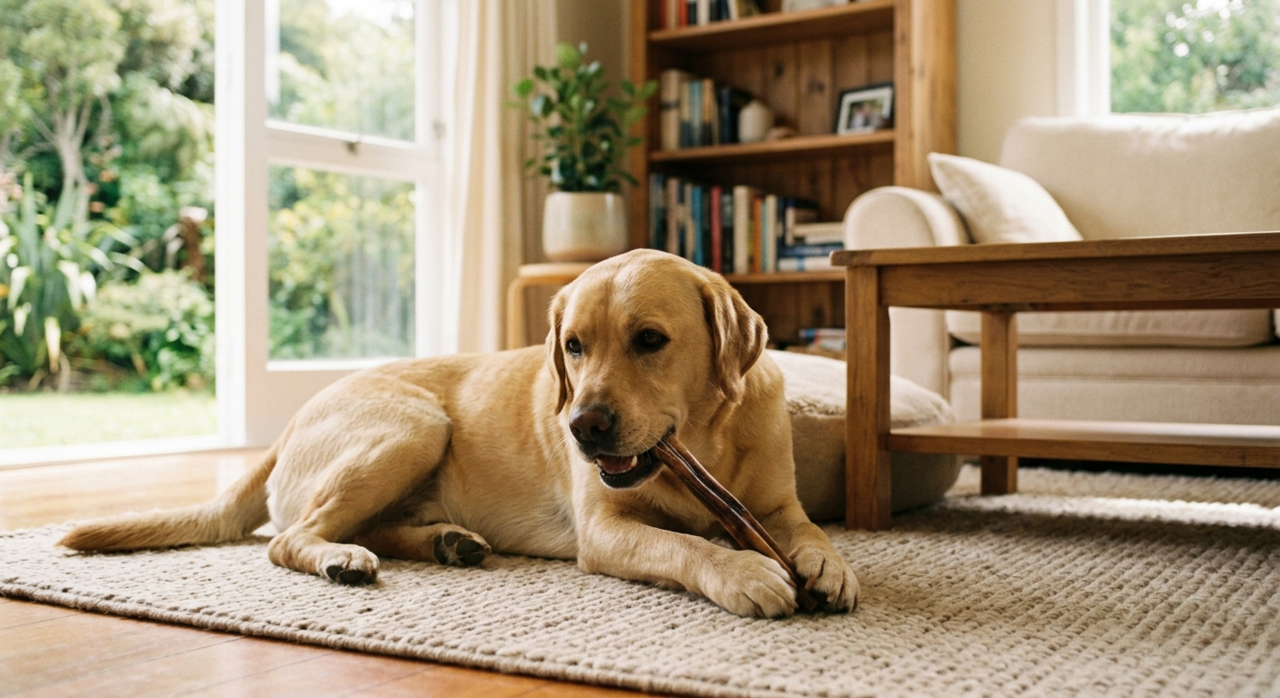
Bully sticks are one of the most popular natural chews for dogs, and for good reason. They're long-lasting, single-ingredient, and most dogs love them. They're also one of those things owners tend to have lots of questions about. Here's a friendly guide to the most-asked bully stick questions, all in one place.
Quick answer
Bully sticks are a natural single-ingredient dog chew made from dried beef pizzle. They're high in protein, generally well tolerated, and most dogs love them. Pick a size that suits your dog (longer and thicker for bigger or stronger chewers), supervise while they chew, and offer them as an occasional treat (not daily) to keep calorie intake in check. They can be a great alternative to processed chews and a brilliant boredom-buster.
What Are Bully Sticks Made Of?
Bully sticks are a natural, single-ingredient dog chew made from dried beef pizzle (the muscle from a bull). The pizzle is cleaned, slow-dried or baked, and shaped into long chewable sticks. There are no added fillers, no rawhide, no preservatives needed. Just one ingredient, naturally high in protein.
Petdirect's own bully sticks are 100% natural beef pizzle, with nothing else added.
Are Bully Sticks Safe for Dogs?
Yes, bully sticks are generally considered safe when used correctly. Compared to rawhide, they're easier to digest and break down naturally as your dog chews. A few simple guidelines to keep them safe:
- Always supervise your dog while they're chewing
- Take the stick away once it gets small enough to be a choking risk
- Pick a size that matches your dog (more on that below)
- Always have fresh water available while they chew
- Introduce them gradually if your dog has never had one before
The biggest safety risk with any long-lasting chew is the same: a small piece being swallowed whole. Supervised chewing solves most of that.
How Long Do Bully Sticks Last?
Chew time depends on three things: your dog's size, how aggressive a chewer they are, and the size of the stick. Some rough averages:
- Small breed gentle chewer: 30 minutes to 1 hour from a single standard stick
- Medium breed average chewer: 15 to 45 minutes
- Large breed strong chewer: 10 to 20 minutes for a standard stick, longer for a thick or jumbo
- Very strong chewers: even a thick stick can disappear in 5 to 10 minutes, in which case a jumbo or braided stick is a better fit
If your dog finishes a stick in under 10 minutes, size up. If they leave half of it for later, that's fine. Just store the leftover safely (more on storage below).
What Size Bully Stick Should I Get for My Dog?
The right size keeps your dog occupied, makes the stick safer, and gives you better value. As a rough guide:
Small dogs (under 10 kg)
Standard 10cm-15cm sticks are usually plenty. Consider thinner sticks for small breeds with delicate jaws. Tendons can also be a softer alternative for small dogs.
Medium dogs (10 to 25 kg)
Standard 15cm or 30cm sticks work well. A standard thickness gives a good chew time without the stick being demolished too quickly.
Large dogs (25 to 40 kg)
30cm sticks or thicker varieties. Heavier dogs need a stick they can't crunch through in a few minutes.
Extra-large or strong chewers (40 kg+)
Jumbo, thick or braided sticks. The chunkier shape stands up to heavy chewing and gives a more satisfying chew session.
Can Bully Sticks Cause Digestive Issues in Dogs?
For most dogs, bully sticks are easy to digest because they're a single natural ingredient. They can occasionally cause:
- Loose stools, especially if your dog isn't used to them or eats too much too fast
- Mild stomach upset if they swallow a large piece
- An issue if your dog has a known beef allergy or sensitivity
The best way to introduce a bully stick is gradually. Let your dog have a short session at first (10 to 15 minutes), see how they go, and build up from there. If your dog has a sensitive stomach, has had pancreatitis, or is on a low-fat diet, it's worth a chat with your clinic before adding bully sticks to their routine.
How Often Can I Give My Dog a Bully Stick?
Bully sticks are a treat, not a daily food. They're high in protein and contribute calories, so most dogs do well with one a few times a week rather than daily.
A reasonable rule of thumb:
- Small dogs: a small stick 1 to 2 times a week
- Medium and large dogs: a stick 2 to 3 times a week
- Adjust down if your dog is on a weight management plan or eating other high-calorie treats
Treats and chews together should make up no more than around 10% of your dog's daily calorie intake. The rest should come from a balanced everyday diet.
Are There Any Alternatives to Bully Sticks?
Plenty. If your dog can't have beef, you want to switch things up, or you're after something a bit different, there are loads of natural chews that work in a similar way.
Beef-based alternatives
Pork-based natural chews
Venison-based chews (lower fat)
Long-lasting natural chews
Plant-based alternative
Do Bully Sticks Have Any Nutritional Value?
Yes, bully sticks are surprisingly nutrient-rich for what looks like a simple chew. Because they're 100% beef pizzle, they offer:
- High-quality animal protein
- Naturally occurring amino acids
- No added fillers, grains or preservatives
- No artificial flavours or colours
That said, they're still a treat first and a nutritional supplement second. They're a great way to deliver some quality protein in chew form, but your dog's main nutrition should come from their everyday food. If you'd like a bully stick to do more nutritionally, look at it as a healthier alternative to processed treats rather than a replacement for proper meals.
How Should I Store Bully Sticks?
Bully sticks are dried and shelf-stable, so they're easy to store. A few tips:
- Keep them in a cool, dry place in their original packaging or a sealed container
- Avoid storing them somewhere humid (like next to the kettle) since moisture can affect them
- Once opened, they're best used within a few months for peak freshness, though they'll last longer when stored well
- Half-finished sticks can be wiped down, popped in a sealed bag and stored in the fridge for a day or two if your dog hasn't quite finished theirs
- Always discard any stick that smells off, looks mouldy or has been chewed down to a small stub
Can Puppies Have Bully Sticks?
Yes, with a few extra considerations. Bully sticks can be great for puppies because they:
- Provide a safe outlet for teething urges
- Help work out energy mentally rather than physically
- Are easier to digest than rawhide
For puppies, choose a thinner or softer stick that matches their jaw size, and always supervise. Puppies tend to chew enthusiastically and can swallow bigger pieces than they should.
A few puppy-specific tips:
- Wait until your puppy is past the very young teething stage (usually 12 weeks+) before introducing harder chews
- Start with very short sessions (5 to 10 minutes) and build up
- Take the stick away once it's small enough to swallow whole
- Keep an eye on stool consistency for the first few sessions
- If you're unsure about whether a particular chew suits your puppy, your clinic is a great place to ask
Tendons (such as venison or beef) are often a great softer starting point for puppies before moving up to a full bully stick.
Shop Natural Dog Chews
Explore Petdirect's range of natural single-ingredient dog chews including bully sticks, tendons, antlers and pork chews. Save with Autodeliver and enjoy everyday member pricing with Pet Perks.
SHOP DOG TREATS