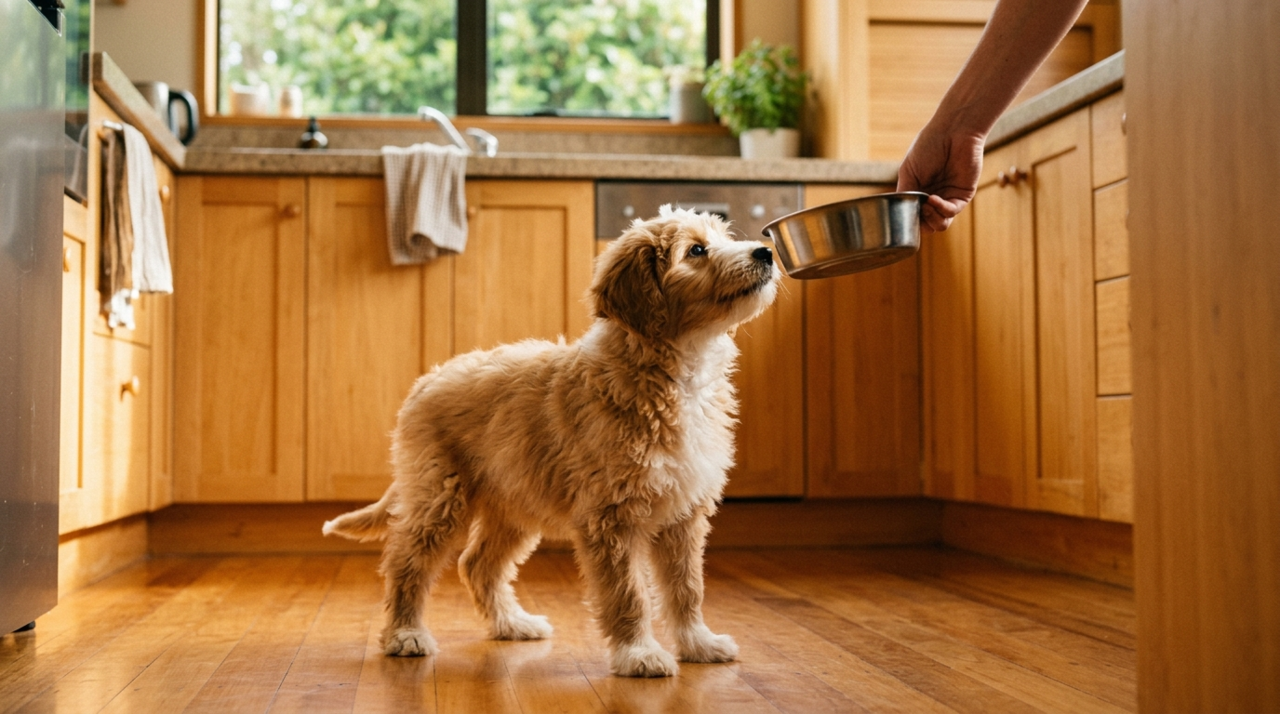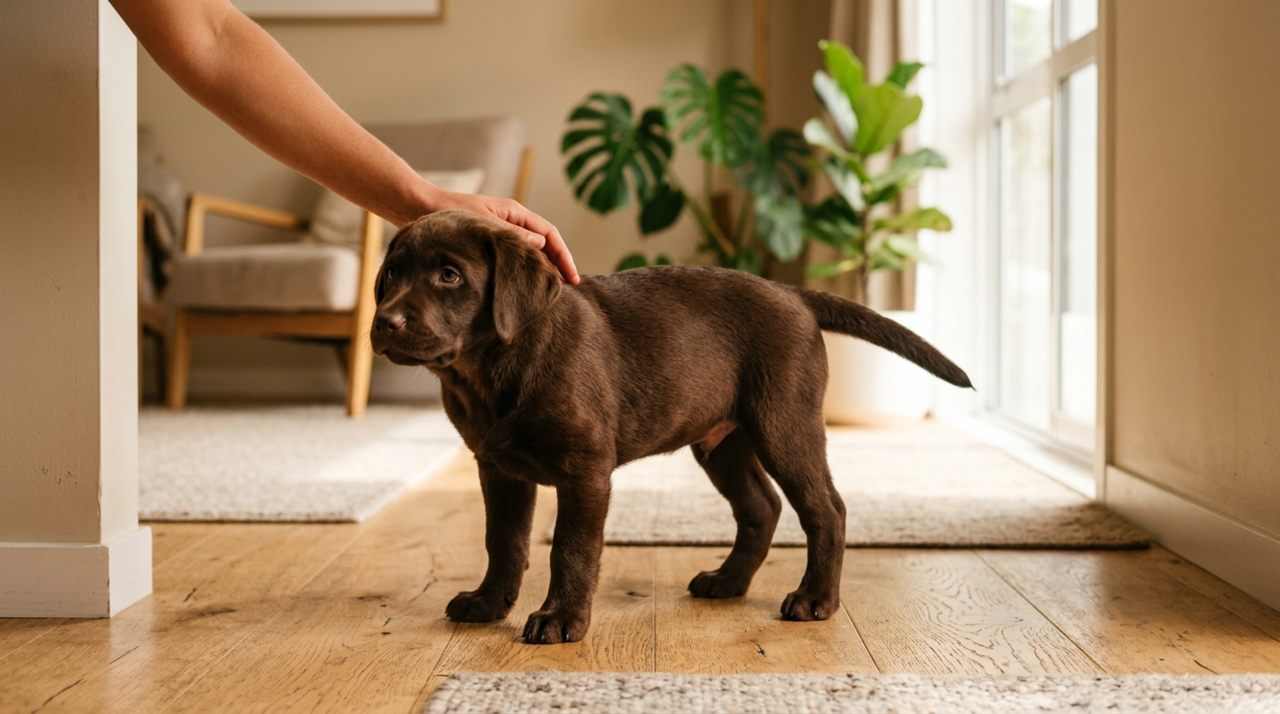
The first week with a new puppy is one of the loveliest weeks you'll have together, and one of the most disorienting. They're meeting a whole new family, a whole new house, a whole new set of smells, sounds, surfaces and people. You're working out a routine that didn't exist a few days ago, trying to remember the toilet schedule, googling whether the carpet is actually saveable, and falling head-over-heels for a tiny creature who's eating your shoelaces.
Here's a practical day-by-day checklist for the first week home with your puppy. Think of it as the doorway to the full Petdirect Puppy Guide, which goes deeper on development, training, nutrition and health.
Quick answer
For the first week home with a new puppy, focus on calm, routine and supervision. Set up a safe space before they arrive, take them straight to the toilet spot, keep visitors and other pets to a minimum for the first few days, build a regular toilet, feed and sleep schedule, and stay close at night. Most settling-in challenges in week one come from too much excitement too soon. The slow, gentle start pays off for the next decade.
Before They Arrive: The Set-Up
Your "before they get home" checklist
- Pick the safe space. A quiet corner of the kitchen or laundry where they can sleep, eat and rest is ideal. Avoid putting them in a back room on their own.
- Get the bed sorted. Soft, washable, big enough to stretch out in. A puppy pen with the bed inside is brilliant for the first weeks.
- Sort the food. Find out what the breeder or rescue is feeding so you can match it for the first few days. Sudden changes upset puppy tummies.
- Stock training pads and a clean-up kit. Accidents will happen. A puppy pad holder, a urine-neutralising spray and a calm attitude will save you a lot of stress.
- Puppy-proof at puppy level. Sit on the floor and look around. Cables, shoes, anything chewable, anything reachable. If it can go in their mouth, it will.
- Plan a quiet first 48 hours. Block out the diary for two days after they arrive. The whole family can meet them, but no big visits, no parties, no major outings.
The Day-by-Day Checklist
Day 1: Welcome home
Take it slow. The world they've left is the only world they know, and the one they've just arrived in feels enormous.
- Carry them straight to the toilet spot when you get home, before they come inside.
- Let them explore one or two rooms at their pace. Don't tour the whole house.
- Offer water and a small amount of the food they're used to.
- Introduce family members one at a time, calmly.
- Keep handling gentle and let them choose to approach.
- Plan for the first night: bed near you, in a pen or crate, with a soft warmed blanket and a heartbeat toy.
Day 2: Building the rhythm
Day two is when routine starts to take shape. Puppies feel safer when life is predictable, so consistent meal times and toilet trips help them settle.
- Take them to the toilet spot every 1-2 hours, plus after every meal, nap and play session.
- Feed three to four small meals at consistent times.
- Reward calm behaviour with praise and a small treat.
- Introduce the collar (or harness) and let them wear it indoors for short periods.
- Keep play sessions short (5-10 minutes) followed by nap time. Puppies need 16-20 hours of sleep a day.
Day 3: First moments of confidence
By now they'll be starting to recognise faces, sounds, the layout of their safe room. You'll see little flashes of personality emerging.
- Begin gentle handling exercises: paws, ears, gums, tail. Praise and treat.
- Practise their name. Say it once, reward when they look up.
- Introduce the lead indoors. Let them drag it on a carpeted floor while you supervise.
- Build a calm settle on the bed using a lick mat or puppy chew.
- Continue toilet trips on schedule.
Day 4: Carry-out adventures
Until your puppy is fully vaccinated, they shouldn't be walking on shared dog spaces. But the world isn't off-limits, you can carry them out for socialisation while keeping them safe.
- Carry them on a short walk around the neighbourhood (in your arms or a sling).
- Let them see and hear traffic, prams, bikes, kids playing, all from your arms.
- Sit on a bench in a quiet area and let them watch the world.
- Reward calm reactions to new sights and sounds with a tiny treat.
- Keep it short (10-15 minutes) and end before they get overwhelmed.
Day 5: Routine and exposure at home
Use day five to expose them gently to everyday household sounds and surfaces. The "everyday" is part of their socialisation window.
- Vacuum cleaner, hair dryer, washing machine, doorbell, kettle. Quietly at first.
- Different floor surfaces: tile, carpet, wood, lino, grass, the deck.
- Try a slow feeder or puzzle for a meal. Mental work is wonderfully tiring.
- Confirm your first vet check is booked (most NZ vets recommend a visit within the first week).
- Start crate or pen settling for short periods (5-10 minutes with the door open, treat inside).
Day 6: Quiet socialisation with people
If the first week has gone well, you can start inviting one or two calm visitors at a time. Don't overwhelm them with a crowd just yet.
- One calm adult visitor at a time. Ask them to ignore the puppy until the puppy approaches.
- Reward calm greetings (four paws on the floor), not jumping up.
- If your puppy hides, don't pull them out. Let them choose to engage.
- Introduce existing pets carefully (separate spaces first, scent-swapping, then short supervised meetings).
- Continue with toilet and feed routine.
Day 7: Settled into the rhythm
By the end of week one, most puppies have a basic sense of "this is home" and "this is my person". You're ready to start widening their world.
- Lock in the daily routine: feed times, toilet trips, nap times, play, training.
- Plan the second week: longer carried walks, more handling, beginning of formal training.
- Make a list of what's working (the bed location, meal times) and what isn't (overnight wake-ups, slippery floors).
- Sit on the floor and have a quiet cuddle. You've both made it through week one.
The First Night (The One Everyone Asks About)
Where should they sleep?
Many vets recommend the puppy sleeps in your bedroom for the first few weeks, in a pen or crate next to the bed. Being near you reduces stress and helps them settle. You can move the pen further away once they're confident.
What to put in the bed
A soft, washable bed, a warmed (not hot) blanket, and a heartbeat toy can all help. Something that smells of their littermates (the breeder may send a blanket home) is gold for the first few nights.
If they cry
The first one or two nights, some crying is normal. A short reassurance is fine, but try not to lift them out, which teaches that crying gets them carried around. Sit nearby, talk softly, and let them settle.
Toilet trips overnight
Young puppies need a wee every 2-3 hours. Set an alarm if needed. Toilet trip, no fuss, no play, straight back to bed. They'll start sleeping through within a week or two.
Food and Feeding in Week One
Feeding the new puppy
- Match what they were eating at the breeder or rescue for the first few days. Sudden food changes upset puppy stomachs.
- Three to four small meals a day until around 5 months, then move to two meals a day. Your Petdirect Puppy Guide has the full schedule by age.
- Use a complete and balanced puppy food formulated for their adult breed size. Small-breed, medium-breed and large-breed puppy foods all have different nutrient profiles.
- If you want to change food, wait at least a week, then transition gradually over 7-10 days (25%, 50%, 75%, 100% new food).
- Fresh water available all day. Stainless steel or ceramic bowls are best, washed daily.
Toilet Training Starts on Day One
How often to go out
Every 1-2 hours during the day, plus after every meal, every nap and every play session. As a rough rule, a puppy can hold it for one hour per month of age, so a 2-month-old needs out every 2 hours during the day.
Where to go
Pick one spot in the garden. Take them there on the lead. Use a consistent cue word ("toilet", "be quick"). Stand still and wait. Reward with praise and a small treat the moment they go.
When they have an accident
Clean it up calmly with a urine-neutralising spray (so they can't smell the spot later). Don't punish, don't rub their nose in it. Puppies learn faster from rewards than from corrections.
Indoor training pads
Useful when you can't take them outside (rainy days, long workdays, very young puppies). Place near the door so they associate the path outside with toilet.
Calm and Enrichment for the First Week
A tired puppy is a happy puppy. Mental enrichment is just as tiring as physical play, and much better suited to a puppy whose joints are still developing. Five to ten minutes of brain work, two or three times a day, is genuinely satisfying.
For the full guide, read the Petdirect Puppy Guide
This blog is your first-week checklist. The full Petdirect Puppy Guide goes deeper on milestones, training, nutrition, vaccinations, desexing and more, written specifically for NZ owners.
READ THE PUPPY GUIDEFrequently Asked Questions
How long does it take a puppy to settle in?
Most puppies are settled into the basics of home life within a week, but a full sense of confidence and routine usually takes 4-6 weeks. The first 48 hours are usually the hardest for the puppy and the wildest for you.
Should I take my puppy out for walks straight away?
Not on the ground in public spaces, no. Puppies need their full vaccination course before walking on shared dog areas. Carry them out for socialisation in the meantime, and use your own garden or a friend's vaccinated-dog garden for paw-on-ground exploration.
When should I book the first vet visit?
Most NZ vets recommend a check within the first week home, especially if the puppy hasn't been seen recently by the breeder's vet. The visit covers a general health check, vaccination plan and answering any questions you have.
Is it normal for my puppy to cry at night?
Yes, especially the first one or two nights. They've just left their littermates and everything they know. Keep their pen or crate close to your bed, leave a warmed blanket and a heartbeat toy, and a short reassurance is fine. They settle quickly.
How much should my puppy eat in the first week?
Follow the breeder or rescue's existing routine for at least the first 4-7 days. After that, the back of the puppy food bag gives daily amounts by weight and age. Three to four meals a day until around 5 months, then move to two.
When can I start training?
From day one. Puppies absorb information whether you're "training" or not, and good habits are easier to build than bad ones are to undo. Keep sessions very short (a few minutes), positive, and end on a win. Formal training (sit, down, name, recall) can start as soon as they arrive.
Do I need to puppy-proof more than I think?
Yes. Cables, shoes, plants (some are toxic), small objects, anything chewable. Sit on the floor at puppy level and look around. If it can go in their mouth, it will. The Petdirect Puppy Guide has a full home-hazards section worth reading before the puppy arrives.
Everything Your Puppy Needs at Petdirect
Browse puppy food by breed size, training pads, calming aids, puzzle feeders, pens and the rest of the new-puppy essentials. Save with Autodeliver on puppy food, and enjoy everyday member pricing as part of Pet Perks. For the complete life-stage guide, read the Petdirect Puppy Guide.
SHOP PUPPY ESSENTIALS