If your cat sits by the back door and meows at it for hours, scoots between your legs every time you open it, or wakes you up at 4am because they want out, you're not alone. The pull of the outdoors is hardwired into a cat's brain, and even cats who've never set foot outside can spend a lot of their day desperate to be on the other side of the glass.
Here's a practical guide to what's actually driving that "I must go outside" behaviour, what it can mean in different circumstances, and what you can do to make life with your cat happier whether they go outside or not.
Quick answer
Most cats want to go outside because their instincts tell them to hunt, patrol territory, explore new smells, and seek out cooler or warmer spots that don't exist indoors. Outdoor pull also goes up when cats are under-stimulated indoors, when they're not desexed, or when something has changed in the home (a new pet, a new person, a routine shift). Increasing indoor enrichment, a structured play routine, and considering options like a microchip cat door or a harness and lead can all help.
The Six Main Reasons Cats Want Outside
1. Hunting instinct
Cats are obligate carnivores wired to hunt small fast-moving prey. Even well-fed indoor cats have the same wiring as their wild cousins. Outside is where the targets are: birds, mice, insects, lizards. Indoor toys can satisfy a lot of the same drive, but the real outdoors will always be more compelling.
2. Territory patrol
Cats are territorial animals. Outdoor cats walk a daily patrol route, marking, sniffing, and updating their mental map of who's around. Indoor cats still feel this drive but have nowhere to direct it, which is why they often want out even if they've never spent a full day outside.
3. Sensory stimulation
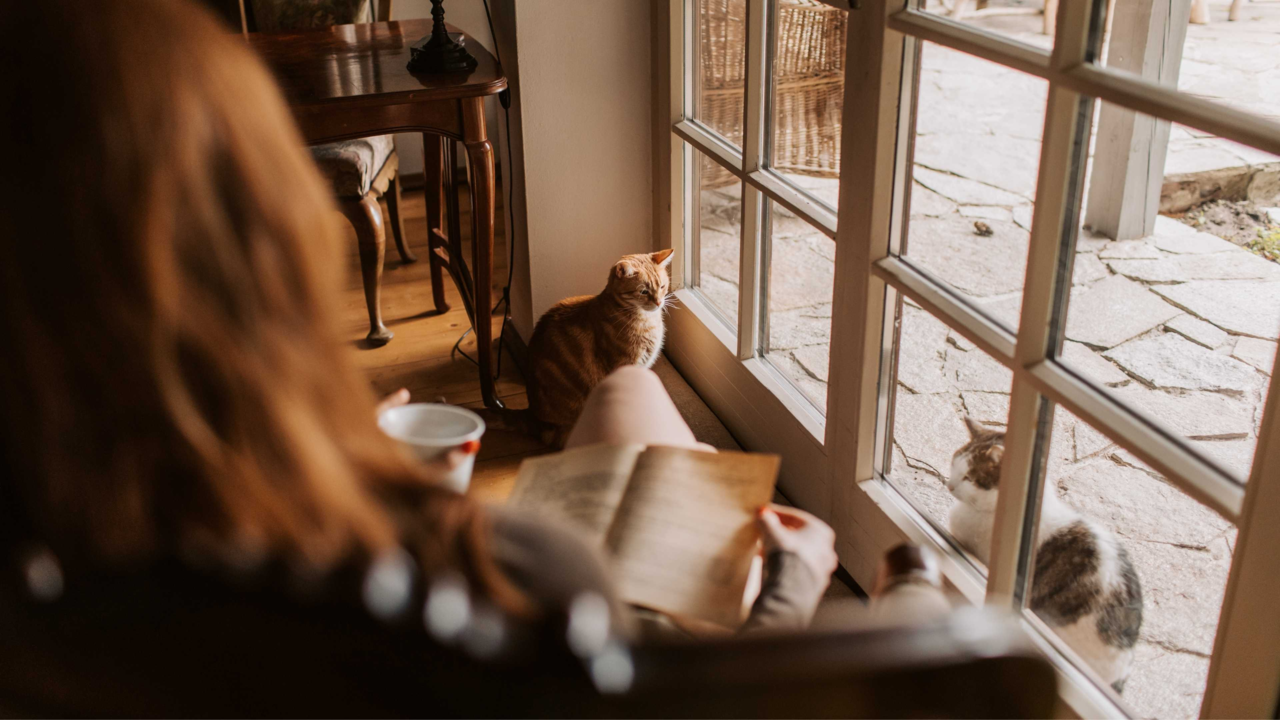
The outdoors has more smells, more sounds, more movement and more changing weather than even the most enriched indoor environment. For a sense-driven animal like a cat, this is genuinely interesting. The window watching, ear-twitching and tail-flicking at the door is your cat reading the daily news.
4. Temperature and comfort
In summer, the cool concrete or shaded fence is more comfortable than a stuffy lounge. In winter, the sunny patch outside might be warmer than indoors. Cats are excellent thermoregulators and will seek out whatever's most comfortable, even if it's three steps from the door.
5. Social and reproductive drive
Cats who aren't desexed (in NZ, most cats over a few months should be) have strong drives to roam looking for mates. Even desexed cats may want to see, sniff or interact with the neighbourhood cats , sometimes friendly, sometimes very much not.
6. Routine and habit
If your cat has ever been allowed outside, they'll likely keep asking. Cats are creatures of routine, and once "out" is part of their daily schedule, breaking the habit takes time. This is normal, not naughty.
When the "Outside" Demand Is About Something Else
Sudden change in your cat's wanting-out behaviour
A cat who has always been outdoorsy can stay that way, but a sudden spike in pacing, meowing at the door, or trying to bolt out when it opens is worth paying attention to. It can mean something has changed inside, like a new pet, new visitor, change in food, new noise, or a litter tray that's not quite right.
Stress and conflict in the home
Tension with another cat, a new dog, a new baby, a noisy renovation , all can push a cat to look for somewhere quieter. The outdoors looks like the obvious escape. Pheromone diffusers like Feliway can help take the edge off household stress while you work on the cause.
Litter tray issues
If your cat has decided the tray isn't working , wrong location, wrong litter, not clean enough, shared with another cat , they may look for outdoor toileting options. Always check tray setup before assuming it's purely a wanderlust issue.
Boredom and under-enrichment
An understimulated indoor cat will eventually try to "fix" the problem themselves. Pacing, fence-watching, meowing and door-scratching often go up when interactive play, hunting toys and climbing space go down. Twenty minutes of structured play a day reduces this dramatically.
Senior or unwell cats
An older cat suddenly wanting outside more (or trying to slip away) can sometimes mean something else is going on. A check-in at the clinic is worth doing if the behaviour is sudden and out of character.
The Indoor vs Outdoor Question in NZ
Some NZ cats are indoor-only, some are indoor-outdoor, and some are mostly outdoor. There's no single right answer, but there are factors worth weighing up.
The case for outdoor access
Outdoor cats get more exercise, more enrichment and tend to be slimmer. They have a richer sensory life. The behavioural problems that come with boredom (over-grooming, destructiveness, attention-seeking) are often less of an issue.
The case for keeping cats inside
Outdoor cats face risks: cars, dogs, other cats, predators (in some NZ regions), and the obvious one , they hunt native wildlife. Many local councils now have curfews or restrictions, and some new developments are cat-contained. Indoor cats live longer on average and have lower lifetime care costs.
The hybrid option
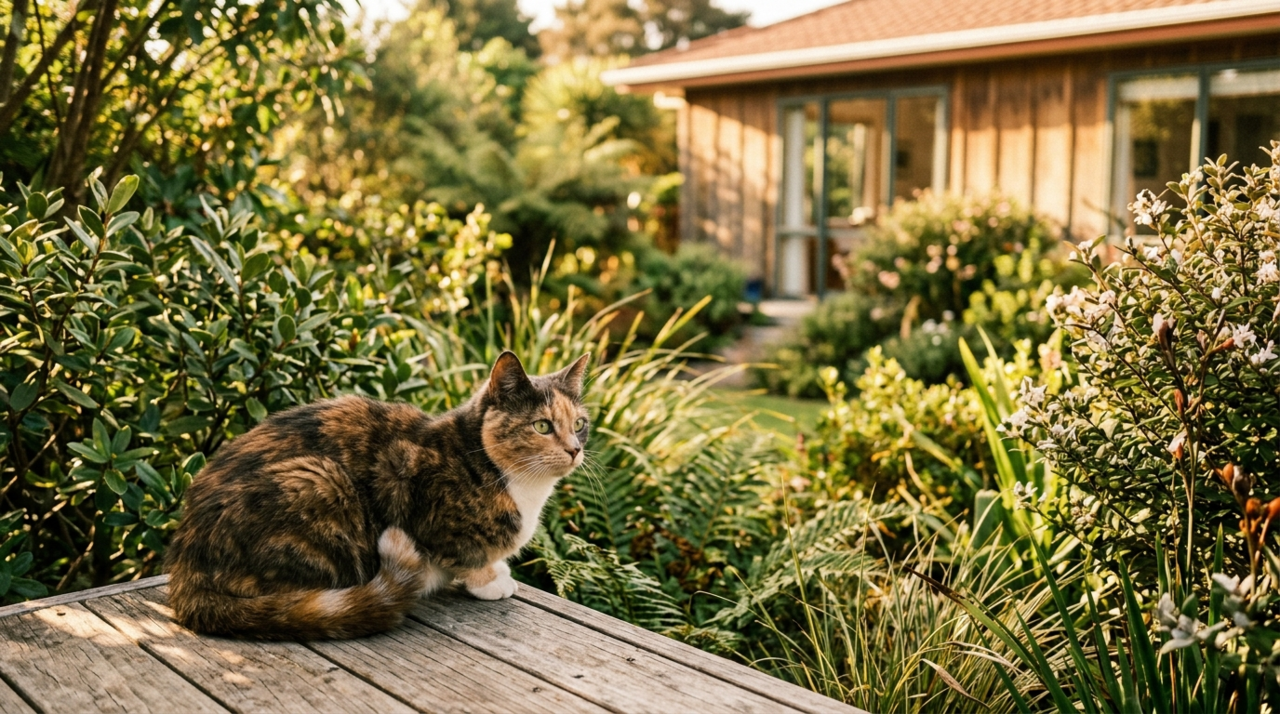
Many Kiwi households go for daytime indoor-outdoor access with cats in at night. This reduces risks to the cat (most injuries happen overnight) and to wildlife (many native birds are crepuscular). A microchip cat door makes this manageable.
The walked-cat option
A growing number of NZ owners take their cats out on a harness. This gives the cat outdoor enrichment with none of the wandering or wildlife risks. It works best when started young, but plenty of adult cats can learn too if you go gently.
Making Indoors More Outdoors-Like
The 20-minute hunt routine
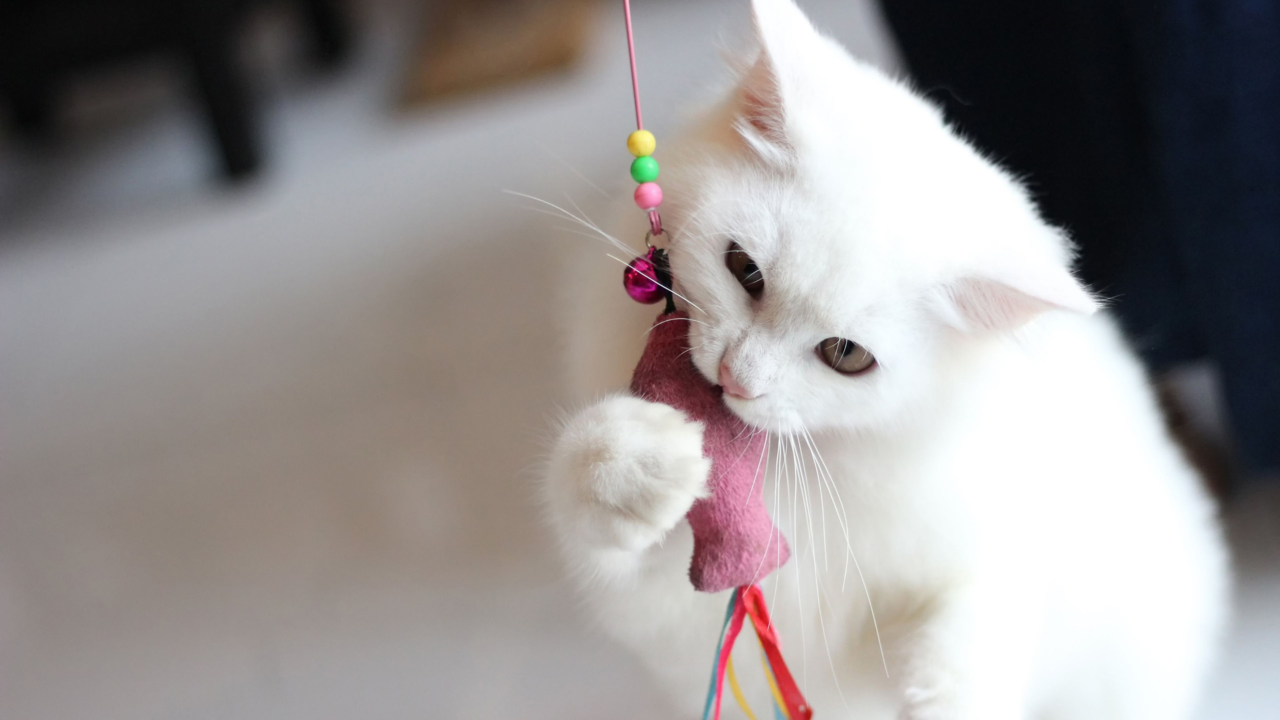
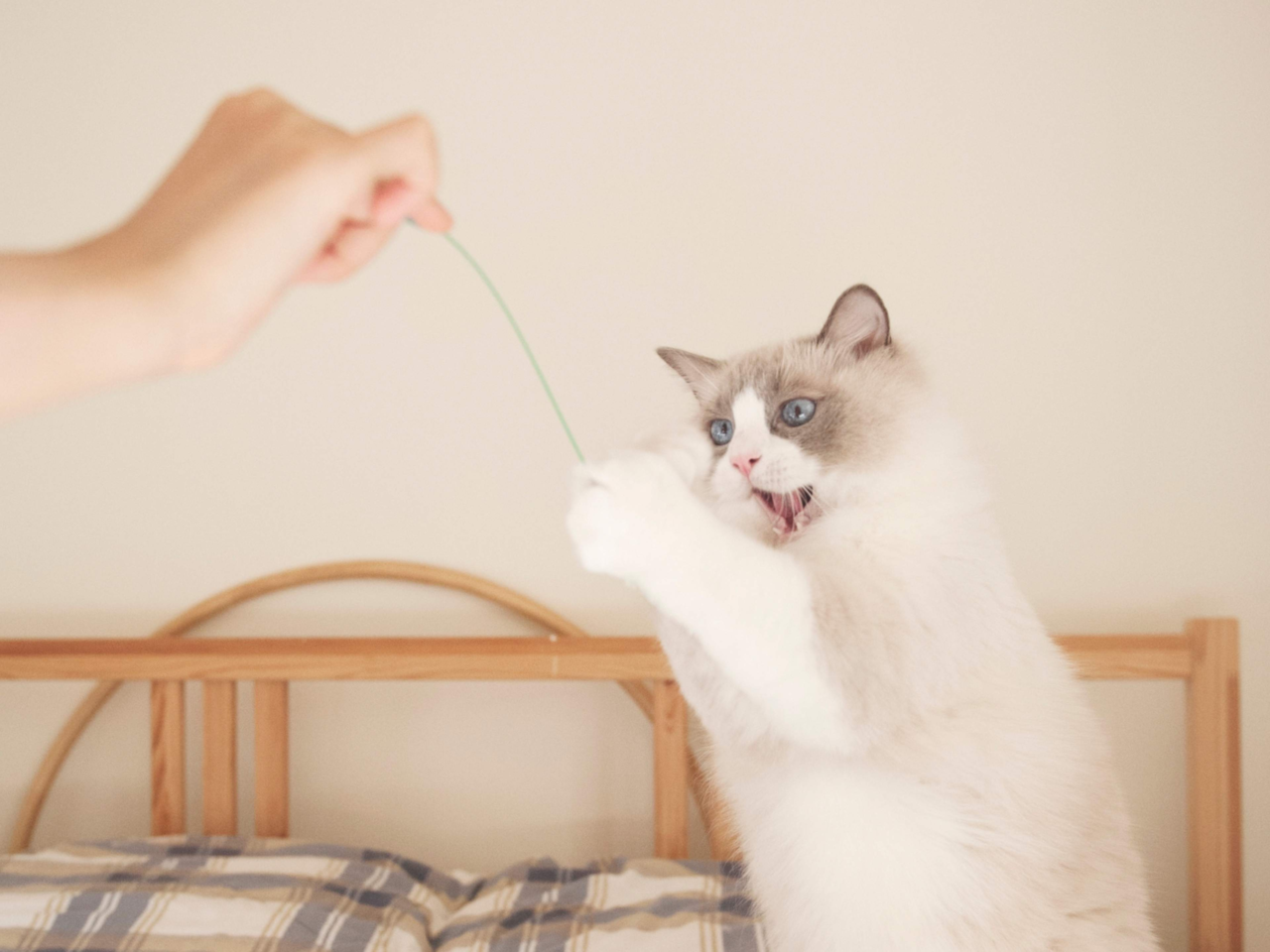
Two ten-minute play sessions a day with a wand toy or motorised toy gives an indoor cat the closest thing to a hunt. End with a small meal , that mimics the real "stalk, catch, eat" cycle and helps your cat settle afterwards. Most under-enriched cats stop asking to go out as much within a couple of weeks of a real play routine.
Vertical space and viewing perches
Cats want to see and survey their territory. A cat tree by a sunny window doubles as a perch, a viewpoint, a sleep spot and a scratching post. The Pup & Purr Nala Cat Tree Scratcher is a good all-rounder.
Variety, scent and rotation
Cats lose interest in toys quickly. Rotate them weekly. Try cat-safe plants (cat grass and catnip), interesting boxes, paper bags, and a regularly refreshed feeding puzzle. Even moving a cat tree to a different window can give them "new" outside to look at.
Giving Safer Outdoor Access
Microchip cat doors
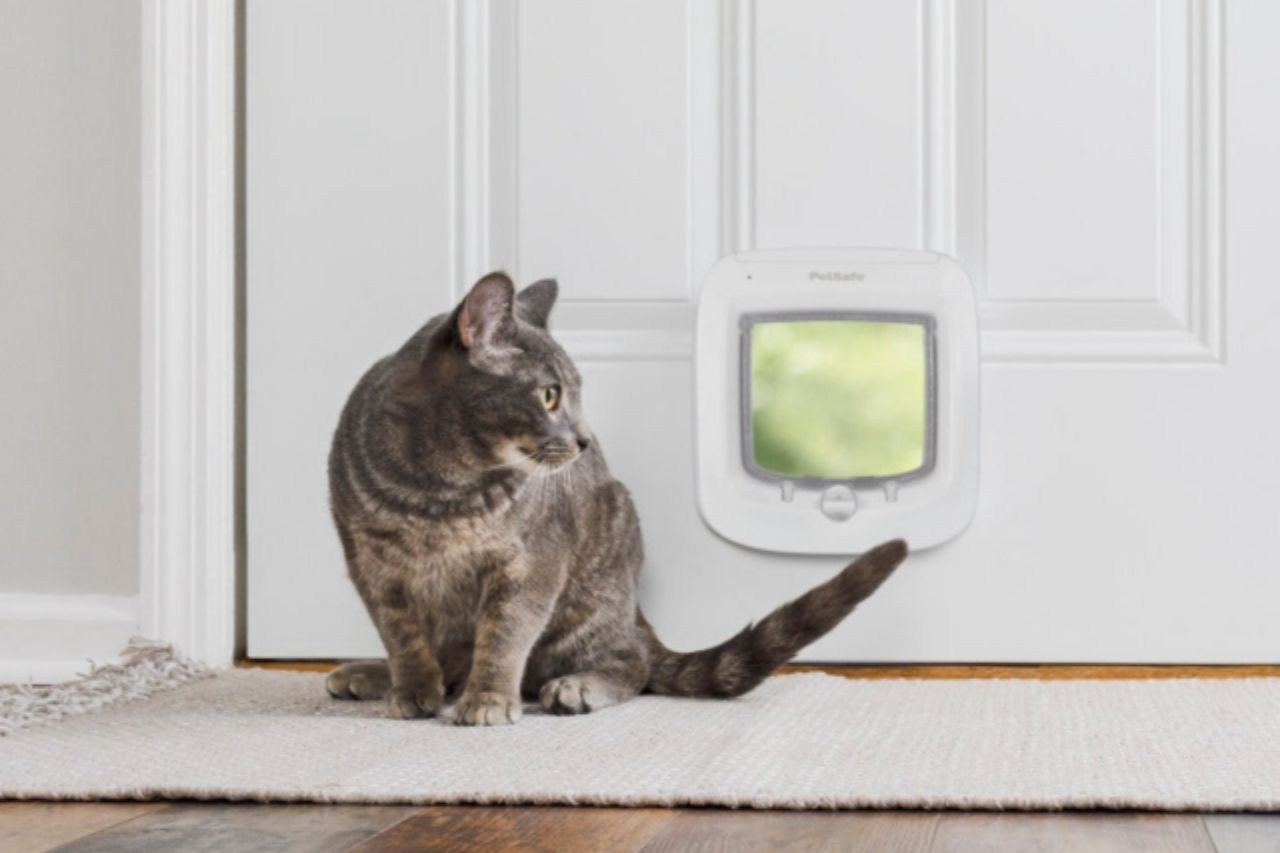
If you've decided your cat can go outside, a microchip cat door is one of the best investments you'll make. It lets your cat come and go on their schedule, keeps other cats out, and can be set to lock at night to keep your cat in during the highest-risk hours. SureFlap and PetSafe both have well-regarded options at Petdirect, with versions for doors, walls and glass.
Cat harness and lead training
For indoor cats who want outdoor stimulation without the wandering, a harness and lead is the safest option. Start indoors with the harness off-lead, build up to short supervised garden trips, and let your cat set the pace. The Rogz Alleycat Harness & Lead Set and Trixie Soft Cat Harness are both designed specifically for cats (not adapted from dog harnesses, which usually slip off).
Quick safety checklist for outdoor cats
- Desex. Reduces roaming, fighting, unwanted litters and territorial spraying.
- Microchip and register. If your cat ever gets lost, this is the only thing that gets them home.
- Quick-release collar with ID. Even with a microchip, a visible tag means a neighbour or local can return them faster.
- Keep up flea and worm prevention. Outdoor cats need it year-round.
- Bring them in at night. Most cat injuries happen overnight. A microchip cat door with night-lock makes this easier.
Calming the Door-Demanding Behaviour
Don't reward the meow
If your cat learns that meowing at the door results in being let out, they'll keep doing it. Try to time outdoor access (where allowed) to moments when they're quiet, not when they're shouting. Hard, especially at 4am, but it does pay off.
Use pheromone support
For stress-driven door behaviour, a Feliway diffuser sends a calming "this place is safe" signal. Friends Feliway works specifically for multi-cat households where conflict might be driving one cat to want out.
Build a real indoor routine
Cats thrive on routine. Two play sessions a day at consistent times, meals at consistent times, and a wind-down routine before bed all reduce night-time waking. A timed feeder can break the "wake the human up for breakfast" loop and a wand toy session before bed leaves them tired enough to sleep through.
Frequently Asked Questions
Will my indoor cat be unhappy if I never let them outside?
Not if their indoor life is enriched. Plenty of cats live happy, full lives indoors, especially if they have vertical space, daily play, varied toys and a routine that suits them. The unhappy indoor cats are usually the under-stimulated ones, not the indoor ones.
My cat keeps trying to dash out the door. What can I do?
Door-darting often comes from a cat who's bored and sees the door as the most exciting thing in their day. Increase indoor play, train a "back" cue using treats away from the door, and consider a baby gate or vestibule setup to break the dash. A harness and lead can also redirect the urge into structured outdoor time.
How long does it take to convert an outdoor cat to indoor?
Most cats settle in to indoor life within a few weeks, but the first one or two are usually the loudest. Increase enrichment, give them plenty to do, use Feliway during the transition, and try not to reward the door-meowing.
Is it cruel to keep a cat indoors?
Not at all, when indoor life is properly enriched. Many cats live longer, healthier lives indoors with no exposure to cars, dogs, fights or wildlife losses. The question is less about indoor or outdoor and more about whether your cat has enough to do.
What age should I start harness training a cat?
The younger the better , kittens take to it easily. Adult cats can learn too, especially food-motivated ones, but the process is slower and some cats simply never enjoy it. Always go at the cat's pace.
Are microchip cat doors worth it?
Yes, particularly if your cat already goes outside or you're planning indoor-outdoor access. They stop neighbouring cats coming in, can be programmed to night-lock, and give your cat more autonomy without the loud-meowing-at-the-door routine.
My cat goes outside but is desexed and microchipped , is that enough?
It's the right foundation. Add a quick-release collar with ID, keep on top of flea and worm prevention, bring them in at night, and check in with them daily. Many NZ councils also have local rules worth checking, especially in newer developments.
Indoor Enrichment and Outdoor Gear at Petdirect
Browse cat trees, interactive toys, slow-feed mats, microchip cat doors, cat harnesses and lead sets, and calming diffusers to make life happier whether your cat goes outside or stays in. Save with Autodeliver on everyday items, and enjoy everyday member pricing as part of Pet Perks.
SHOP CAT ENRICHMENT