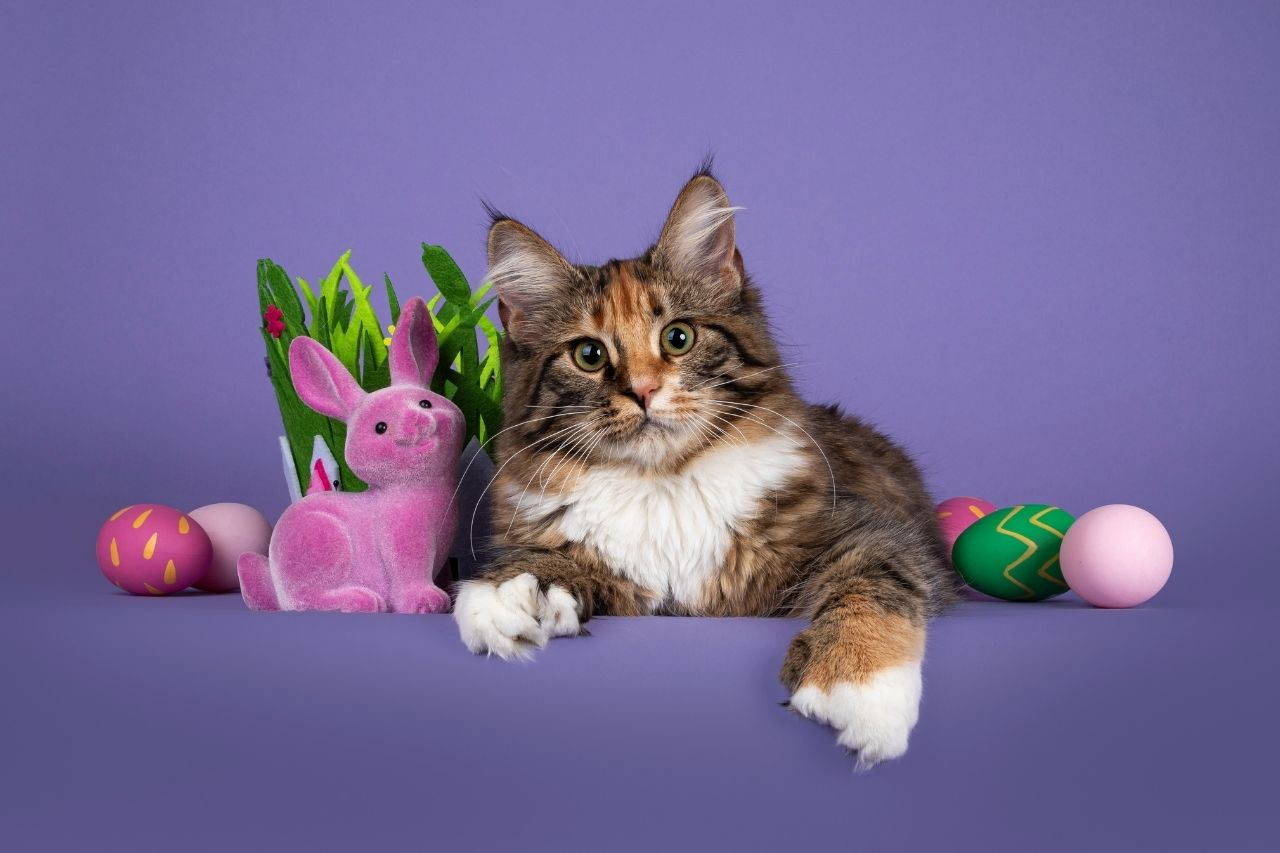
Easter is a wonderful time for families, but for cat owners it brings a handful of serious risks that are easy to overlook. Chocolate eggs, Easter lilies, hot cross buns, foil wrappers, and even well-meaning visitors can all pose a threat to curious cats.
Cats are particularly vulnerable because they are quiet investigators. They will nibble a fallen petal, bat a foil wrapper under the couch, or lick a spilled drink without anyone noticing. This guide covers the most common Easter hazards for cats in New Zealand, what symptoms to watch for, and how to keep your cat safe over the long weekend.
The Biggest Easter Dangers for Cats
Easter Lilies
The single most dangerous Easter hazard for cats. All parts of the lily plant, including pollen, petals, leaves, and even the water in the vase, are extremely toxic. Ingestion can cause fatal kidney failure within 24 to 72 hours.
Chocolate
Chocolate contains theobromine and caffeine, both of which are toxic to cats. Dark chocolate and cocoa powder are the most dangerous. Even a small amount can cause vomiting, tremors, rapid heart rate, and seizures.
Hot Cross Buns
Raisins, sultanas, and currants are toxic to cats and can cause kidney damage. Hot cross buns left on the bench or table are an easy target for a curious cat.
Xylitol
This artificial sweetener is found in sugar-free chocolate, gum, and some baked goods. It can cause a rapid drop in blood sugar and liver damage in cats.
Foil and Ribbon
Shiny Easter egg wrappers and decorative ribbon are irresistible to cats. If swallowed, foil can cause intestinal blockages and ribbon can become a linear foreign body, which is a surgical emergency.
Easter Grass
The plastic or paper grass used in Easter baskets is extremely dangerous if ingested. Like ribbon, it can bunch up in the intestines and require emergency surgery to remove.
Why Lilies Are So Dangerous for Cats
Lilies deserve their own section because they are the number one cause of Easter-related poisoning in cats. Many NZ households receive lilies as gifts or buy them as decorations without realising the risk.
The most dangerous species include Easter lilies, tiger lilies, Asiatic lilies, daylilies, and Japanese show lilies. Even brushing past a lily and then grooming the pollen off their fur can be enough to poison a cat.
What happens if a cat is exposed to lilies
- Within 1 to 3 hours: vomiting, drooling, loss of appetite
- Within 12 to 24 hours: increased thirst and urination as the kidneys begin to fail
- Within 24 to 72 hours: kidney shutdown, which can be fatal without immediate veterinary treatment
What to do
If you suspect your cat has had any contact with a lily, take them to the vet immediately. Do not wait for symptoms to appear. Early treatment with intravenous fluids gives the best chance of survival. Bring a sample of the plant if possible so your vet can confirm the species.
The safest approach is to never bring lilies into a home with cats. If you receive them as a gift, move them to a room your cat cannot access or give them to a friend without cats. For a full list of toxic and safe plants, read our NZ guide to safe and toxic houseplants for pets.
Chocolate Poisoning in Cats
While cats are less likely than dogs to eat chocolate (they cannot taste sweetness), it still happens. Cats may lick melted chocolate off surfaces, eat chocolate-flavoured baked goods, or chew on a foil-wrapped egg out of curiosity.
Theobromine is the toxic compound in chocolate. Cats are more sensitive to it than dogs, so even a small amount can be dangerous. Dark chocolate and cocoa powder contain the highest concentrations.
Symptoms of chocolate poisoning in cats
Early Signs (1 to 4 hours)
Vomiting, diarrhoea, restlessness, increased thirst, and frequent urination.
Moderate Signs (4 to 12 hours)
Rapid breathing, elevated heart rate, muscle tremors, and hyperactivity.
Severe Signs (12+ hours)
Seizures, collapse, cardiac arrhythmia, and in extreme cases, death. Seek emergency veterinary care immediately.
What to Do
Contact your vet immediately. Note the type of chocolate, the approximate amount, and when it was eaten. Do not try to induce vomiting unless your vet advises it.
Other Hidden Easter Dangers
Cooked bones and fatty scraps
Easter roasts and ham can tempt well-meaning family members to slip the cat a treat. Cooked bones can splinter and cause internal injuries, while fatty scraps can trigger pancreatitis. Stick to cat-safe treats instead. For more on what is and is not safe, read can pets eat leftovers?
Essential oils and diffusers
Many essential oils are toxic to cats, including tea tree, eucalyptus, peppermint, and citrus oils. If you are using a diffuser over the long weekend, make sure it is in a well-ventilated room your cat can leave freely.
Cleaning products
A pre-Easter deep clean can leave residues on surfaces that cats walk on and then groom off their paws. Use pet-safe cleaning products and make sure surfaces are dry before your cat has access. Read our guide to household cleaning products that are toxic to pets.
Open doors and windows
With visitors coming and going, doors and windows may be left open more than usual. Indoor cats can escape, and even outdoor cats may be startled by unfamiliar people and bolt. Make sure your cat is microchipped and wearing a collar with an ID tag.
Keeping Your Cat Calm Over Easter
Extra visitors, children, noise, and disrupted routines can all stress cats out. Some cats will hide, others may stop eating or start over-grooming. A little preparation can help your cat feel safe during the long weekend. For more strategies, read our calming tips for anxious cats.
Set Up a Safe Room
Give your cat a quiet room away from the action with their bed, litter tray, water, food, and a favourite toy. Close the door so guests do not wander in.
Use Calming Pheromones
Plug in a Feliway diffuser a few days before Easter to help your cat feel settled. In multi-cat households, Feliway Friends can help reduce tension between cats.
Maintain Routine
Try to keep feeding times, play sessions, and quiet time as close to normal as possible. Cats are creatures of habit and disruption can trigger anxiety.
Provide Enrichment
A puzzle feeder or lick mat can keep your cat occupied and mentally stimulated while the house is busy. Read our indoor cat enrichment guide for more ideas.
Safe Easter Treats for Cats
Your cat does not need to miss out on the Easter fun. Skip the chocolate and offer cat-safe treats instead. Lickable treats like Inaba Churu are a favourite, or try spreading wet food on a LickiMat for a calming, enriching activity. For more ideas, read pet-friendly Easter treats.
Keep Flea Treatments Up to Date
Autumn is peak flea season in New Zealand. If your cat is visiting other homes, staying at a cattery, or simply spending more time outdoors during the long weekend, make sure their flea and tick protection is current. For a full guide, read flea, tick and mite prevention for pets in NZ.
Easter Cat Safety Checklist
- Remove all lilies from your home and garden, or move them to a room your cat cannot access
- Store chocolate, hot cross buns, and lolly bags in sealed containers or high cupboards
- Pick up all foil wrappers, ribbon, and Easter basket grass immediately after use
- Set up a quiet safe room for your cat before guests arrive
- Plug in a Feliway diffuser a few days before the long weekend
- Remind children and guests not to feed your cat human food
- Check that doors and windows are secure, especially if your cat is indoor-only
- Make sure your cat's microchip details are up to date
- Stock up on cat food, treats, and flea treatments before the public holidays
- Save your vet's after-hours emergency number in your phone
Frequently Asked Questions
Are all lilies toxic to cats?
The most dangerous are true lilies from the Lilium and Hemerocallis families, including Easter lilies, tiger lilies, Asiatic lilies, and daylilies. Peace lilies and calla lilies are less toxic but can still cause mouth irritation and drooling. The safest approach is to keep all lilies away from cats.
How much chocolate is toxic to a cat?
Cats are more sensitive to theobromine than dogs. As little as 20mg of theobromine per kilogram of body weight can cause symptoms. A single square of dark chocolate could be enough to make a small cat seriously ill. If your cat eats any amount of chocolate, contact your vet.
What should I do if my cat eats a lily?
Take your cat to the vet immediately, even if they seem fine. Lily poisoning can be fatal within 24 to 72 hours, but early treatment with intravenous fluids significantly improves the chances of survival. Bring a sample of the plant if you can.
Can cats eat hot cross buns?
No. Hot cross buns contain raisins, sultanas, or currants, which are toxic to cats and can cause kidney damage. The dough itself can also cause digestive issues. Keep all baked goods out of reach.
How can I keep my cat calm during Easter gatherings?
Set up a quiet room with their bed, litter tray, water, and food. Plug in a Feliway diffuser a few days before Easter. Keep feeding times and play sessions as close to normal as possible, and let your cat approach guests on their own terms.
What Easter treats are safe for cats?
Stick to cat-specific treats like Inaba Churu lickable treats, or spread wet food on a LickiMat for an enriching activity. Never give cats chocolate, raisins, onion, garlic, or xylitol-containing products.